6 Best Tuscany Coffee Table Books (2026)
Six Tuscany coffee table books, personally reviewed — from Assouline's linen-bound *Tuscany Marvel* to Frances Mayes's love letters to Cortona and Taschen's 464-page record of the region's private homes. Here's exactly who each one is for.
Tuscany is the region everyone thinks they can picture — cypress rows on a hilltop, a bowl of ribollita, terracotta light on old stone — which is exactly why most Tuscany books disappoint. It's easy to fill 200 pages with the postcard. The books that earn a permanent place on the table are the ones that go past it: into the private villa that hasn't changed hands in six generations, into Frances Mayes's actual kitchen in Cortona, into the difference between a Chianti hill in June and the same hill in November.
I've spent years collecting these, and the six below all have that quality — a point of view that survives past the second flip-through. I've noted who each one is genuinely for, and, just as importantly, who should skip it. If you want the whole country rather than the one region, I'd start with my broader Italy coffee table books roundup instead — a couple of these titles appear there too, seen through a wider lens.
Disclosure: This article contains affiliate links. If you purchase through these links, I earn a small commission at no extra cost to you.
My Top 3 Picks at a Glance
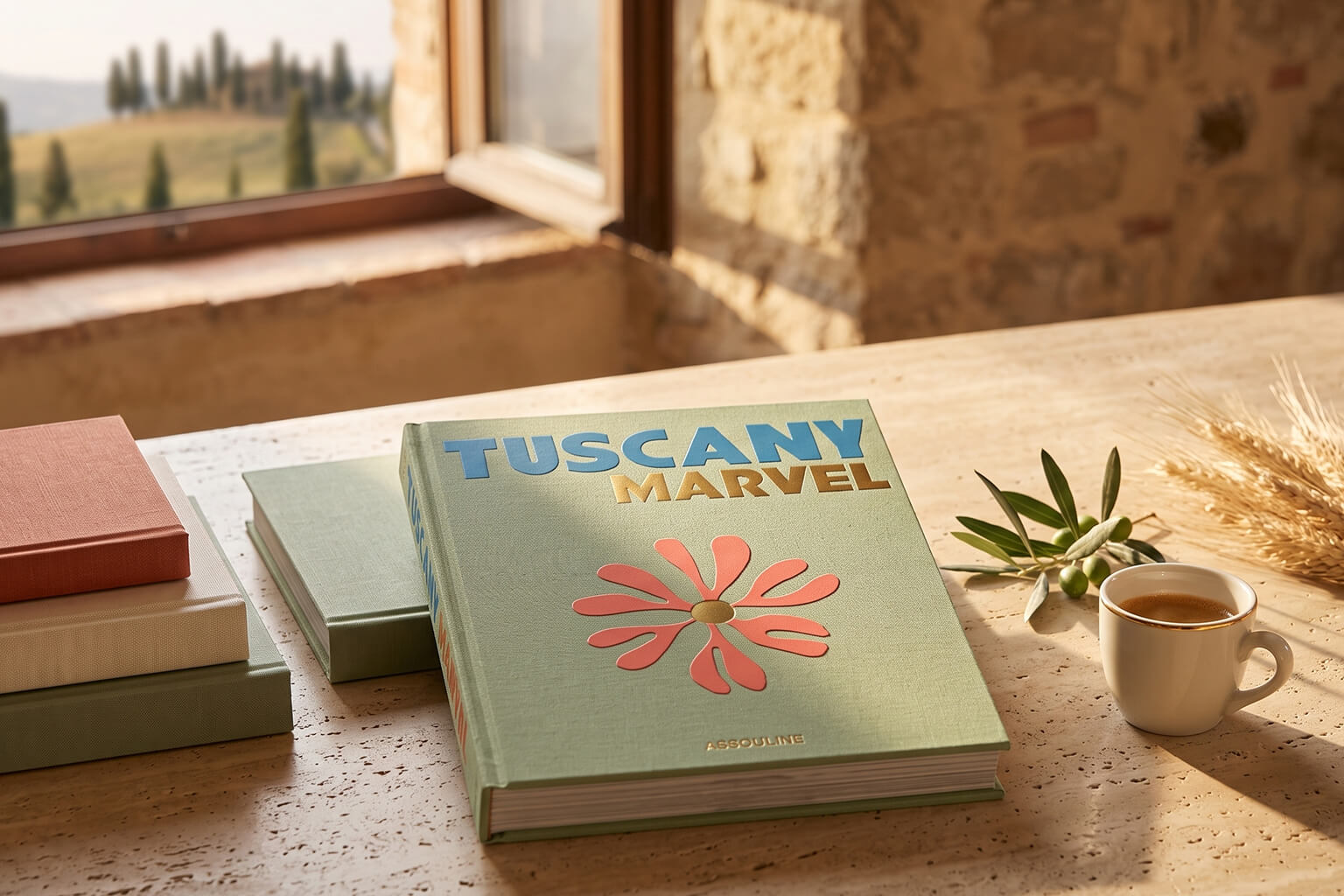
- Best Overall: Tuscany Marvel (Assouline) — the definitive luxury Tuscany volume, from Medici villas to the Chianti hills, in a linen hardcover that anchors a table
- Best for the Dreamer: In Tuscany by Frances Mayes — the Under the Tuscan Sun author's most photographic book, Bob Krist's images across five sections of Tuscan life
- Best for Interiors: Living in Tuscany (Taschen) — 464 pages of private Tuscan homes that have been lived in for generations
1. Tuscany Marvel – Cesare Cunaccia
| Author | Cesare Cunaccia |
| Publisher | Assouline |
| Pages | 312 |
| Illustrations | Over 200 |
| Dimensions | 10 x 13 x 1.5 inches |
| Weight | ~6 lbs |
| Coverage | Florence, Siena, Chianti, Medici villas, Pisa, Elba, artisan workshops, Tuscan fashion |
| Best For | Best overall — the statement Tuscany book, luxury gift, anyone who dreams of a Tuscan escape |
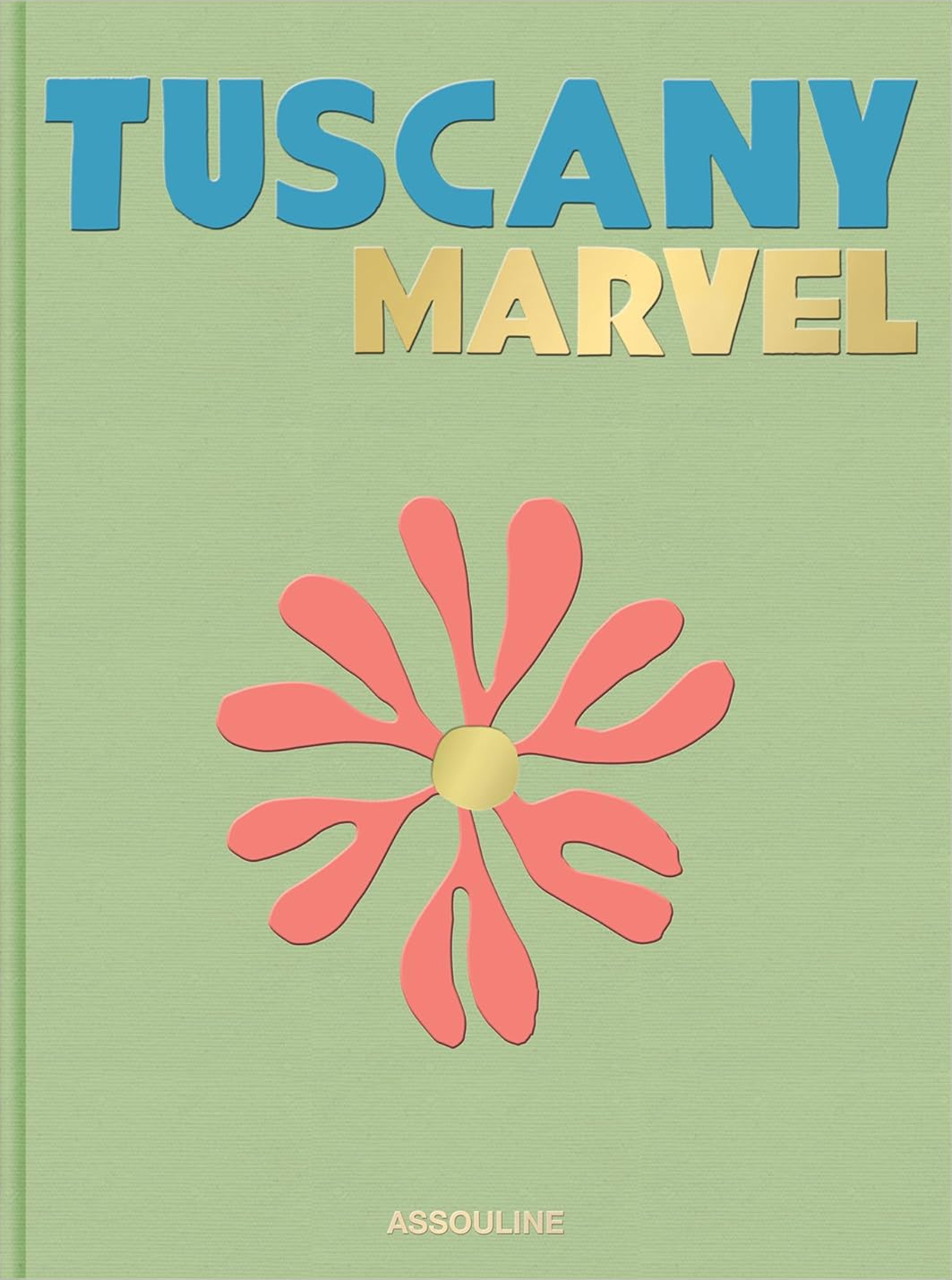
If you buy one Tuscany book to leave out where people will see it, this is the one. Assouline's Tuscany Marvel is part of the same Travel Series as their Amalfi Coast and Capri volumes, and it's written by Cesare Cunaccia — former editor at large for Vogue Italia and antiques consultant for Architectural Digest Italy, which tells you the eye behind the selection. This isn't a tourist's Tuscany. It's an insider's.
The book moves from Brunelleschi's dome in Florence to the Palio horse race in Siena's Piazza del Campo, through the centuries-old winemaking of Chianti, out to the Tyrrhenian coast and the island of Elba where Napoleon was exiled. Cunaccia threads in the things most Tuscany books ignore — the region's fashion lineage through Gucci, Ferragamo and Pucci, the artisan workshops, the Medici villas dotting the hills. The physical object matches the content: linen hardcover, 312 pages, over 200 illustrations, and roughly six pounds of it. It behaves less like a book and more like a piece of the room.
What I keep returning to: The Chianti spreads. There's a particular way the late-afternoon light sits on the vine rows that Assouline's printing captures without over-saturating it into a screensaver. It reads as a real place at a real hour, which is harder to pull off than it sounds.
The honest downside: The price. At around $105 this is the most expensive book on this list by a wide margin, and you're paying partly for the Assouline name and production rather than for depth of text — the writing is evocative but sparse. If you want reading rather than looking, the Mayes books below give you far more for far less.
The bottom line: The definitive Tuscany statement book, and the one I'd give as a wedding or milestone gift without hesitation. Nothing else on this list commands a table the way it does.
2. In Tuscany – Frances Mayes & Edward Mayes
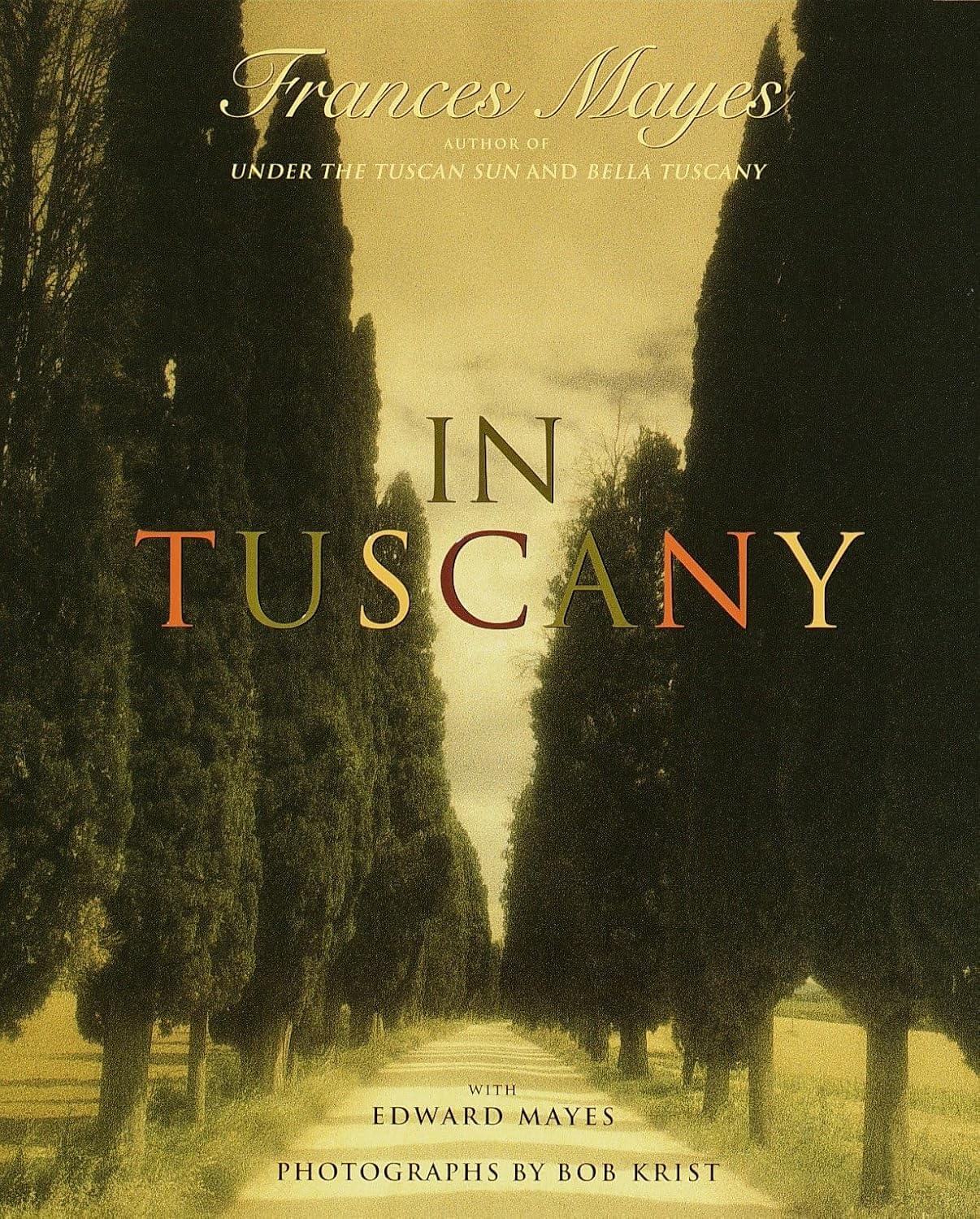
| Authors | Frances Mayes & Edward Mayes |
| Photographer | Bob Krist |
| Publisher | Broadway Books |
| Pages | 272 |
| Photographs | Over 200 full-color |
| Dimensions | 8 x 10 inches |
| Coverage | Cortona, Volterra, Asciano, hill towns, piazzas, festivals, markets, the Tuscan table |
| Best For | Under the Tuscan Sun readers, dreamers, anyone who wants Tuscany's feeling more than its inventory |
Almost everyone who searches for a Tuscany book arrives, one way or another, through Frances Mayes. Under the Tuscan Sun made a generation fall for the region, and In Tuscany is the most photographic of her books — the one that belongs on a coffee table rather than a nightstand. She writes the essays, her husband Edward contributes a chapter, and travel photographer Bob Krist supplies more than 200 full-color images.
What makes it work is the structure. The book is built in five sections, each keyed to a facet of Tuscan life — La Piazza, La Festa and so on — rather than marched through geographically. Mayes writes about her own town of Cortona and out-of-the-way places like Volterra, Asciano and Castelmuzio, and Krist photographs the granular stuff the glossy books miss: hand-painted shop signs, market stalls, a wild bird perched on a neighbor's head, cypress silhouettes at dusk. It feels lived-in because it was. This is Mayes documenting a place she actually moved to, not a place she flew over.
What I keep returning to: The festival photographs. There's a warmth and slight chaos to them — real people mid-laugh, food mid-service — that reminds you Tuscany is somewhere people live, not just a landscape to admire from a hired car.
The honest downside: It's from 2000, and it looks it in the best and worst ways — the photography style is early-2000s travel-magazine rather than contemporary fine art, and it's a more modest physical object than the Assouline or Taschen books. If you want a pristine, oversized art volume, this isn't it. If you want Tuscany's soul, it's the best value here.
The bottom line: The heart of any Tuscany shelf, and the natural pick for anyone who loved the film or the memoir. At around $35 (and less used), it's the easiest book here to recommend.
3. Living in Tuscany – Barbara & René Stoeltie
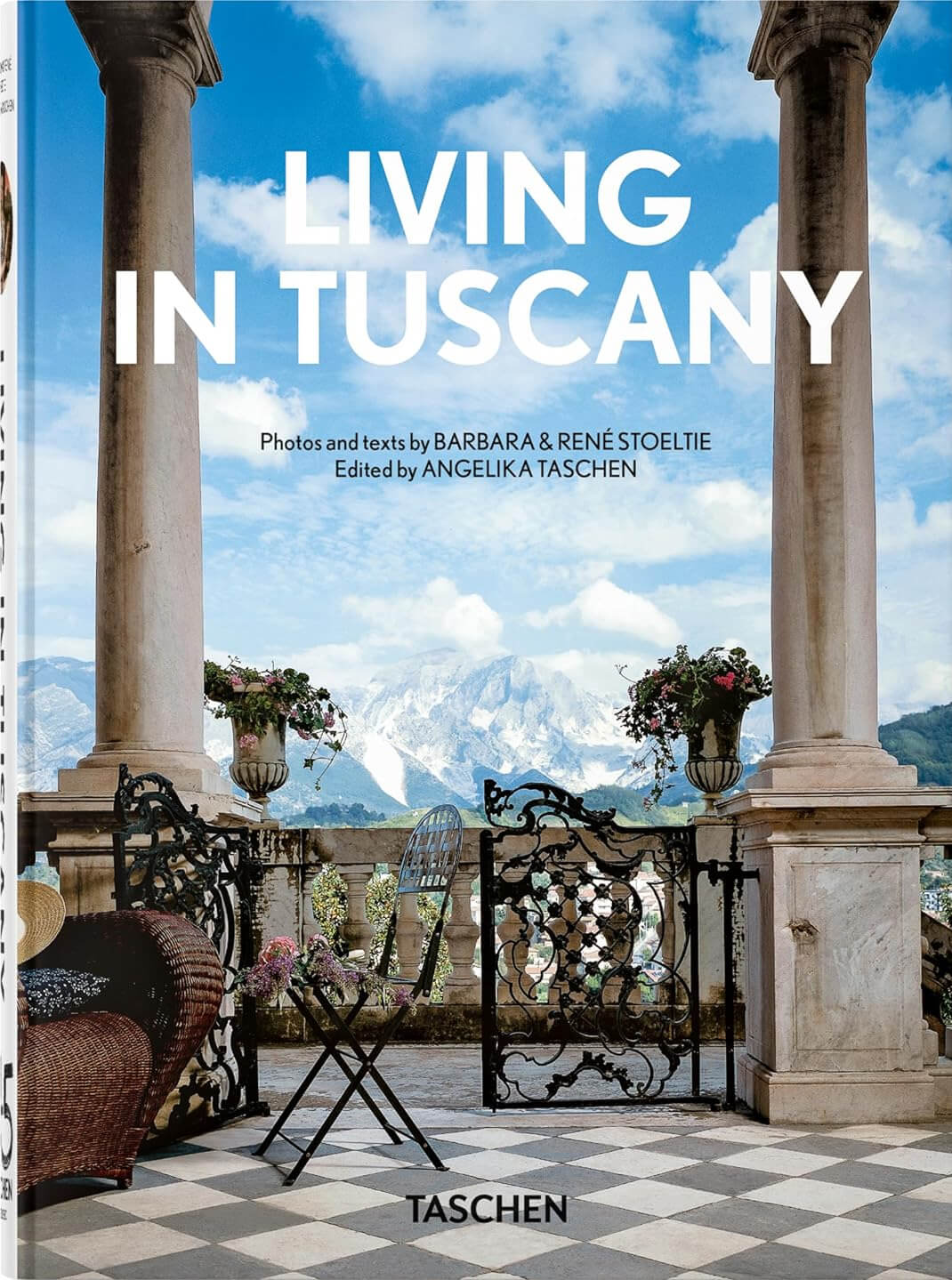
| Authors | Barbara & René Stoeltie |
| Editor | Angelika Taschen |
| Publisher | Taschen |
| Pages | 464 |
| Dimensions | 8.8 x 6.5 x 1.2 inches |
| Weight | 2.31 lbs |
| Coverage | Tuscan homes, villas, farmhouses and interiors — Arezzo, the Florence surrounds, rural estates |
| Best For | Interior design lovers, farmhouse-restoration dreamers, anyone designing a Tuscan-inflected home |
If your Tuscany fantasy is less about the view and more about the rooms, this is your book. Barbara and René Stoeltie have photographed and written about interiors for Vogue, World of Interiors and Elle since 1984, and Living in Tuscany — now in its 45th edition — is their definitive record of the region through its most remarkable private homes.
The Stoelties don't stage. They document houses that have been lived in for generations, finding the beauty in accumulated furniture, faded family portraits, rooms that clearly smell of old wood and lemon. The book runs from a medieval hermitage in Arezzo once visited by Michelangelo to a Hockney-homage pool built by an architect-turned-winemaker, and across 464 pages it makes a quiet argument: that Tuscany figured out something about how to live that the rest of us keep imitating and never quite land. It also appears in my Italy roundup — but it earns its place here more than anywhere, because Tuscany is its whole subject.
What I keep returning to: A 14th-century villa near Florence where, as the Stoelties tell it, Dante's wife took refuge during the poet's exile. The rooms are essentially untouched — tile floors, whitewashed walls, furniture older than the idea of Italy — and they photograph it as the most natural thing in the world.
The honest downside: The compact Taschen format (8.8 x 6.5 inches) is the trade-off. At 464 pages it's wonderfully deep, but the smaller trim means some interiors feel slightly cramped compared to an oversized book. This is one to read closely in an armchair, not to display open across a table.
The bottom line: The most comprehensive documentation of Tuscan interior life in print, and a genuine working reference if you're renovating or decorating. Page-for-dollar, the best value on the list.
4. Bringing Tuscany Home – Frances Mayes & Edward Mayes
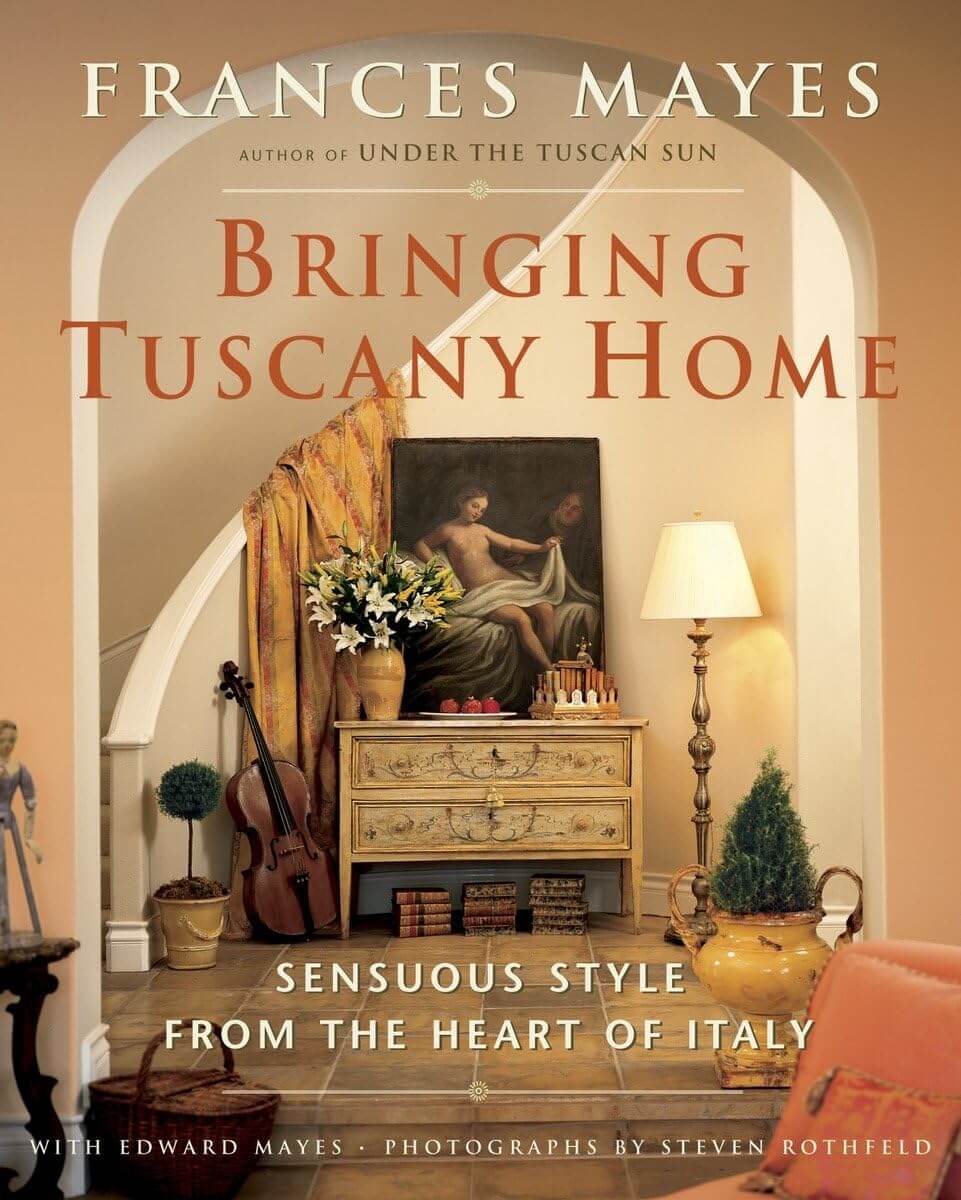
| Authors | Frances Mayes & Edward Mayes |
| Photographer | Steven Rothfeld |
| Publisher | Clarkson Potter / Broadway |
| Pages | 240 |
| Photographs | Over 100, plus 25 recipes |
| Dimensions | 8.3 x 10.3 inches |
| Best For | Anyone who wants to recreate the Tuscan look at home — decor, table, garden, entertaining |
This is the practical companion to In Tuscany, and worth understanding as a pair. Where In Tuscany is a portrait of the place, Bringing Tuscany Home is a how-to: Frances and Edward Mayes showing how they carried the Tuscan lifestyle from Bramasole, their Cortona house, to their home in California — and how you can borrow it wherever you live. Steven Rothfeld's photography (more than 100 images) covers both the Italian originals and their translated-into-California versions.
The scope is deliberately domestic. Setting a table with majolica and vintage linens, hunting the antiques markets (with market days for several Tuscan towns actually listed), the simple grammar of the Tuscan kitchen — olive oil, vin santo, pici, gnocchi — with 25 recipes folded in, plus notes on gardens and entertaining. It's the least "art book" title on this list and the most useful if you're actually trying to do something rather than just look.
What I keep returning to: The antiques-market pages. The mix of Mayes's prose and Rothfeld's photographs of stalls and finds makes you want to book a flight and ship a chair home — and she gives you enough real logistics to half-believe you could.
The honest downside: Two things. It's the most dated in styling (2004, and firmly of its interior-decor moment), and if you already own In Tuscany there's some overlap in spirit and a few settings. Buy this one for the practical, lifestyle angle; buy In Tuscany for the lyrical, photographic one. Owning both is only worth it if you're a committed Mayes reader.
The bottom line: The most actionable book here, and a lovely gift for someone renovating or hosting in a Tuscan register. Skip it if you want photography to admire rather than ideas to steal.
5. Italian Splendor: Castles, Palaces, and Villas – Jack Basehart
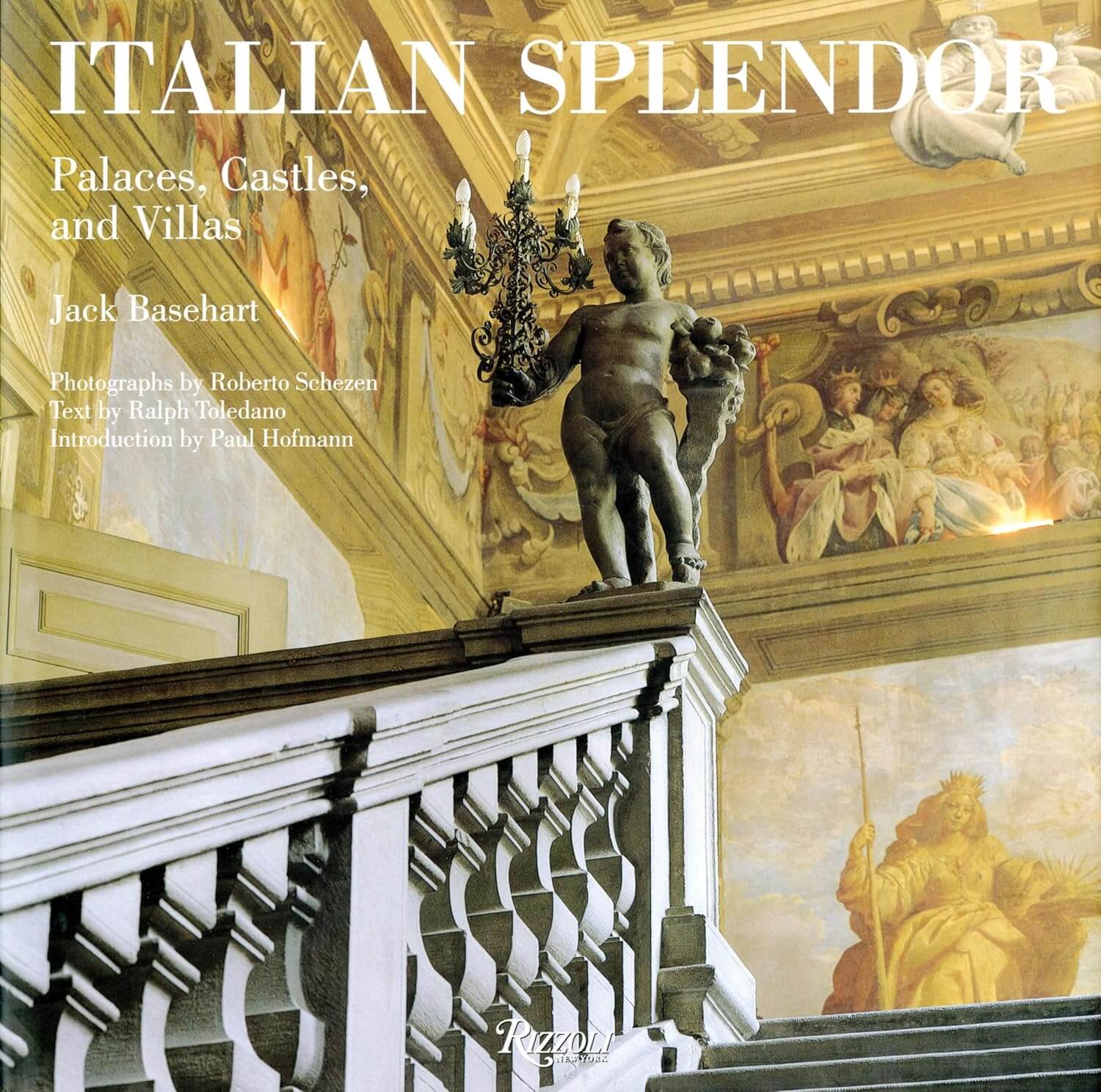
| Author | Jack Basehart |
| Photographer | Roberto Schezen |
| Publisher | Rizzoli Classics |
| Pages | 420 |
| Dimensions | 9.34 x 9.28 x 1.61 inches |
| Coverage | 50 private villas, palaces and castles — Tuscany and Siena prominent, plus Veneto, Rome, Sicily |
| Best For | Architecture lovers, anyone drawn to Tuscany's grand villas and aristocratic heritage |
Strictly, this is an all-Italy book — but its Tuscan and Sienese chapters are strong enough, and rare enough, to earn it a place on a Tuscany shelf. Jack Basehart spent eighteen months arranging access to 50 private residences no guidebook covers, and Roberto Schezen — whose work sits in MoMA's permanent collection — photographed them.
For the Tuscany lover, the draw is the country retreats and the Siena palazzi where the walls still hold the paintings commissioned for them four centuries ago. Schezen doesn't over-light or over-style; he shows these places lived-in and magnificent, and the restraint makes them more convincing. If Tuscany Marvel is the region's public face and Living in Tuscany is its domestic interior, this is the door into the grand houses behind the gates. It also features in my Italy roundup, framed there across the whole country.
What I keep returning to: A Sienese interior, unchanged for centuries, photographed as if the family has just stepped out of the room. There's a stillness to Schezen's work that most interiors photography chases and rarely catches.
The honest downside: The Rizzoli Classics reissue is smaller than the original oversized edition (about 9.3 inches), which slightly flattens the grandeur of some full-page spreads — the earlier edition is worth hunting if you find it. And because it spans all of Italy, only part of the book is Tuscany; buy it knowing that.
The bottom line: The best window into Tuscany's private grand houses in print, wrapped inside a broader Italian survey. Essential if aristocratic architecture is the part of Tuscany that moves you.
6. Tuscany – The Silver Spoon Kitchen
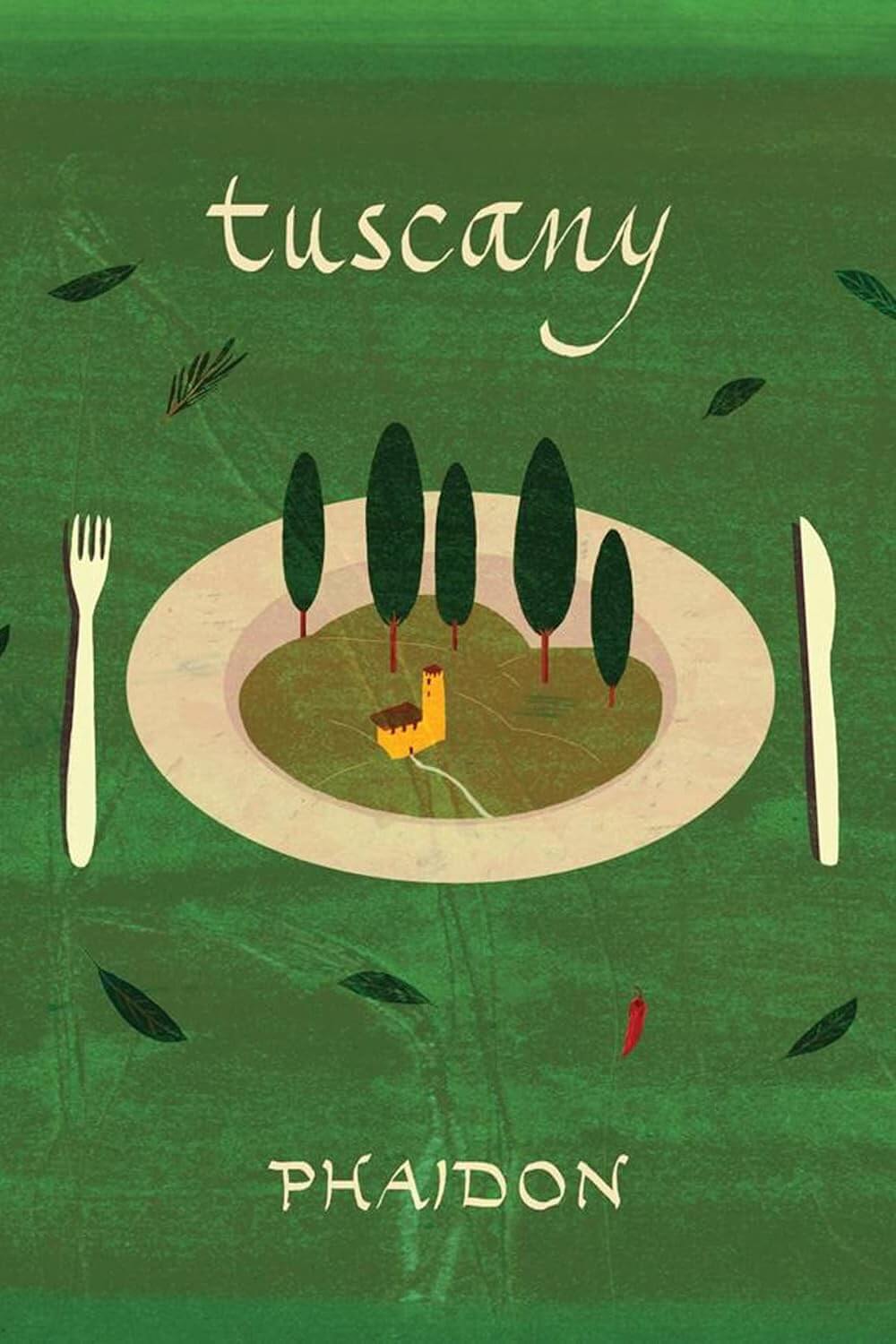
| Author | The Silver Spoon Kitchen |
| Publisher | Phaidon |
| Recipes | 50+ classic Tuscan dishes |
| Coverage | Regional Tuscan cooking, with location photography throughout |
| Best For | The Tuscan-table lover — cooks, food-first travelers, anyone who reads Tuscany through its kitchen |
Every other book here shows you Tuscany. This one lets you taste it. It comes from Phaidon's Silver Spoon stable — the English-language offshoot of Il Cucchiaio d'Argento, Italy's home-cooking bible since 1950 — and the Tuscany volume distills the region into 50-plus authentic recipes, from ribollita and pici to the simple grammar of Tuscan bread, oil and beans.
I'm including it with one honesty caveat: it's a cookbook first and a coffee table book second. But it earns the slot because its location photography is genuinely good — BBC Good Food singled out photographs that give a real feel for the place — and because no photography book on this list captures the Tuscan table the way this does. On a shelf with the Assouline and the Taschen, it adds the sense the others leave out.
What I keep returning to: The bread-and-oil chapters. There's something very Tuscan about how much the cuisine does with how little, and the book photographs that restraint beautifully — a loaf, a bottle of new-pressed oil, a plate of white beans, and suddenly you understand the whole regional philosophy.
The honest downside: It's the least "display" object here — trim size and design are built for the kitchen counter, not the living room. If you want pure photography with no recipes, this isn't your book. If you cook, it's the one you'll actually use.
The bottom line: The essential food-lover's entry to Tuscany, and the most usable book on the list. Pair it with any of the photographic titles above and you've covered both the eyes and the table.
How to Choose the Right Tuscany Coffee Table Book
If you want one statement book to display: Tuscany Marvel (Assouline). The definitive luxury volume — expensive, but it anchors a room.
If you loved Under the Tuscan Sun: In Tuscany by Frances Mayes. Her most photographic book, and the best value for capturing the region's feeling.
If you dream of the interiors: Living in Tuscany (Taschen). 464 pages of private Tuscan homes — the deepest reference here.
If you want to recreate the look at home: Bringing Tuscany Home (Mayes). The practical, do-it-yourself companion — decor, table, garden, recipes.
If grand villa architecture moves you: Italian Splendor (Rizzoli). The private castles and palazzi most people never enter.
If you read Tuscany through its food: Tuscany from The Silver Spoon (Phaidon). A cookbook first, but the only one that brings the Tuscan table to the shelf.
Want the rest of the country too? My Italy coffee table books roundup covers Amalfi, Lake Como, Sicily and more, and my architecture books guide goes deeper on the design side.
This article contains affiliate links. If you purchase through our links, we may earn a small commission at no extra cost to you. All books were independently selected based on photography quality, editorial depth, and reader reviews.
About the Author

Max Crawford
Founder & Editor
I've been collecting coffee table books for over 8 years, starting when I opened my design studio in Austin. What began as client gifts turned into a genuine obsession — I now have 200+ books in my personal collection. Every book featured on Prettybook has been in my hands.