8 Best Portugal Coffee Table Books (2026)
Eight Portugal coffee table books, personally reviewed — from Assouline's linen-bound *Lisboa Luz* to a $30 National Bestseller, a 448-page Phaidon compendium and two out-of-print classics worth hunting. Here's exactly who each one is for.
Portugal has a book problem that Italy and Greece don't. Search for an Italy book and you'll find Taschen's Living in Italy, Great Escapes Italy, half a dozen Assouline volumes and a shelf of photography monographs. Search for Portugal and the results collapse into two piles: a small number of genuinely excellent books, and a startling volume of print-on-demand filler with stock photography and titles like Portugal: Coffee Table Picture Book.
That gap is the reason this list exists. Below are the eight Portugal books actually worth owning — what each one physically is, which two are out of print, and which of them isn't the size you think it is. If you want the Mediterranean rather than the Atlantic, my Italy coffee table books and Tuscany roundups cover that side of the shelf.
Disclosure: This article contains affiliate links. If you purchase through these links, I earn a small commission at no extra cost to you.
My Top 3 Picks at a Glance
- Best Overall: Lisboa Luz (Assouline) — 304 pages of Lisbon photographed by two people who actually live there, in a linen hardcover that genuinely anchors a table
- Best Value: Patterns of Portugal by Christine Chitnis — a $30 National Bestseller built around azulejos and Portuguese color, with more of the country per dollar than anything else here
- Best for the Coast: Comporta Bliss (Assouline) — the book that made Comporta a design reference, and still without competition eight years on
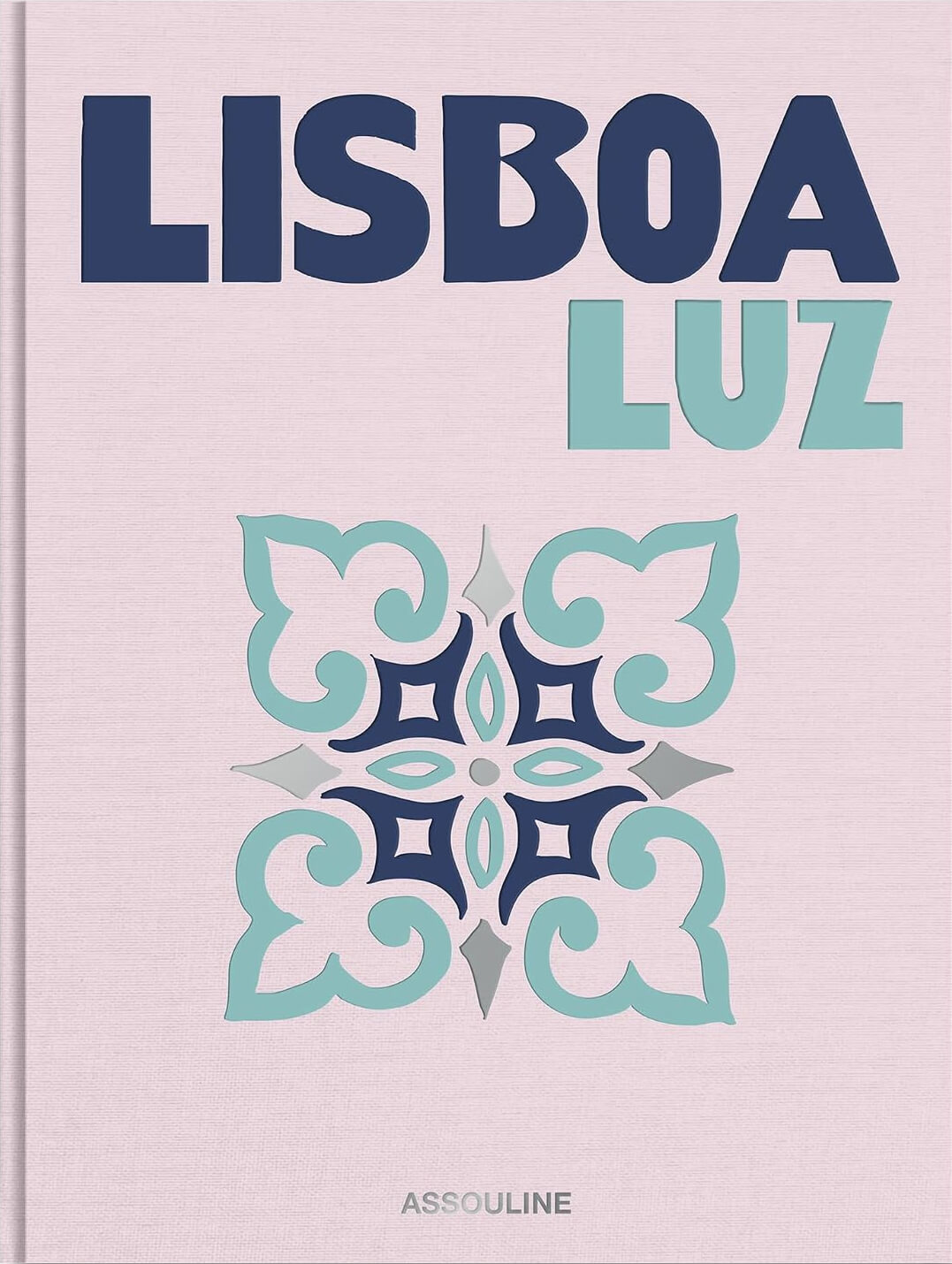
1. Lisboa Luz – Carlos Souza & Charlene Shorto
| Authors | Carlos Souza & Charlene Shorto |
| Publisher | Assouline (Classics Collection) |
| Released | June 2025 |
| Pages | 304 |
| Illustrations | Over 200 |
| Dimensions | 10 x 13 x 1.5 inches |
| Weight | 6.38 lbs |
| Coverage | Lisbon — Belém, Bairro Alto, the Tagus, fado, azulejos, jacarandas |
| Best For | Best overall — the statement Portugal book, luxury gift, anyone whose Portugal is Lisbon |
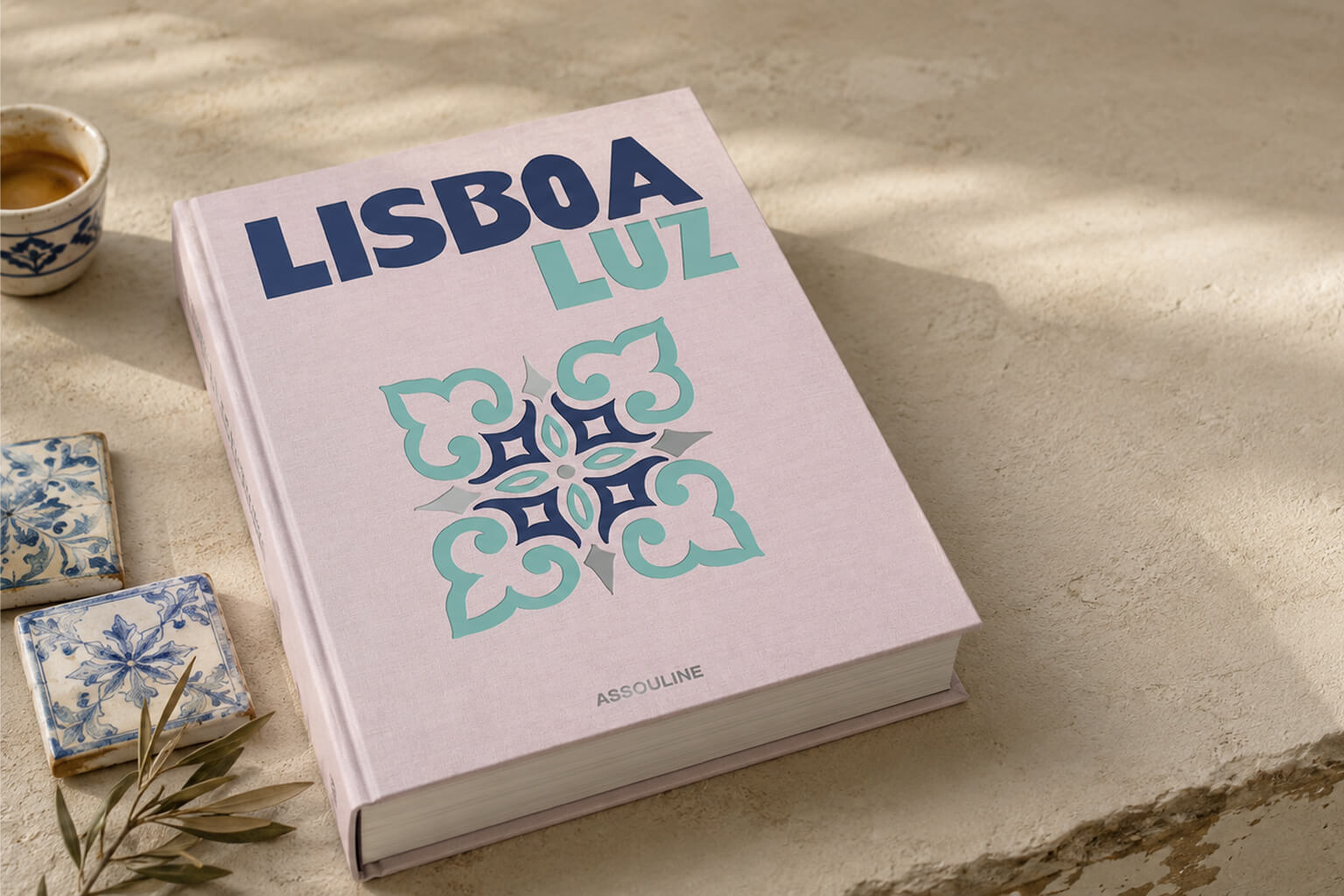
If you buy one Portugal book to leave out where people will see it, this is the one. Assouline published Lisboa Luz in June 2025 as part of the same Travel Series as their Amalfi Coast and Capri volumes, and at 304 pages, over 200 images and six and a half pounds, it's unambiguously a table book rather than a shelf book — which, as the size table further down shows, is rarer in this category than you'd expect.
What makes it work is authorship rather than production. Carlos Souza spent more than four decades at Valentino and began photographing at Andy Warhol's suggestion for Interview; Charlene Shorto has known Lisbon since childhood and lives there now. The result reads as a portrait by residents rather than a commissioned survey — the grandeur of Belém against the bohemian sprawl of Bairro Alto, fado as the city's native sound, and the particular Atlantic light off the Tagus that gives the book its title.
What I keep returning to: The tilework spreads. Azulejos are almost impossible to photograph well — the glaze either blows out under light or goes flat and postcard-like — and Assouline's printing holds the depth of the blue without lacquering it. You can read the hand in the painting.
The honest downside: At $105 this is the most expensive in-print book here, and it's a Lisbon book wearing a Portugal jacket. If you want the Douro, the Alentejo or the Algarve, this isn't it — and Assouline's Travel Series has never pretended to sell you text. The writing is atmospheric, not deep.
The bottom line: The best-made Portugal volume available, and the one I'd give as a milestone gift without hesitation. Nothing else in print commands a table the way it does.
2. Patterns of Portugal – Christine Chitnis
| Author | Christine Chitnis |
| Publisher | Clarkson Potter |
| Released | February 2024 |
| Pages | 288 |
| Photographs | Over 200 |
| Dimensions | 7.3 x 9.9 x 1.15 inches |
| Weight | 34 oz |
| Coverage | Azulejos, lavradeira costume, cuisine, architecture — countryside, coast, cities |
| Best For | Best value — gifting, first Portugal book, anyone drawn to tile and color |
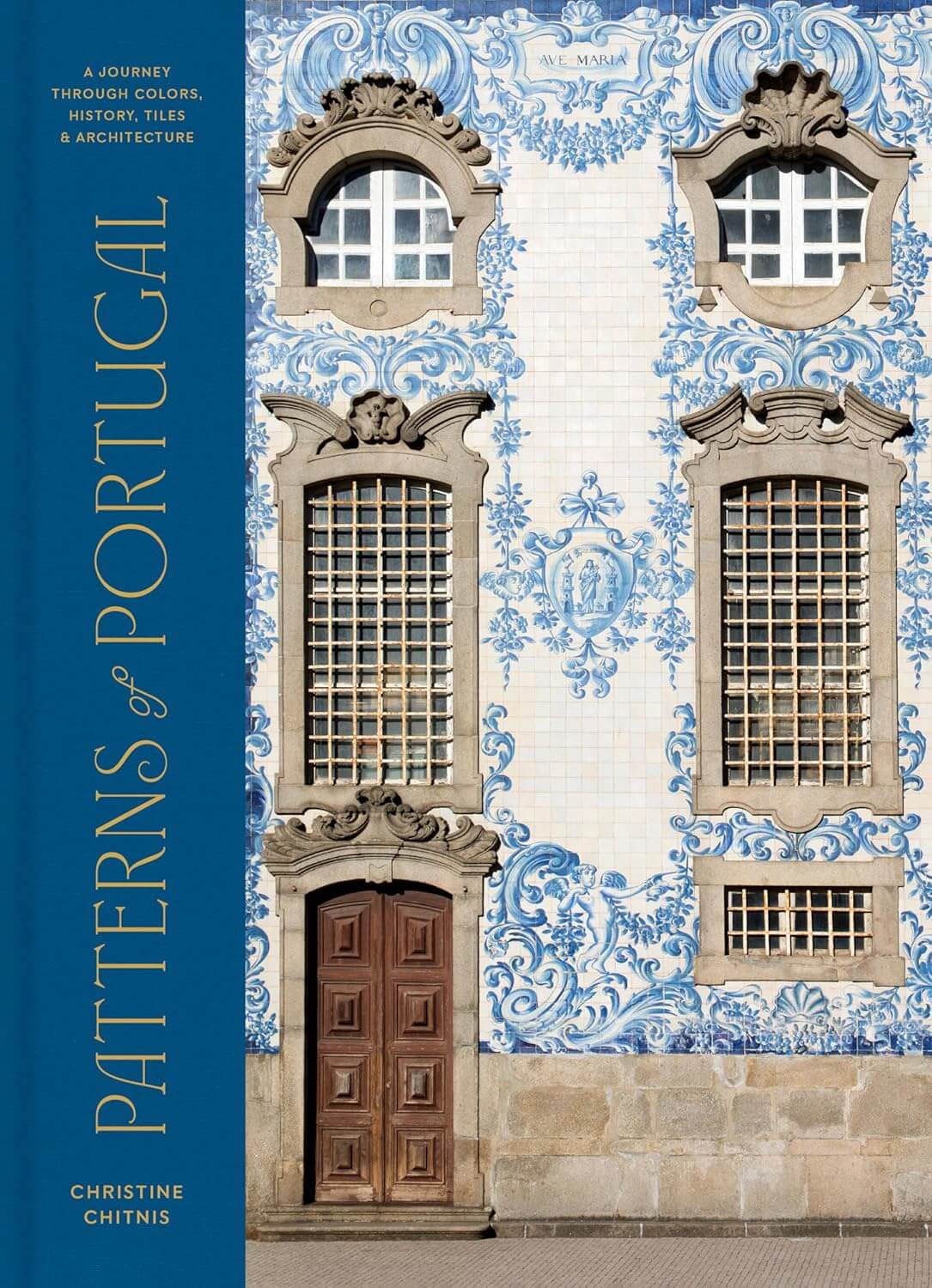
Almost everyone who buys a Portugal book at a normal price point ends up with this one, and deservedly. Christine Chitnis published Patterns of Portugal through Clarkson Potter in February 2024 at $30, and it became a National Bestseller with a feature in Condé Nast Traveler — unusual reach for a photography book about a mid-sized European country.
The organizing idea is color and pattern rather than geography. Chitnis moves through azulejo tilework, the embroidery of traditional lavradeira costume, food and architecture, with short essays anchoring each section. She did the same for Rajasthan in Patterns of India, and the method transfers: it gives the book a spine that a straight "beautiful places" survey lacks, and it means the book has an argument rather than just an inventory.
What I keep returning to: The costume pages. Everyone photographs Portuguese tiles; almost nobody photographs the embroidery, and putting the two side by side makes a case about Portuguese decorative instinct that neither would make alone.
The honest downside, and it's a real one: this is not a large-format book. Penguin Random House lists it at 7.3 x 9.9 inches and 34 ounces — roughly the footprint of a hardback novel, about half the surface area of the Assouline volumes. It's a beautiful object and a genuinely giftable one, but if you're buying it to anchor a coffee table you will be surprised when it arrives.
The bottom line: The single best entry point to Portugal in book form, and the one I recommend most often. Just calibrate on size before you order.
3. Comporta Bliss – Carlos Souza & Charlene Shorto de Ganay
| Authors | Carlos Souza & Charlene Shorto de Ganay |
| Publisher | Assouline (Classics Collection) |
| Released | May 2018 |
| Pages | 280 |
| Illustrations | 250 |
| Dimensions | 9.8 x 13 x 1.57 inches |
| Weight | 6.0 lbs |
| Coverage | Comporta and Carvalhal — beaches, rice paddies, cabanas, thatched houses, interiors |
| Best For | The Slim Aarons reader, coastal-bohemian interiors, anyone who knows what Comporta means |
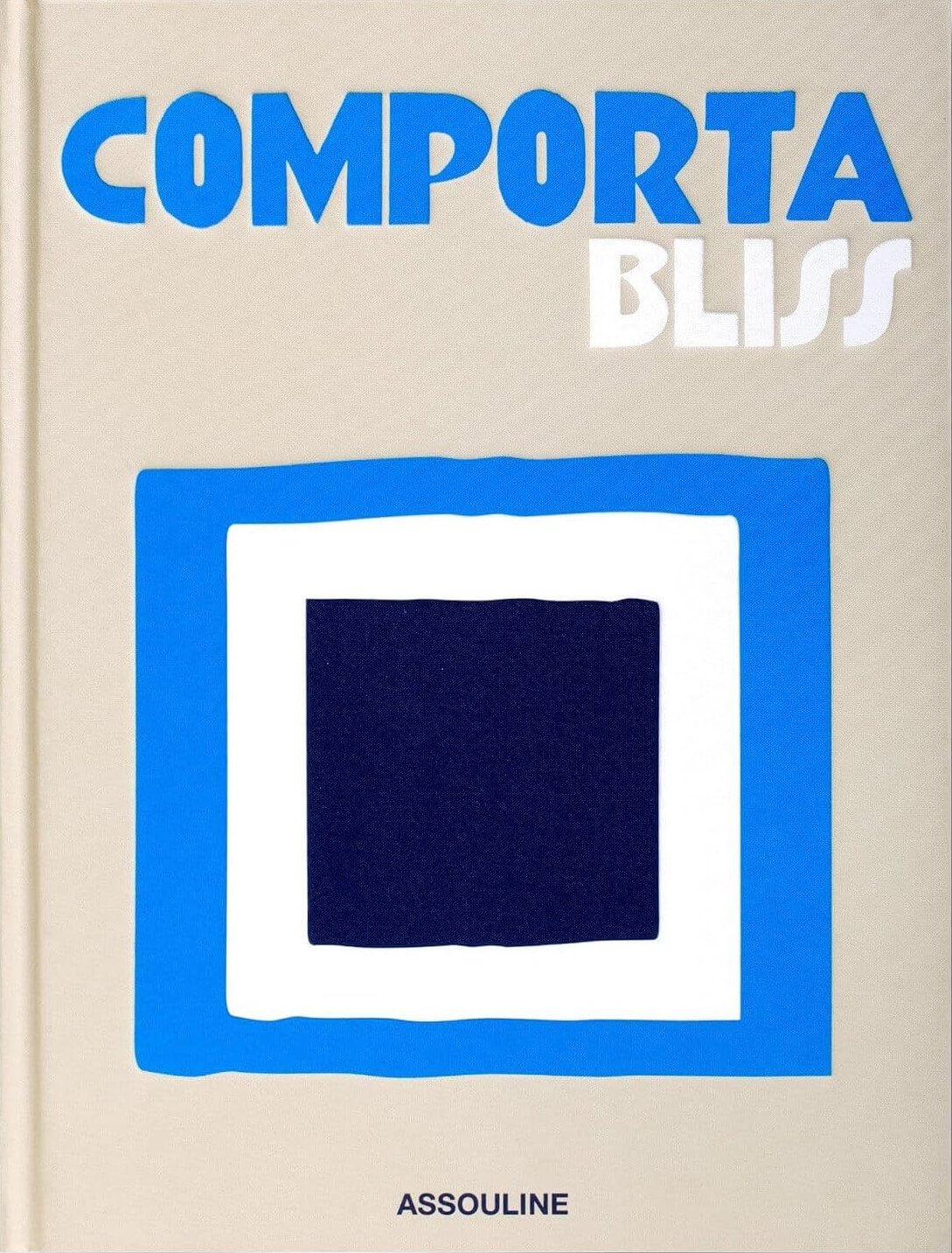
If your Portugal is barefoot rather than urban, this is your book. Assouline published Comporta Bliss in May 2018, and it's the volume that turned a fishing village an hour south of Lisbon into a permanent design reference — 280 pages, 250 images, linen hardcover, same authors who later made Lisboa Luz.
The subject is narrow and the book is better for it. Comporta is rice paddies, storks, Atlantic dunes, thatched cabanas and a specific cobalt blue that runs through the shutters, walls and furniture; Souza and Shorto photograph the architecture built around that blue, where the line between indoors and outdoors is deliberately left unresolved. It landed with a run of coverage in Vogue, Architectural Digest and Town & Country through 2018, which is a fair measure of how completely it defined the look.
What I keep returning to: The interiors where a thatched roof meets a genuinely serious piece of furniture. That collision — rustic shell, considered contents — is the whole Comporta idea in one frame, and it's why designers kept citing this book for years afterwards.
The honest downside: It's eight years old and Comporta has changed considerably since — this is a portrait of the moment just before the wider world arrived. And a village of a few thousand people is a narrow subject for a $105 book if you don't already care about it.
The bottom line: If you loved Poolside with Slim Aarons or Assouline's Lake Como volumes, this is the Portuguese entry in exactly that register. If Comporta means nothing to you, start elsewhere.
4. Charming Portugal – Heide Christiansen
| Author | Heide Christiansen |
| Publisher | teNeues (Charming series) |
| Released | April 2026 |
| Pages | 208 |
| Photographs | Approx. 300, colour and black-and-white |
| Dimensions | 19.5 x 24 cm (7.7 x 9.4 inches) |
| Coverage | Coastal towns, historic cities, coves, markets, festivals, artisan shops |
| Best For | Anyone with a Portugal trip actually booked — illustrated maps and real notes |
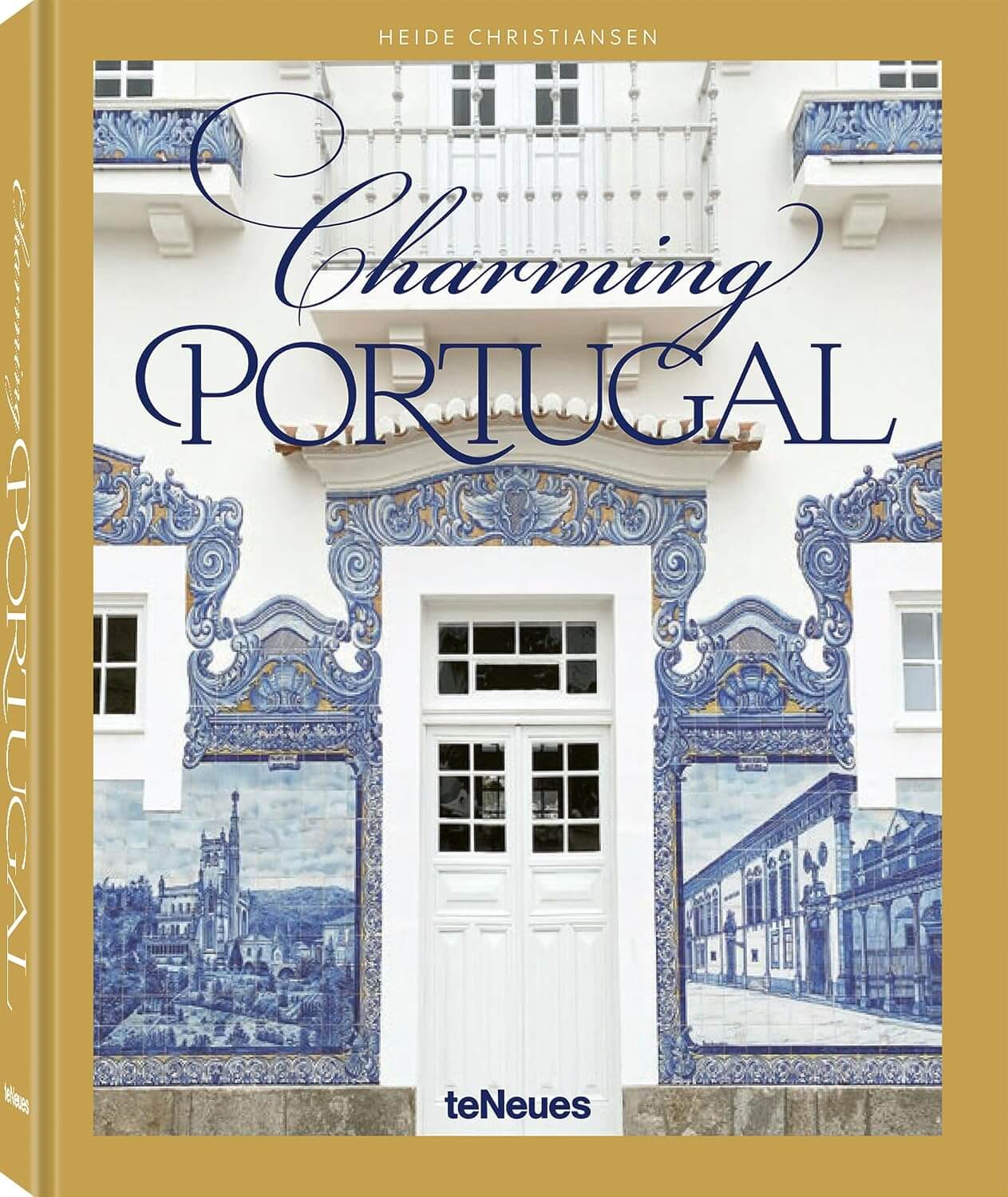
This is the newest Portugal book on the market and the most practical. teNeues published it in April 2026 as the third in Heide Christiansen's Charming series, following Charming England and Charming France — 208 pages, roughly 300 photographs, hardcover.
The distinguishing feature is that it's built to be used. Alongside the photography there are illustrated maps and practical notes: artisan shops, markets, festivals, coves, all organised around going a step off the standard route. Christiansen is a Munich-based photo editor who has produced work for Condé Nast, GQ and Glamour, and the curation reflects that background — a tight edit with no filler, and a preference for the small and specific over the monumental.
What I keep returning to: The market and festival photographs. They do the thing the Assouline books deliberately don't — show Portugal with people in it, mid-transaction, mid-meal, slightly untidy.
The honest downside: At 19.5 x 24 cm it's the smallest book on this list, smaller even than Patterns of Portugal. And its travel-guide DNA cuts both ways: the map spreads and shop recommendations that make it useful now are also the pages that will date fastest.
The bottom line: The best book here for someone actively planning a trip. Less so for someone who wants a permanent object on the table.
5. Portugal: The Cookbook – Leandro Carreira
| Author | Leandro Carreira |
| Publisher | Phaidon |
| Pages | 448 |
| Recipes | Over 550 |
| Dimensions | 270 x 180 mm (10.6 x 7.1 inches) |
| Coverage | Every region — Algarve shellfish, Douro Valley stews, Lisbon pastry, breads, rice |
| Best For | The cook, the food-first traveller, anyone who reads a country through its kitchen |
Every other book here shows you Portugal. This one lets you taste it. Phaidon's volume by chef Leandro Carreira runs 448 pages with more than 550 recipes — a three-year project covering every region, from the shellfish of the Algarve through the stews of the Douro Valley to the pastry tradition of Lisbon, with contributions from Nuno Mendes, José Avillez and others filling the regional gaps.
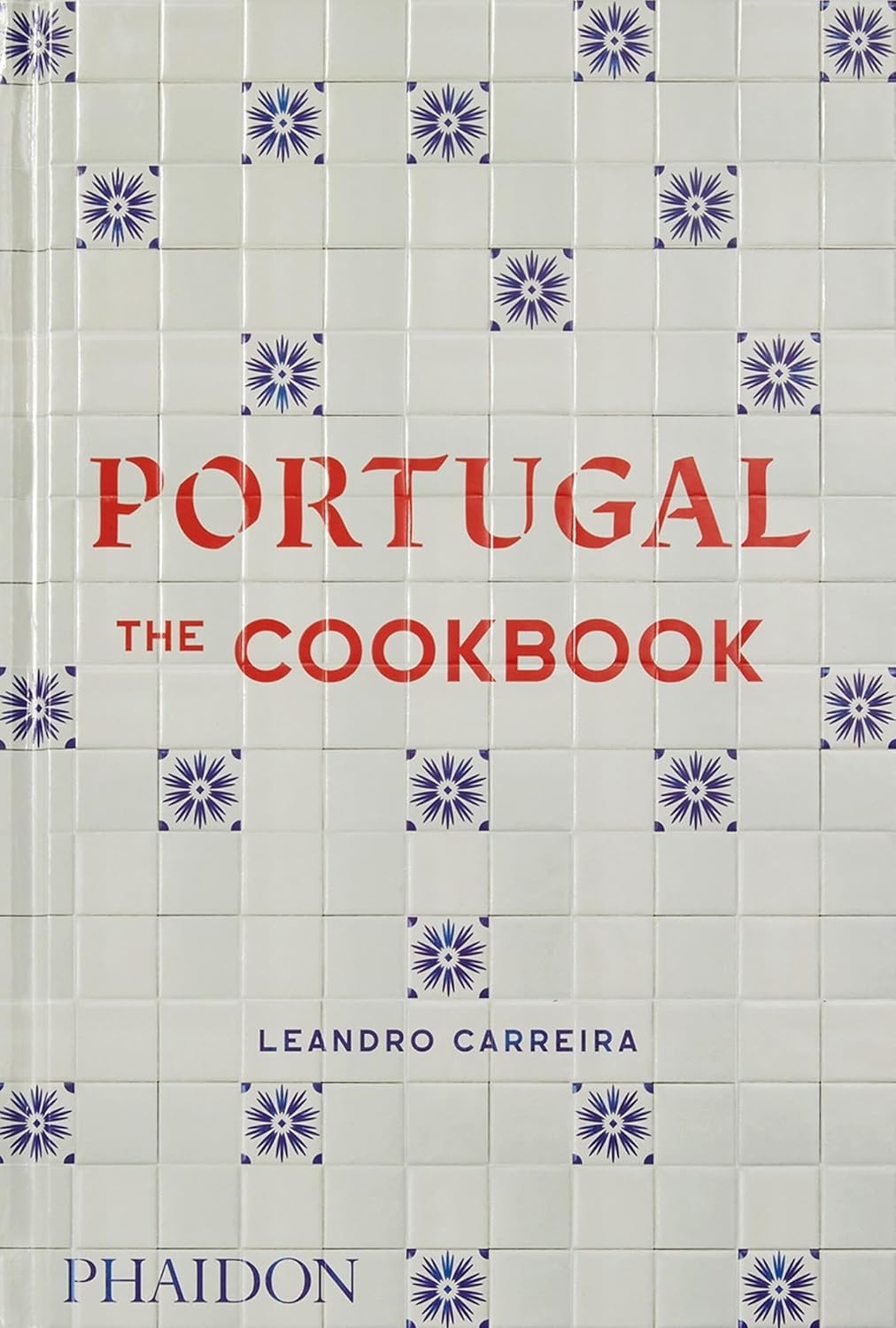
I'm including it with the same honesty caveat I applied to the Silver Spoon volume in my Tuscany roundup: it's a cookbook first and a coffee table book second. It earns the slot because Phaidon's national compendiums — The Silver Spoon, Japan: The Cookbook — are built as reference objects with real production values, and because Departures called it unmatched for understanding how Portuguese cooking actually works. It's also the most recognisable Portugal book jacket in print, thanks to that azulejo-patterned cover.
What I keep returning to: The bread and rice chapters. Portuguese cooking does an enormous amount with very little, and the book photographs that restraint rather than dressing it up — which is more than most national cookbooks manage.
The honest downside: At 270 x 180 mm it's a tall, narrow working format that reads as a kitchen book on a coffee table. And reviewers have fairly noted that the sheer regional granularity produces stretches of recipes that differ only slightly from one another.
The bottom line: The book to buy if the person you're buying for cooks. Not the book to buy if you want photographs of the country.
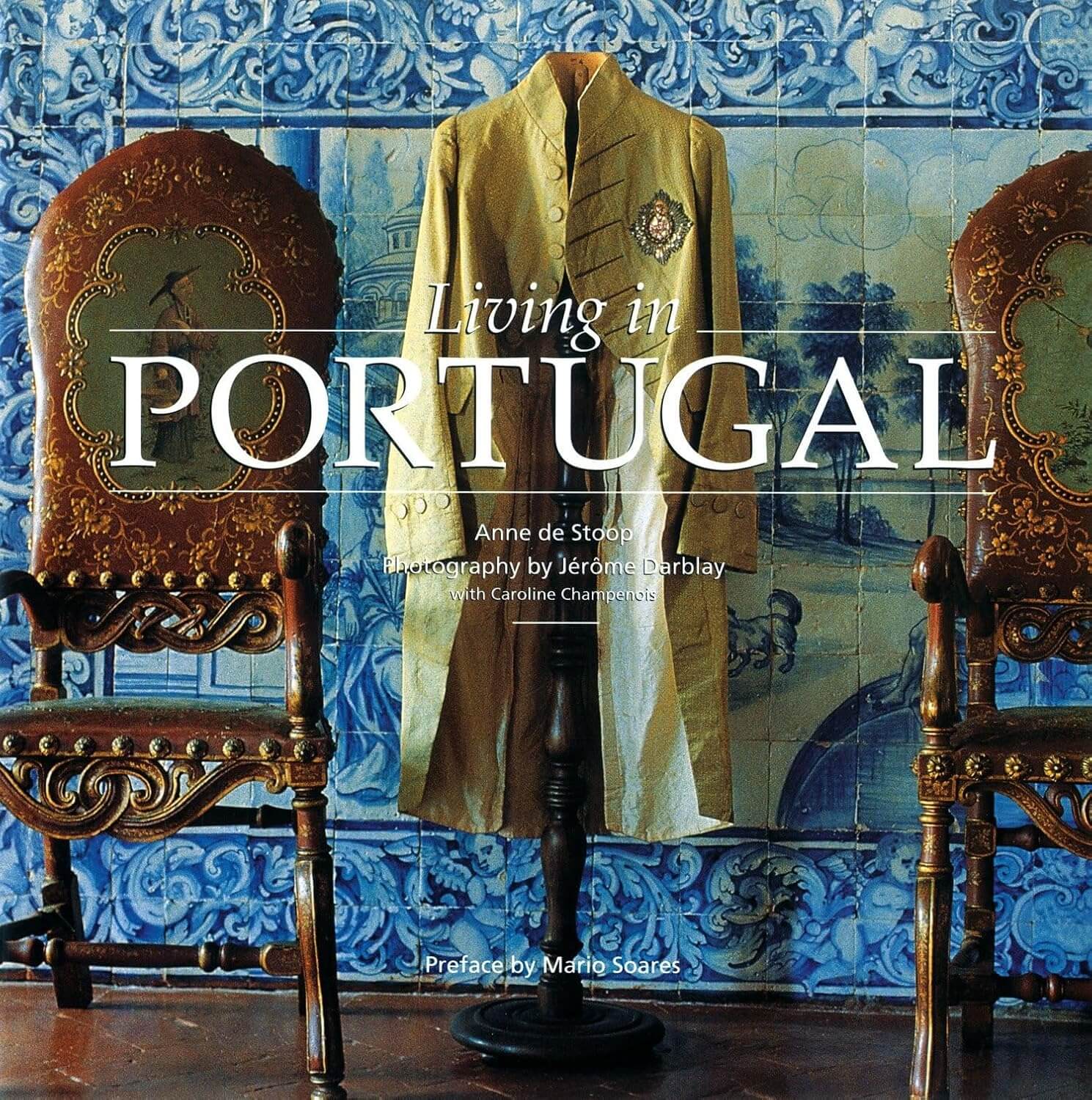
6. Living in Portugal – Anne de Stoop
| Author | Anne de Stoop |
| Photographer | Jérôme Darblay |
| Publisher | Flammarion |
| Pages | 256 |
| ISBN | 9782080304858 |
| Availability | Out of print — used market only |
| Coverage | Minho, Douro, Porto, Lisbon interiors, Alentejo, Algarve — houses, gardens, palaces |
| Best For | Interiors lovers, restoration dreamers, anyone designing in a Portuguese register |
This is the interiors book Portugal deserves, and it is out of print. Anne de Stoop wrote it for Flammarion with photography by Jérôme Darblay, moving north to south — the Minho and Douro, the markets of Porto, the country estates and baroque interiors of Lisbon, the whitewashed Alentejo, the Algarve.
The credentials behind it are the reason it still matters. De Stoop worked at the Museu Nacional de Arte Antiga in Lisbon and has published repeatedly on Portugal's historic houses; Darblay shot Living in Venice and Living in Istanbul in the same Flammarion series and his work appears regularly in Elle Decoration. If you know Taschen's Living in Tuscany from my Tuscany list, this is the structural equivalent — and it came first.
What I keep returning to: The Alentejo chapters. Whitewash and shadow is a hard thing to photograph without flattening it, and Darblay finds the texture in walls that most photographers render as blank planes.
The honest downside: Rizzoli lists the title as out of print, and used pricing is erratic — I've seen the same edition offered from under $25 to well over $70 depending on seller and condition. Search by ISBN rather than title, because there's an earlier 1998 edition (9782080135674) with different contents that gets listed interchangeably.
The bottom line: Worth hunting if Portuguese interiors are the point. Not a book you can simply add to a cart.
7. Portuguese Decorative Tiles: Azulejos – Rioletta Sabo & Jorge Nuno Falcato
| Authors | Rioletta Sabo & Jorge Nuno Falcato |
| Photographer | Nicolas Lemonnier |
| Publisher | Abbeville Press |
| Released | 1998 |
| Pages | 215 |
| Illustrations | Over 200, commissioned for the book |
| Dimensions | 23.5 x 30.5 cm (9.3 x 12 inches) |
| ISBN | 9780789204813 |
| Availability | Out of print — used market only |
| Best For | The azulejo deep dive — design history, architecture, anyone serious about the tiles |
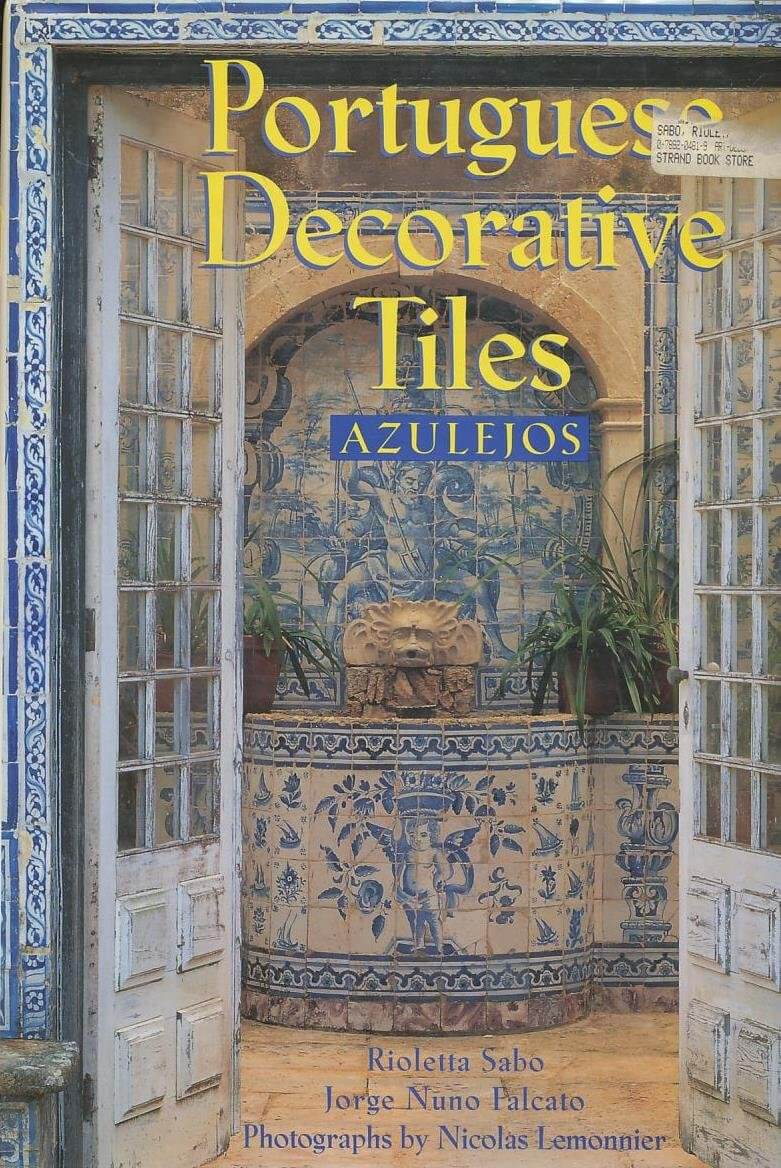
This is the definitive book on azulejaria, and it has been out of print for years. Rioletta Sabo and Jorge Nuno Falcato produced it for Abbeville Press in 1998 with more than 200 photographs commissioned specifically for the book by Nicolas Lemonnier — and at 9.3 x 12 inches it's a properly large volume, larger than either affordable book on this list.
It does the thing no in-print book does: traces the form from its Moorish and Islamic origins through Mannerism, the Baroque and the eighteenth-century golden age, then photographs the results in situ. The Mudéjar geometry at the Palace of Sintra, the panels at the Palácio dos Marqueses de Fronteira, the Museu Nacional do Azulejo holdings. Craftsmanship detail appears in close-up alongside the architectural context, which is precisely what tile books usually skip.
What I keep returning to: The Sintra interiors. Seeing an entire room tiled floor to ceiling, photographed as architecture rather than as pattern samples, changes how you read every azulejo photograph afterwards.
The honest downside: You're buying a 1998 book on the used market, and the dust jackets have generally not aged well. Reproduction is good for its era but not to a current Assouline standard, and the paper stock shows its age.
The bottom line: If azulejos are the reason you're here, this is the book. It also explains why Patterns of Portugal sells the way it does — with this and the Zwemmer museum catalogue both out of print, there is essentially no in-print alternative.
8. Quinta da Comporta – Margarida Rebelo Pinto
| Author | Margarida Rebelo Pinto |
| Publisher | Assouline (Hospitality Collection) |
| Released | June 2026 |
| Pages | 180 |
| Illustrations | Over 100 |
| Dimensions | 23 x 30 cm (9 x 11.8 inches) |
| Weight | 2.3 kg |
| Coverage | One hotel — origins, the Comporta region, rooms, artistic collaborations |
| Best For | Guests of the hotel, architecture obsessives, the completist collector |
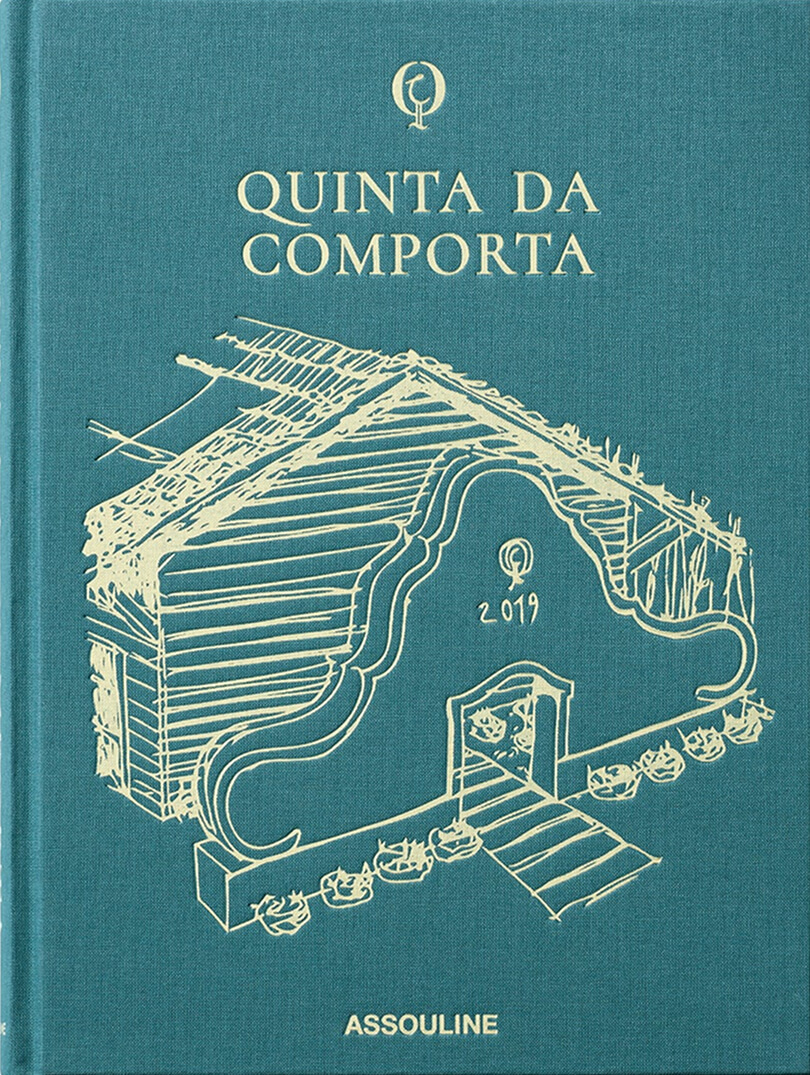
This is the most recent Portugal title from a major publisher, released by Assouline in June 2026 as part of its Hospitality Collection. It's a single-property book about the hotel Miguel Câncio Martins built in the Comporta rice fields, opened in 2019 — chapters on the origins, the region, the rooms and the artistic collaborations, written by the Portuguese novelist Margarida Rebelo Pinto, who knew the founders long before the hotel existed.
The architecture justifies the treatment. Local building traditions, natural materials and artisanal craft run through the property alongside contemporary design, and Rebelo Pinto — who has spent enormous amounts of time in the region — writes it as a story about a landscape rather than a hotel brochure.
What I keep returning to: The material details. Thatch, lime, raw timber and water photographed close enough that you can read the texture, which is the actual argument the hotel is making.
The honest downside: At 180 pages and just over 100 images it's the thinnest book here at the highest price, and single-property hotel monographs are a genuinely narrow genre. Unless you've stayed there, Comporta Bliss covers the same region with far more range.
The bottom line: For a very specific reader. Beautiful, but the third-best Comporta-adjacent purchase on this list.
The Assouline Portugal Problem
Assouline publishes four Portugal-related titles and not one of them is about Portugal. This trips people up constantly: you search for a Portugal coffee table book, land on Assouline's collection page, see four handsome linen volumes at $105–$120 and assume any of them will do. Two are about Comporta — a village of a few thousand people. One is about Lisbon. One is about a single hotel.
| Assouline title | Actual subject | Released | Pages | Price |
|---|---|---|---|---|
| Lisboa Luz | Lisbon | June 2025 | 304 | $105 |
| Comporta Bliss | The Comporta region | May 2018 | 280 | $105 |
| Quinta da Comporta | One hotel in Comporta | June 2026 | 180 | $120 |
| Amalfi Coast | Italy, not Portugal | — | — | $105 |
That last row matters more than it looks. The Souza and Shorto Amalfi Coast volume surfaces constantly in Portugal searches because it shares authors with the two Portuguese books — it is an Italy book, and it belongs on my Italy list instead.
There's a second gap worth knowing about. Taschen, which publishes both Living in Italy and Great Escapes Italy — and Greek equivalents — has no dedicated Portugal volume at all. Portugal appears as chapters inside Great Escapes Europe, including a 150-year-old estate renovated by Pritzker laureate Eduardo Souto de Moura, but there is no Living in Portugal or Great Escapes Portugal from Taschen. If you arrived here from my Tuscany roundup looking for the Portuguese counterpart, that's why you couldn't find it.
Size, Price and What You're Actually Getting
Portugal is the category where "coffee table book" is doing the most marketing work, so here is what these books physically are. All dimensions are publisher-listed.
| Book | Pages | Images | Size | List price |
|---|---|---|---|---|
| Lisboa Luz | 304 | 200+ | 10 x 13 in | $105 |
| Comporta Bliss | 280 | 250 | 9.8 x 13 in | $105 |
| Azulejos (Abbeville) | 215 | 200+ | 9.3 x 12 in | Out of print |
| Quinta da Comporta | 180 | 100+ | 9 x 11.8 in | €120 |
| Portugal: The Cookbook | 448 | — | 10.6 x 7.1 in | $54.95 |
| Living in Portugal | 256 | — | — | $50, out of print |
| Patterns of Portugal | 288 | 200+ | 7.3 x 9.9 in | $30 |
| Charming Portugal | 208 | ~300 | 7.7 x 9.4 in | ~$40 |
The pattern that falls out of this is worth stating plainly: the only genuinely large-format Portugal books in print are the two $105 Assouline volumes. Both books people most often recommend as affordable alternatives — Patterns of Portugal and Charming Portugal — are shelf-sized. That isn't a criticism of either. It's the trade-off nobody mentions, and it's the single most common reason people are disappointed by a Portugal book purchase.
One more thing worth saying out loud: Portugal attracts more self-published photo-book filler than almost any destination I follow, and those listings are designed to be hard to tell apart from real books. Three checks catch nearly all of them. Look for a named publisher — every book here comes from Assouline, Clarkson Potter, Phaidon, teNeues, Flammarion or Abbeville. Look for a photographer with an actual body of work; titles like Portugal: Coffee Table Picture Book credit authors with no other photographic output. And check the review count rather than the star rating, because several of these listings carry high averages built on two or three reviews.
How to Choose the Right Portugal Coffee Table Book
If you want one statement book to display: Lisboa Luz (Assouline). The best-made Portugal volume in print — expensive, but it anchors a room.
If price is the constraint: Patterns of Portugal by Christine Chitnis. The best content-per-dollar here by a distance, as long as you know it's shelf-sized.
If your Portugal is the coast: Comporta Bliss (Assouline). The book that defined the barefoot-luxury Portuguese aesthetic and still owns it.
If you have a trip booked: Charming Portugal (teNeues). Illustrated maps and genuine recommendations alongside the photography.
If they cook: Portugal: The Cookbook (Phaidon). 550 recipes and the most-used book on this list.
If interiors are the point: Living in Portugal (Flammarion). Out of print, worth hunting, and unmatched for Portuguese domestic architecture.
If azulejos are the reason you're here: Portuguese Decorative Tiles (Abbeville). Also out of print, also worth it.
One honest gap to close on: there is still no large-format photography book dedicated to the Azores from a major publisher, and no Portuguese equivalent of Living in Tuscany currently in print. If either is what you came for, the answer for now is the used market. Want more of Europe? My Italy, Tuscany and Paris roundups pick up where this one stops.
This article contains affiliate links. If you purchase through our links, we may earn a small commission at no extra cost to you. All books were independently selected based on photography quality, editorial depth, and reader reviews. Prices, page counts and dimensions were verified against publisher listings in August 2026.