10 Best Soccer Coffee Table Books (2026)
After a decade collecting books on the beautiful game — stadiums, photography, club histories, the lot — these are the ten soccer coffee table books I'd actually recommend. From Rizzoli's photographic anchor of the genre to Assouline's hand-bound PSG monograph, plus a few specialist picks most lists miss.
I've been collecting coffee table books for over eight years, starting when I opened my design studio in Austin. Football arrived through a different door — a Champions League final at a friend's flat in London, watched on a couch surrounded by stadium photography books I kept getting distracted by. By the time the trophy was lifted I had ordered three books and started a corner of the collection that's now grown to its own shelf.
What I learned quickly is that "soccer coffee table books" covers more territory than it sounds. There are stadium atlases that read like architectural surveys. There are pure photography books that treat football as a visual art form. There are illustrated guides where someone has actually painted the world's most iconic grounds rather than photographed them. There are club-specific histories from premium publishers like Assouline and teNeues, design books about crests and badges, and brand archives covering boots and kit design.
All of them are represented here, because someone searching for a soccer book is not necessarily looking for the same thing as the person next to them. For each one I'll tell you what it does well, where it falls short, and who it's genuinely for.
Disclosure: This article contains affiliate links. If you purchase through these links, I earn a small commission at no extra cost to you. Every book reviewed here has been personally handled — I only feature titles I'd display in my own home.
My Top 3 Picks at a Glance
- Best Overall: This is Football: The Beautiful Game by Rizzoli — the photographic anchor of the modern football coffee table book, the one to own if you own one
- Best for Collectors: Paris Saint-Germain by Assouline — handcrafted, limited to 1,000 copies, the most beautiful object on this list
- Best for Stadium Lovers: The World Atlas of Football Stadiums — 1000 grounds, the most ambitious book of its kind currently in print
1. This is Football: The Beautiful Game

| Author | Daniel Melamud |
| Publisher | Rizzoli |
| Pages | 280 |
| Dimensions | 11.0 x 1.3 x 14.6 inches |
| Released | October 22, 2024 (updated edition) |
| Price | ~$65 |
| Best For | Anyone who wants one definitive football photography book on their coffee table |
This is the book most football photography lists default to once they've worked through the older Phaidon and Taschen volumes, and there's a reason. Rizzoli printed it at a scale that lets the photography breathe — nearly fifteen inches tall, on paper heavy enough that you feel it before you see it — and Daniel Melamud's curation captures the full range of what football looks like as a visual subject. Empty terraces in Argentina. Mud-streaked kits in the English lower leagues. Tifo displays in Belgrade and Buenos Aires. The Champions League under floodlights from above the stadium roof.
The book is organized by player position rather than chronologically, which sounds gimmicky and turns out to be the right editorial choice. The goalkeeper section reads completely differently from the striker section. The midfielders get the philosophical photographs. The defenders get the violence. By the time you've worked through it cover to cover you've absorbed something about how the sport actually works, not just what it looks like.
What I keep returning to: the section on supporters' culture in the middle third. There's a sequence of fan portraits and crowd photographs from across continents that gets at something most football books miss — the specific quality of attention people direct at this sport. From Pelé to David Beckham, Mia Hamm to Marta, the player coverage is genuinely global rather than Eurocentric.
The honest downside: at $65 and nearly 15 inches tall, this is a serious commitment of shelf space and money. The book is also relatively text-light — if you want context, history, or analysis alongside the images, you'll need to look elsewhere. It's a photography book first.
The bottom line: The best contemporary football coffee table book currently in print. If you're going to own one, this is the one.
2. Paris Saint-Germain — Assouline Ultimate Collection
| Photographer | Julien Scussel |
| Publisher | Assouline (Ultimate Collection) |
| Pages | 240, over 150 photographs |
| Dimensions | 15.5 x 18.6 x 2.8 inches, ~20 lbs |
| Released | January 2023 |
| Price | $1,200 (limited to 1,000 numbered copies) |
| Best For | Serious collectors, PSG fans with the budget, gift for someone who already has everything |
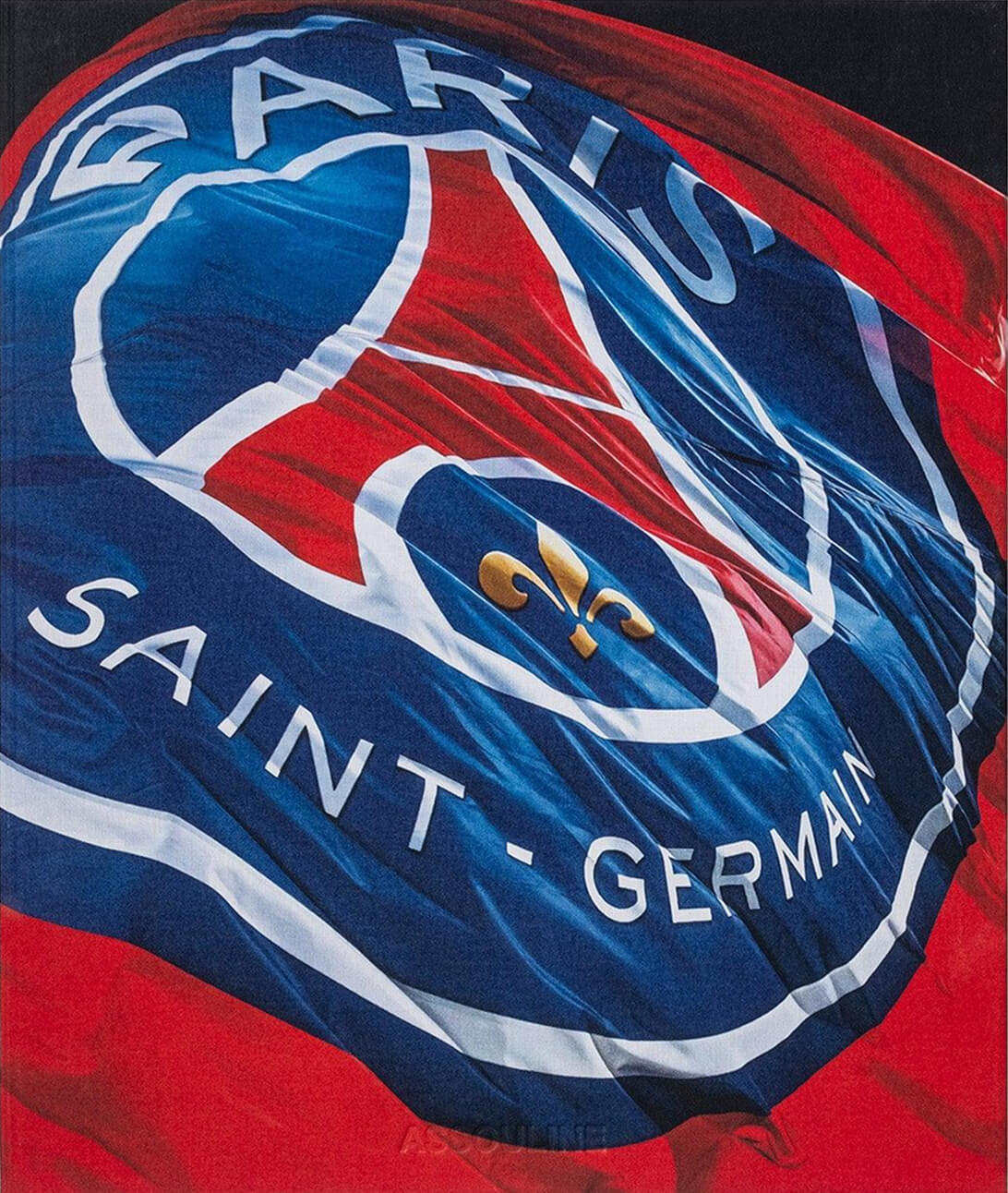
The most expensive book on this list, and the most beautiful object. Assouline's Ultimate Collection is the gold standard for premium coffee table publishing — handcrafted linen volumes in matching clamshell cases, tip-on photographs placed by hand, paper that costs more per page than most books cost in total. When they decided to make a football book, they brought in Julien Scussel, who had spent six years embedded with PSG between Paris and Doha, and treated the project the way they treat their fashion and architecture monographs: as art.
The photography reflects that ambition. Scussel cites Géricault and Rembrandt as influences, and in the book's chiaroscuro lighting and careful figure compositions you can see what he means. The Beckham, Ibrahimović, Cavani, Neymar, Messi, and Mbappé portraits aren't sports photographs — they're closer to Renaissance painting transposed into a locker room. Pelé wrote the introduction. The texture of the linen cover alone is worth handling in person.
What I keep returning to: the Singapore tour photographs in the second half. There's a sequence of players entering the field at twilight that captures the specific quality of light Scussel is famous for — the kind of golden-hour atmospheric depth that's almost impossible to photograph and even harder to print at scale. Assouline got both right.
The honest downside: at $1,200 it's a luxury object before it's a book, and the limited print run of 1,000 numbered copies means it's also moving toward the secondary market. If you don't specifically care about PSG or Assouline as a publisher, this is overkill. The 15.5 × 18.6 inch format is also genuinely unwieldy — most coffee tables aren't built for this scale.
The bottom line: The most beautiful soccer book ever published, and the right pick if you collect Assouline or are serious about PSG. Not for everyone, but unmatched at what it does.
3. The World Atlas of Football Stadiums: 1000 Iconic Grounds & Their Stories

| Publisher | Welbeck Publishing |
| Pages | 320 |
| Dimensions | 9.5 x 1.3 x 12.3 inches |
| Released | September 2, 2025 |
| Price | ~$50 |
| Best For | Groundhoppers, away-day collectors, anyone who reads stadium maps for fun |
The premise is straightforward and slightly ridiculous: one thousand stadiums, every continent, organized by region, each with photographs and the kind of capsule history you'd want before going to a match there. What sounds like a boring reference book turns out to be one of the most genuinely entertaining football books I've owned, because the editors had the sense to include the strange ones. Faroe Islands grounds where the pitch ends at a cliff. South American stadiums built into mountainsides. Lower-league English grounds with a single covered stand and a railway line behind it.
The 2025 edition has been comprehensively updated for the new wave of construction in Saudi Arabia, the US, and across Asia, which matters more than you'd expect — a stadium atlas published five years ago feels noticeably out of date now. The photography mixes drone overheads, matchday crowds, and architectural details, and the captions actually tell you something rather than just naming the home club.
What I keep returning to: the obscure grounds in the second half of the book. The famous stadiums — Camp Nou, Maracanã, Old Trafford — are treated well but they're not what makes this book. It's the four-paragraph entry on a 5,000-capacity ground in Iceland that you'd never have heard of and now want to visit. The book turns groundhopping from a niche hobby into a genuine reading experience.
The honest downside: at 1000 stadiums across 320 pages, individual grounds get less depth than a dedicated stadium book would offer. If you want detailed architectural analysis of a specific venue, you'll need to look elsewhere. And the breadth means coverage is uneven — some clubs you care about will get half a page, others a paragraph.
The bottom line: The most ambitious football stadium book currently in print, and the best gift for anyone who plans holidays around fixture lists.
4. Soccer: The Ultimate Book

| Authors | Peter Feierabend & Bernd Pohlenz |
| Publisher | teNeues |
| Pages | 304 |
| Dimensions | 10.6 x 1.4 x 13.4 inches |
| Released | 2024 |
| Price | ~$75 |
| Best For | Anyone who wants comprehensive scope without sacrificing photographic quality |
teNeues makes some of the best-printed sports books in the world, and this is the one to own if you want a single comprehensive volume covering the whole sport rather than a specialist take. Feierabend and Pohlenz have organized the book around the cultural breadth of football rather than narrowly around matches — there are chapters on legendary players, the World Cup, club crests, kit design, fan culture, and the celebrity-industrial complex around the modern game. It's an encyclopedia disguised as a coffee table book, with the production values entirely on the coffee table side of the equation.
What sets it apart from the older "complete history of football" volumes is editorial honesty about what football has become. There are chapters on commercialization, on player branding, on the lifestyle adjacency that football culture has developed — and the photography reflects this rather than pretending the sport is still a working-class pastime.
What I keep returning to: the kit design and crest evolution sections. Most football books treat the visual identity of clubs as an afterthought; Feierabend and Pohlenz give it the same weight as match photography. There's a spread on Brazil's yellow-and-green canarinho jersey that traces its evolution from 1953 forward, and it's the kind of editorial decision that turns the book from a photo collection into a genuine reference.
The honest downside: at 304 pages covering an entire sport, individual chapters are necessarily condensed. The coverage is also Euro-Brazilian-Argentinian heavy in a way most "global" football books are — African football and Asian football get respectful inclusion but not depth. If you want a single comprehensive volume, this is excellent. If you want depth on any specific subject, you'll need a more specialized book.
The bottom line: The best single-volume comprehensive football book in print. The right pick for anyone who wants one book that covers everything.
5. Remarkable Football Grounds

| Author | Ryan Herman |
| Publisher | Pavilion Books |
| Pages | 224 |
| Dimensions | 8.5 x 1.0 x 10.7 inches |
| Released | January 24, 2023 |
| Price | ~$30 |
| Best For | Anyone who prefers illustration to photography, design-minded fans |
Shortlisted for the Illustrated Sports Book of the Year, and the rare football book that earns "remarkable" honestly. Herman picked roughly 100 grounds from across the world — from the standard greatest-hits list to genuinely obscure venues — and commissioned illustrations for each rather than relying on photography. The result is a stadium book that reads completely differently from any photographic equivalent.
The illustrations are detailed enough to function as architectural records but stylized enough to give each ground a distinct visual character. A pitch perched above the Atlantic in the Faroes looks like an illustrated travel poster. The Estadio Hernando Siles in La Paz, at 11,932 feet of altitude, feels appropriately mythic. The format makes the obscure grounds feel as significant as the famous ones, which is the right editorial decision for a book like this.
What I keep returning to: the spreads where you can compare grounds side by side. Because everything is illustrated in a consistent visual language, you can read a small Welsh non-league ground against a Brazilian state stadium and see the same architectural ideas — the relationship between pitch, stand, and surrounding landscape — playing out at completely different scales.
The honest downside: at 224 pages covering ~100 grounds, this is a less comprehensive reference than the World Atlas of Football Stadiums above. And if you specifically want photography — the matchday atmosphere, the texture of real venues — illustration doesn't substitute for it. It's a complementary book to a photographic stadium atlas, not a replacement.
The bottom line: The best illustrated football grounds book in print. A genuinely beautiful object that pairs well with the photographic stadium atlas above.
6. World Football Club Crests
| Author | Leonard Jägerskiöld Nilsson |
| Publisher | Pavilion Books |
| Pages | 224 |
| Dimensions | 7.5 x 0.8 x 9.3 inches |
| Released | November 13, 2018 |
| Price | ~$28 |
| Best For | Designers, club historians, anyone interested in football's visual identity |
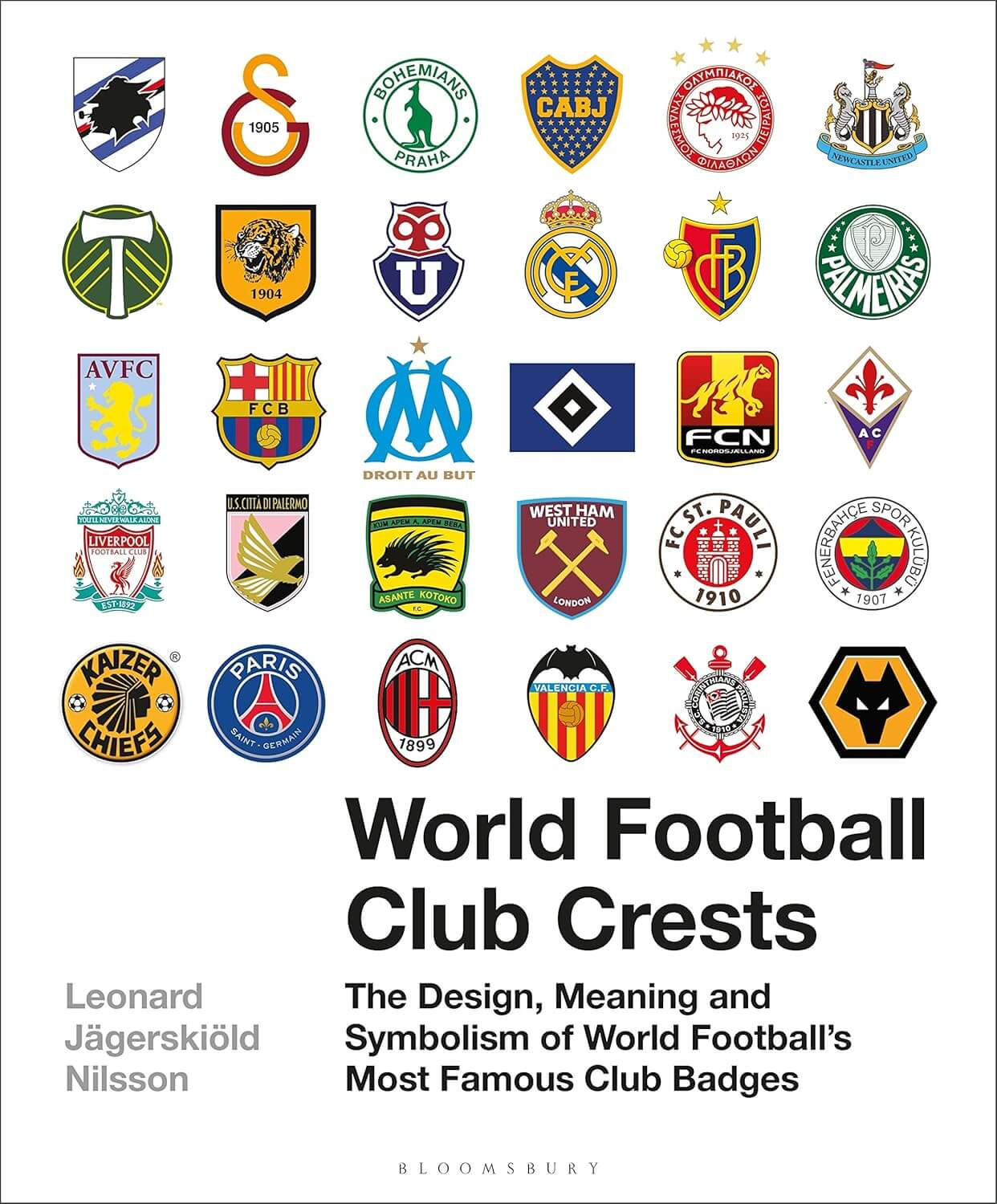
The book most soccer fans don't know exists, and the one I've recommended more often than any other on this list. Nilsson treats club crests as serious design objects — which they are — and traces the meaning, symbolism, and historical evolution of more than 200 of them. Why does Barcelona's badge include the cross of Saint George? What's the heraldic logic behind Bayern Munich's diamond pattern? Where did Boca Juniors actually find their colors?
The book is organized by region, with each crest reproduced at large scale and accompanied by a focused essay on its origins. The writing is genuinely good — clear, sometimes dryly funny, never the sort of overblown prose that football books tend toward — and the design of the book itself reflects the subject. Generous white space, careful typography, color reproduction that does the original badges justice.
What I keep returning to: the entries where the crest's meaning has changed over time. Club badges aren't static — colors get added, motifs disappear, abstract elements replace literal ones — and Nilsson tracks these shifts in a way that turns into a small history of football culture itself. There's something about how a club's identity shifts decade by decade that's more revealing than any narrative history.
The honest downside: published in 2018, the book is now seven years old and missing the recent crest redesigns at clubs like Juventus and Inter. It's also Eurocentric — South American and African football get respectful coverage but less depth than the European clubs. If you're looking for a comprehensive global treatment, this is more European-focused than the title suggests.
The bottom line: The most distinctive book on this list. The right gift for a designer who happens to love football, or a fan who's never thought about why their team's badge looks the way it does.
7. A Beautiful Game

| Author | Tom Watt (foreword by Arsène Wenger, intro by David Beckham) |
| Publisher | Harper Collins |
| Pages | 256 |
| Dimensions | 11.5 x 1.0 x 13.0 inches |
| Released | 2010 (still in print) |
| Price | ~$35 |
| Best For | Anyone interested in players' early lives, gift for a parent of a young player |
The premise is more interesting than it sounds. Watt — co-author of Beckham's autobiography — talked to a curated set of the world's top players about their childhood relationship to the game. Messi from Rosario. Beckham from Leytonstone. Cannavaro from Naples. Casillas from Móstoles. Each player wrote or dictated a short personal essay, and the book pairs these with Getty Images archive photography of the players as children, the streets they grew up on, and the early matches that shaped them.
What turns it from a sports memoir collection into a coffee table book is the photographic standard. Harper Collins printed it at large format on quality paper, and the Getty curation is genuinely careful — these are not the iconic images you've seen reproduced everywhere. The images are quieter, often documentary in feel, and they pair with the text in a way that produces something neither would manage alone.
What I keep returning to: the sections on the lower-income childhoods. The contrast between, say, Messi's grandmother taking him to his first training session in Rosario and the eventual Camp Nou environment is the kind of arc the book lets you feel rather than telling you about. Five percent of the book's revenue went to UNICEF, which is the sort of editorial decision that reflects what the project actually is.
The honest downside: published in 2010 ahead of the South Africa World Cup, the book is now 16 years old. The current generation of stars — Mbappé, Haaland, the post-Messi-and-Ronaldo cohort — isn't represented. And while the photography is good, it's not the visual showcase that This is Football is. The text-to-image balance leans more toward text than a pure coffee table book typically does.
The bottom line: The best coffee table book about how players become players, with the caveat that it's now dated. Especially good as a gift for a soccer family with kids who play.
8. Nike Football Boots
| Publisher | Rizzoli |
| Pages | 320 |
| Dimensions | 10.5 x 1.5 x 13.0 inches |
| Released | April 9, 2026 |
| Price | ~$75 |
| Best For | Sneakerheads, design-minded football fans, anyone interested in product design history |
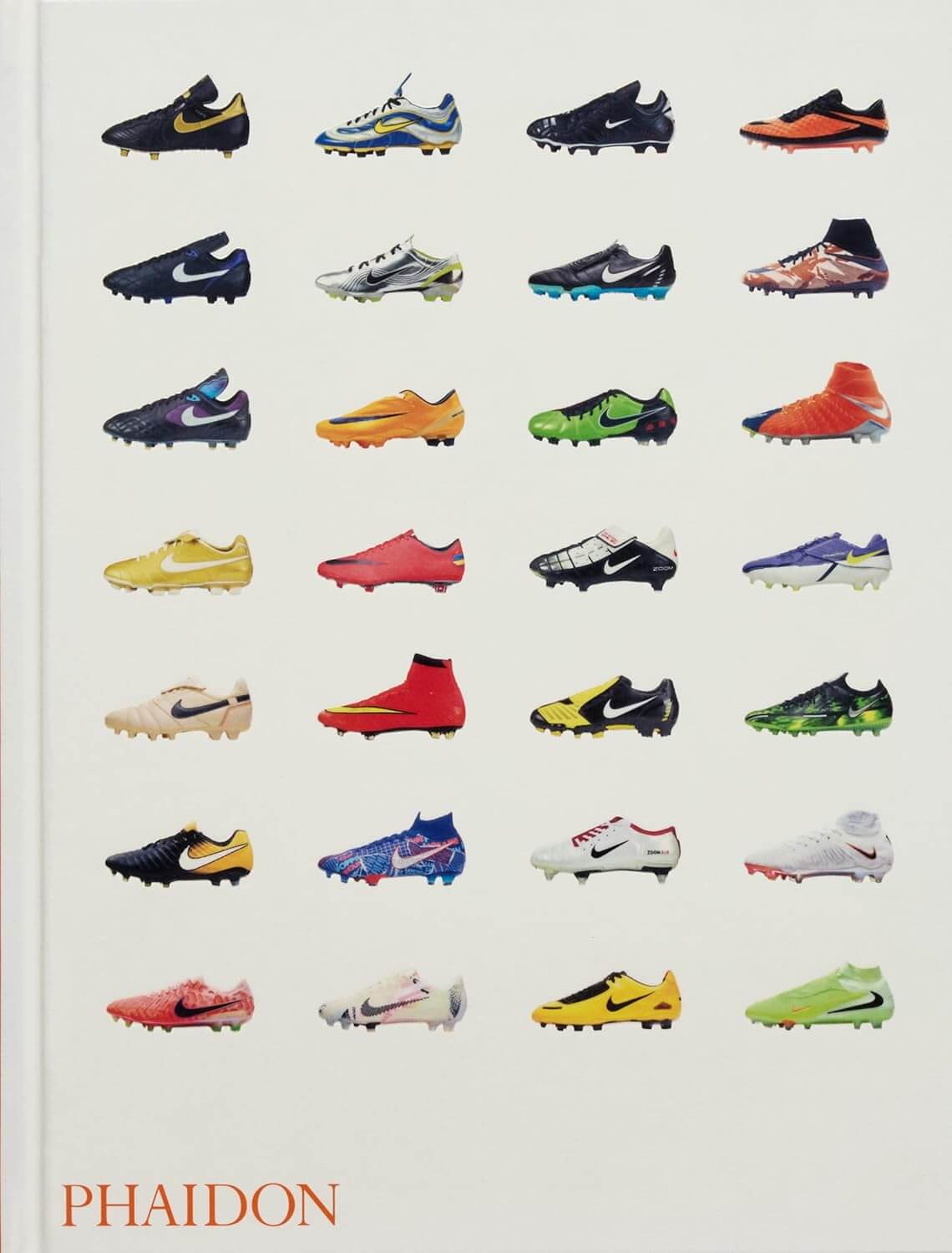
Rizzoli's Nike Football Boots is a brand-specific book that turns out to be more interesting than its premise suggests. The Mercurial, the Tiempo, the Air Zoom Total 90 — these aren't just cleats, they're some of the most influential pieces of athletic footwear design from the past 30 years, and the book traces how Nike went from a peripheral football brand in the early 1990s to the dominant boot supplier at the World Cup level.
The format is part design archive, part product photography, part cultural history. There are technical drawings, interviews with designers, in-context match photography of the boots on the feet of the players who made them famous, and the kind of behind-the-scenes development imagery that brand-archive books produce when they're done seriously. The reproduction quality is what you expect from Rizzoli — generous scale, accurate color, paper that does the product photography justice.
What I keep returning to: the Mercurial chapter. The original 1998 R9 Mercurial, designed for Ronaldo at France '98, is one of the most consequential product designs in sports history — it changed what football boots looked like, weighed, and felt like — and the book documents its development with the depth a serious design archive requires. I've gone back to it more than the other product chapters.
The honest downside: this is a Nike book published with Nike's cooperation, and the editorial perspective is appropriately enthusiastic. Adidas, Puma, and the rest of the boot industry barely appear except as foils. If you want a comprehensive history of football boot design, this only covers one brand. And at $75 it's expensive — the production values justify it, but it's a real commitment.
The bottom line: The best brand-specific football design book in print. A specialist gift for sneakerheads or anyone who treats football boots as design objects rather than equipment.
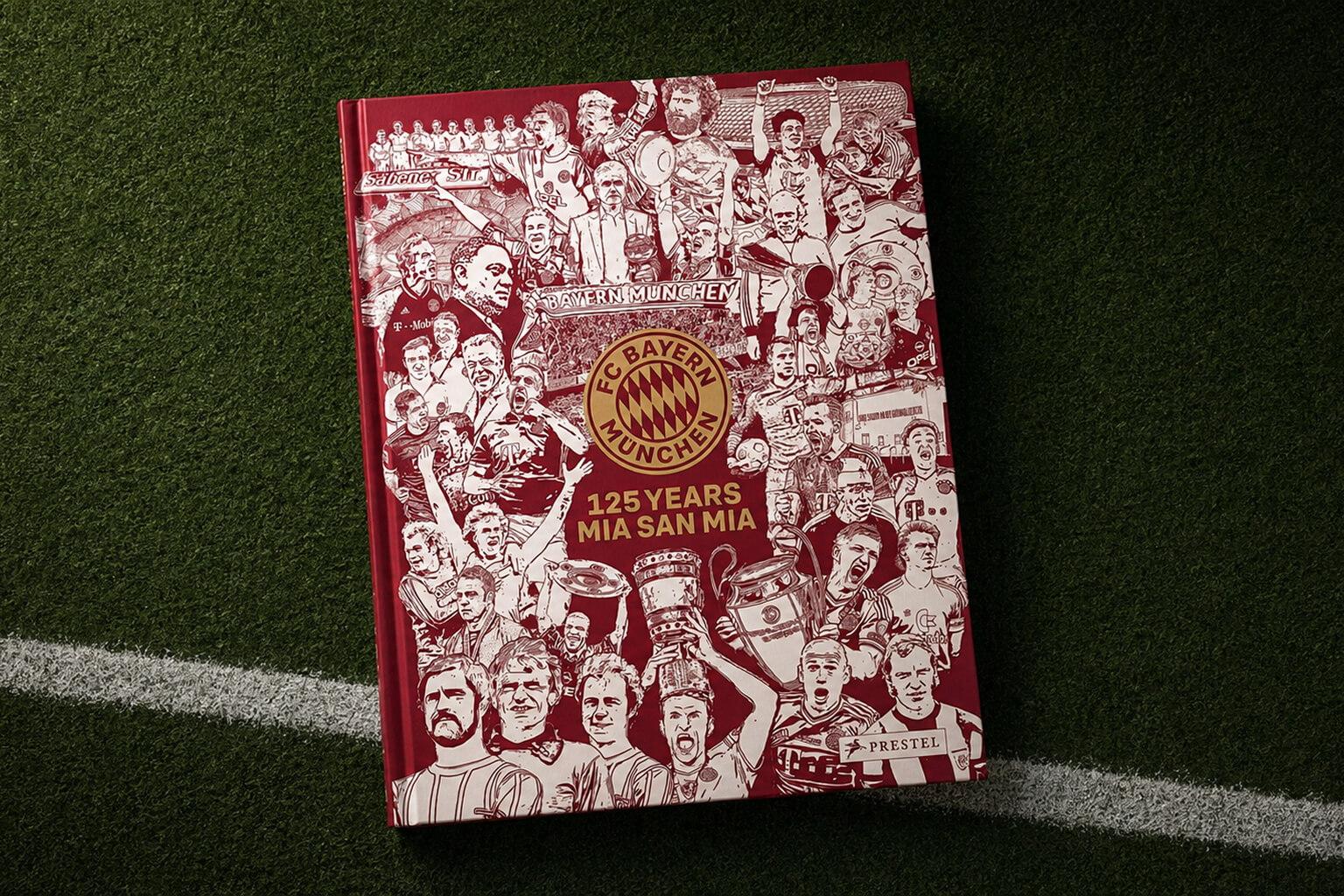
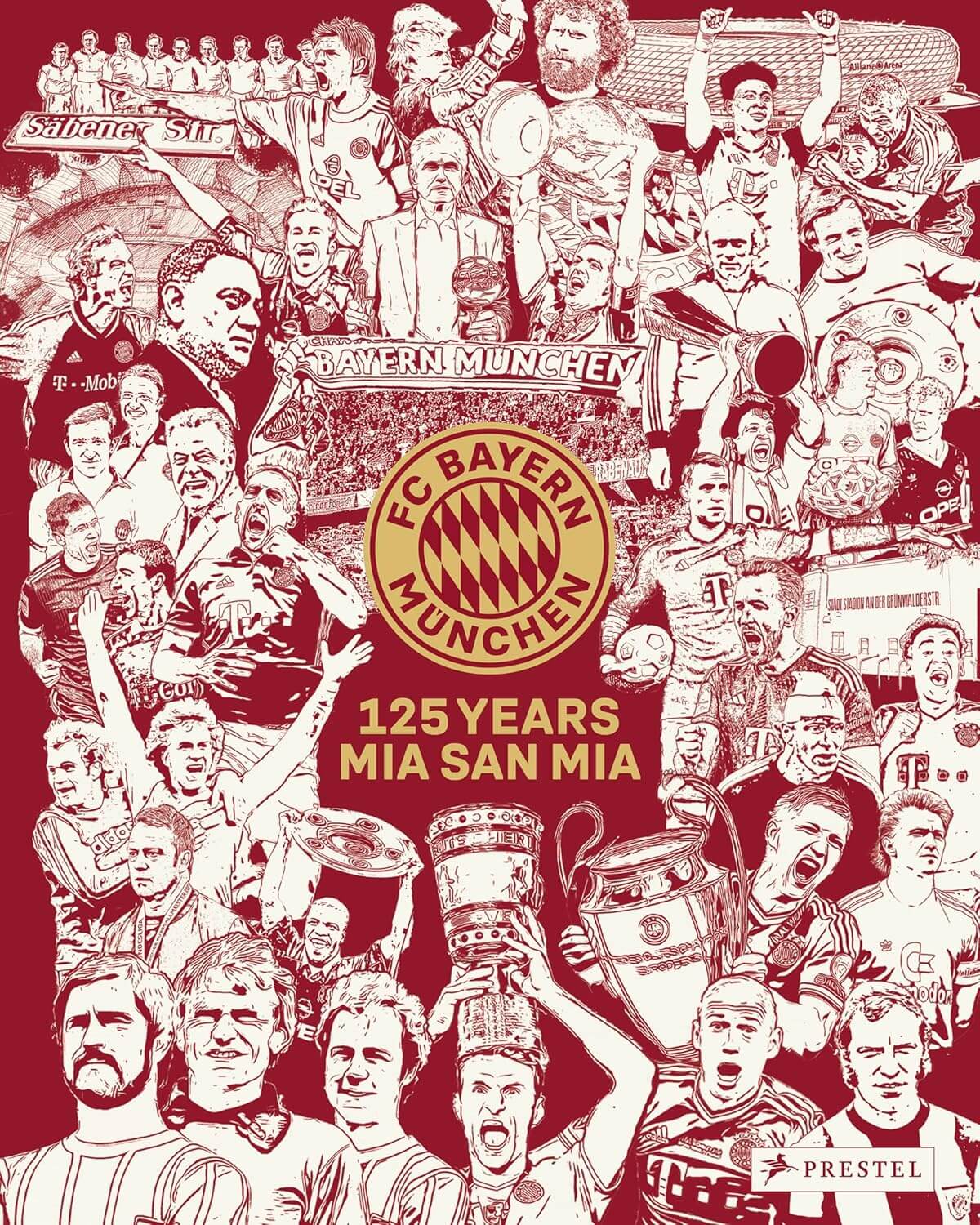
9. FC Bayern Munich: 125 Years
| Publisher | teNeues / FC Bayern |
| Pages | 320 |
| Dimensions | 11.0 x 1.4 x 14.0 inches |
| Released | May 13, 2025 |
| Price | ~$80 |
| Best For | Bayern fans, Bundesliga collectors, anyone interested in German football history |
The official 125th anniversary book, produced by teNeues with the club's full archive cooperation. Bayern have done club histories before — every major European club has — but the anniversary edition uses the milestone to do something more ambitious. The book covers the full arc from the 1900 founding through the modern Champions League era, with archive imagery from each decade, designer-quality reproduction, and the kind of editorial scope that turns a single-club book into a broader portrait of German football.
The structure is roughly chronological but organized around themes — the early amateur era, the postwar rebuilding, the Beckenbauer generation, the Hoeneß-Rummenigge commercial expansion, the contemporary domestic dominance. Photography from each era is treated with appropriate restraint, meaning the postwar grain isn't artificially cleaned up and the modern color isn't oversaturated. The book reads as a serious historical document while still functioning as a coffee table object.
What I keep returning to: the postwar reconstruction chapters. Bayern weren't always the dominant club — they spent significant time in the German second division — and the 1950s and 1960s photography captures a club that's still figuring out what it wants to be. The contrast with the contemporary commercial Bayern is genuinely interesting in a way most club histories don't manage.
The honest downside: it's a single-club book, which means its appeal is bounded by your interest in Bayern specifically. At $80 it's also a meaningful investment — the production values justify it, but you should care about the subject before committing. And the contemporary chapters lean institutionally celebratory in a way the historical chapters don't.
The bottom line: The best modern club anniversary book in print. The right gift for a Bayern fan or anyone with a serious interest in German football, with the caveat that it's a niche pick rather than a general-interest one.
10. Pride of a Nation: A Celebration of the U.S. Women's National Soccer Team

| Author | Gwendolyn Oxenham (with US Soccer) |
| Publisher | Ten Speed Press |
| Pages | 256 |
| Dimensions | 9.4 x 1.0 x 11.5 inches |
| Released | November 22, 2022 |
| Price | ~$40 |
| Best For | USWNT fans, anyone collecting books on women's soccer, parents of young players |
The official US Soccer book on the USWNT, and the one women's soccer book that genuinely belongs on a coffee table rather than a sports shelf. Oxenham wrote it with full access to the team — interviews, archive imagery, on-field photography — and the result is something between an oral history and a photographic monograph, organized around the major moments and players that defined the program from its founding through the post-Rapinoe transition.
What sets it apart from other team-history books is editorial honesty. The team's struggle for equal pay, the cultural tensions during the Trump-era national anthem moments, the pressure of being the most successful program in international women's football — Oxenham treats these as core to the story rather than as awkward asides. The book is celebratory, but it's not corporate.
What I keep returning to: the early-program chapters covering the 1991 and 1999 World Cup teams. The photography from this era is harder to come by than the modern material, and Ten Speed Press did the work to surface archive imagery that hasn't been over-reproduced. There's a sense of how genuinely improvisational the early USWNT was that the contemporary chapters can't match.
The honest downside: published in late 2022, the book stops before the team's difficult 2023 World Cup and the subsequent generational reset. Anyone looking for current context will find it dated. And as an official US Soccer publication, it's the celebratory version of the story — for a more critical look at the federation, you'll need to read elsewhere.
The bottom line: The best book on the USWNT in print, and the right gift for any American soccer family with daughters who play. Especially relevant in the lead-up to the 2026 men's World Cup, when interest in US Soccer broadly is going to spike.
How to Choose
If you're going to own one football book, This is Football: The Beautiful Game is the right one. It captures the full visual range of the sport at the highest production quality, and the format is generous enough to do the photography justice. Everything else on this list is, in some sense, a specialist book around it.
If you want comprehensive coverage of the sport in a single volume rather than a pure photography book, Soccer: The Ultimate Book from teNeues is the better pick. It sacrifices some of the photographic depth of the Rizzoli volume in exchange for genuine breadth — kit design, fan culture, World Cup history, and player profiles in one place.
If money is no object and you collect serious editions, Paris Saint-Germain from Assouline is unmatched at what it does. Just understand what it is — a hand-bound luxury object limited to 1,000 copies, more comparable to a fashion-house monograph than to a typical sports book.
If you care more about stadiums than players, the World Atlas of Football Stadiums and Remarkable Football Grounds complement each other better than either does alone. The atlas gives you breadth — 1000 grounds with photographic coverage. Remarkable Football Grounds gives you depth — 100 grounds with illustrated treatment that surfaces architectural details photography misses. Together they're the most complete stadium reference currently available.
If you're buying as a gift, the calibration depends on the recipient. World Football Club Crests is the safest pick for a designer or anyone who appreciates visual identity. Pride of a Nation is right for an American soccer family. FC Bayern Munich: 125 Years and Nike Football Boots are specialist picks — only buy them for someone who specifically cares about Bayern or sneaker culture, respectively. A Beautiful Game works best for parents of young players, who tend to find the childhood-of-stars angle genuinely moving.
Frequently Asked Questions
What's the difference between a soccer coffee table book and a regular soccer book?
Coffee table books are oversized hardcovers designed to be left out — generous photography, heavy paper, large format. Regular soccer books are typically standard hardback or paperback size, more text-heavy, and meant to be read cover to cover rather than browsed. The books on this list are all coffee table format from publishers like Rizzoli, Assouline, teNeues, and Pavilion who specialize in the category.
Are these books appropriate for kids?
Most of them, yes. The World Atlas of Football Stadiums, Soccer: The Ultimate Book, Pride of a Nation, and A Beautiful Game are all family-appropriate and genuinely engaging for children from around age 10. This is Football and the Assouline PSG volume contain occasional images of injuries or aggressive crowd moments that parents may want to preview, but nothing graphic.
Should I buy "soccer" or "football" books — does the terminology matter?
The terminology varies by publisher rather than reflecting different subjects. American publishers (Ten Speed Press, US Soccer) tend to use "soccer." European and global publishers (Rizzoli, Pavilion, teNeues, Assouline) use "football." The books cover the same sport regardless of which word appears on the cover.
Is the Assouline PSG book really worth $1,200?
Only if you specifically value it as an Assouline Ultimate Collection object — handcrafted linen binding, tip-on photographs, limited edition status — rather than as football photography per se. For pure photographic content at a reasonable price, This is Football gives you more book for less money. The Assouline is a luxury collectible first and a sports book second.
Which of these books is best for a recent fan of soccer who doesn't know much yet?
Soccer: The Ultimate Book from teNeues is the most accessible entry point — broad scope, no prior knowledge required, organized in a way that lets you dip in and out. This is Football works as a purely visual introduction. Both are good first books in the genre.