8 Best Watercolor Books (2026) — For Every Kind of Painter
After working through dozens of watercolor books — from beginner workbooks to technique guides to proper art books — these are the eight I'd actually recommend. From Jenna Rainey's bestselling 30-day guide to the most beautiful aquarelle coffee table book currently in print.
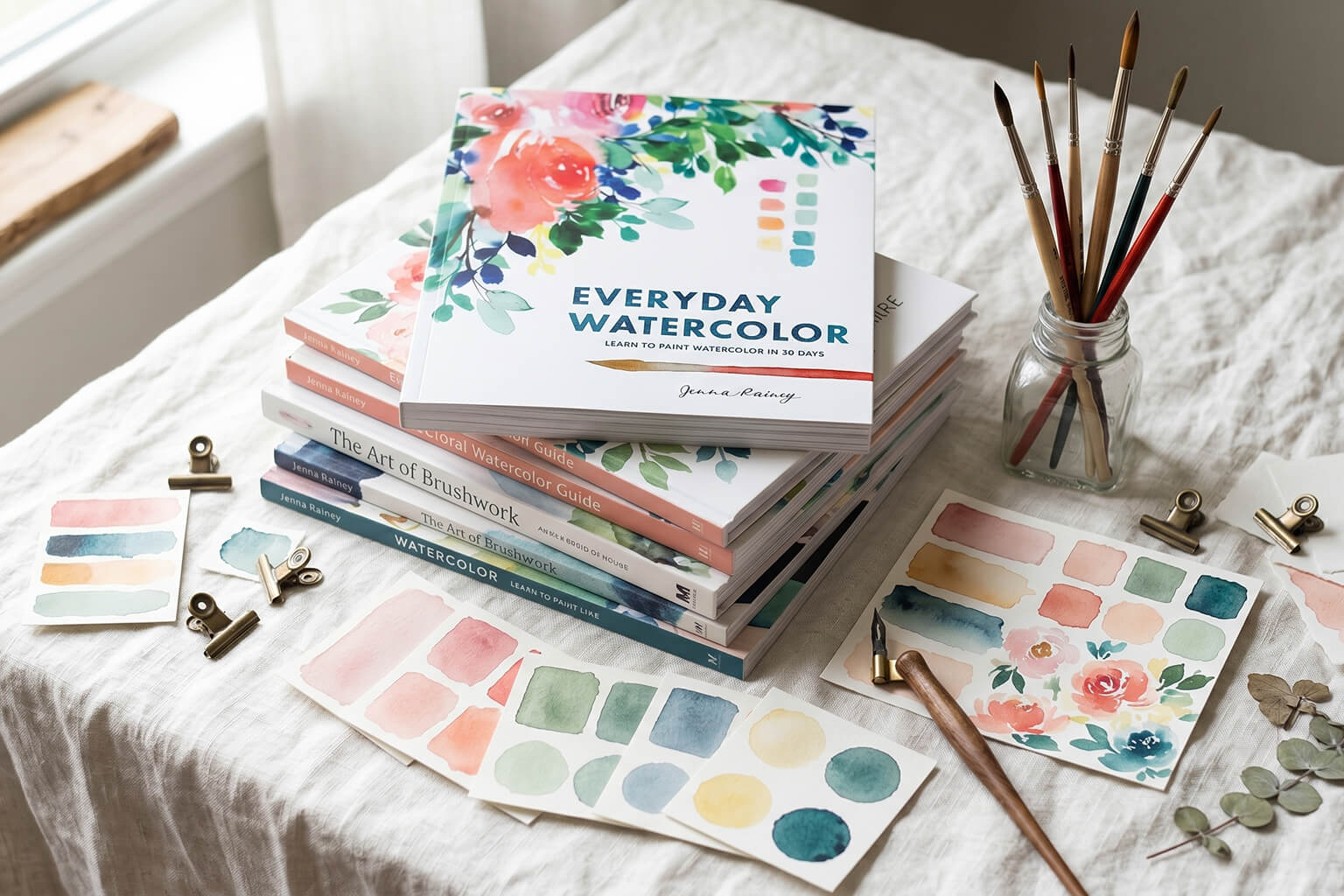
I've been collecting coffee table books for over eight years, starting when I opened my design studio in Austin. Watercolor arrived through the back door — a friend gave me Jenna Rainey's Everyday Watercolor as a gift, presumably because I was spending too much time in front of a screen. It sat on the coffee table for a week before I opened it. Six weeks later I had stained a kitchen towel permanently yellow and developed a genuine interest in how watercolor painters think about light.
The books followed from there. What I discovered is that "watercolor books" covers more territory than it sounds. There are workbooks where you paint directly inside the book on real watercolor paper. There are step-by-step instructional guides. There are books about technique and color theory meant to sit on your desk not your coffee table. And there are proper art books — beautifully printed volumes about watercolor as a medium, as a history, as a tradition worth understanding.
All of them are represented here, because people searching for watercolor books are not all looking for the same thing. For each one I'll tell you what it does well, where it falls short, and who it's genuinely for.
Disclosure: This article contains affiliate links. If you purchase through these links, I earn a small commission at no extra cost to you. Every book reviewed here has been personally reviewed — I only feature titles I'd display in my own home.
My Top 3 Picks at a Glance
- Best Overall: Everyday Watercolor by Jenna Rainey — the book that launched a generation of hobbyists, still the best place to start
- Best Workbook: Watercolor Made Simple Workbook by Sarah Simon — sketches already drawn on real watercolor paper, pick up and paint
- Best for Display: Everyday Watercolor Flowers by Jenna Rainey — beautiful enough to leave out when you're not painting from it
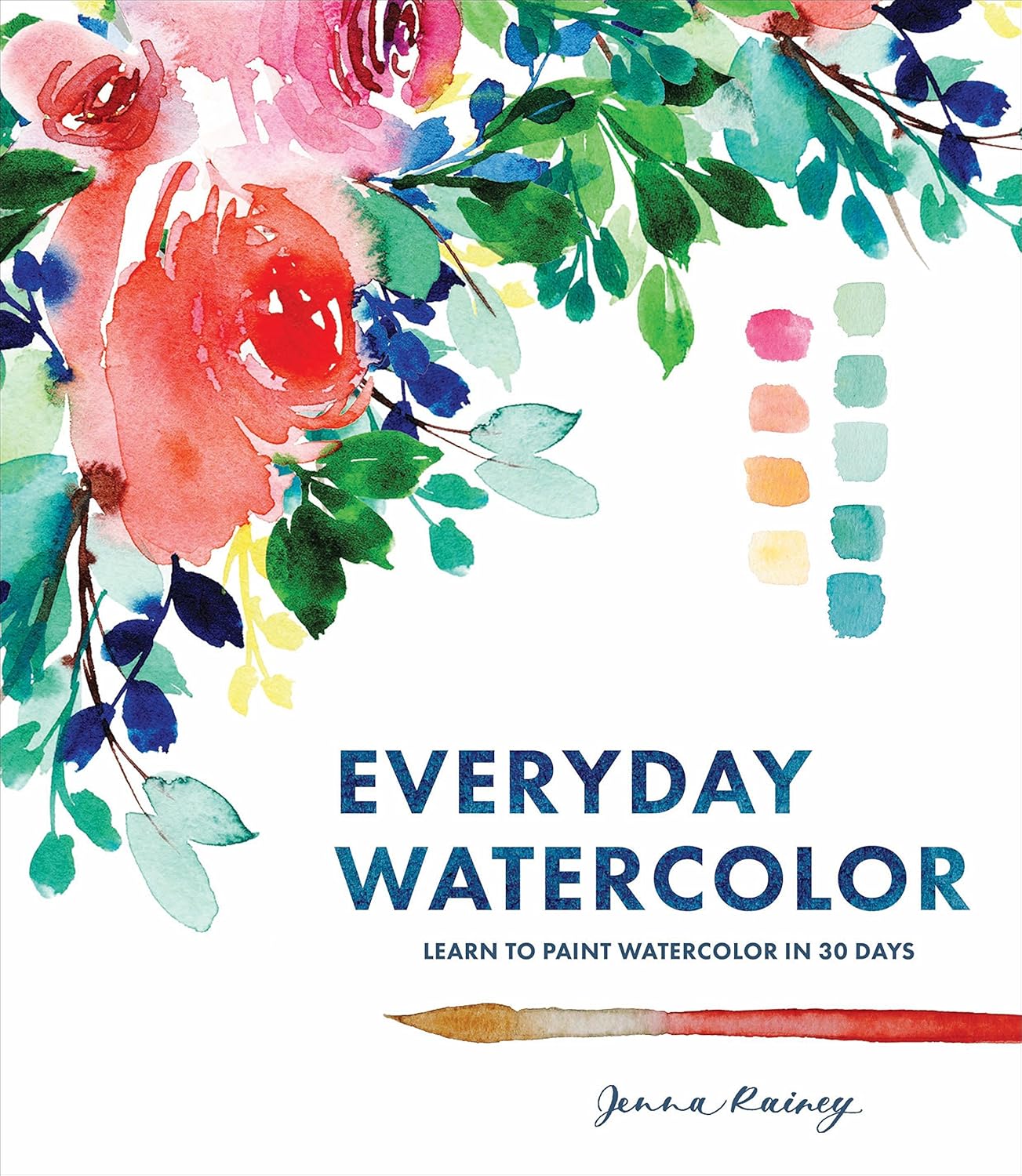
1. Everyday Watercolor — Jenna Rainey
| Author | Jenna Rainey |
| Publisher | Ten Speed Press |
| Pages | 192 |
| Dimensions | 8.0 x 0.6 x 9.1 inches |
| Price | ~$22 |
| Best For | Complete beginners, anyone who wants a structured 30-day course |
This is the book that caused the watercolor revival on Instagram, and it's still the best place to start. Rainey built a design studio and a following of hundreds of thousands with her loose, contemporary florals — the kind of watercolor that looks effortless and requires, as she'll tell you directly, daily practice over several weeks.
The structure is 30 lessons, one per day, building from basic brushwork through color theory to layered compositions. Day one is basic strokes. Day fifteen is complementary colors. Day thirty is a finished jungle scene with a parrot painted in up to six layers. Each lesson runs short enough to complete in an hour, which removes the main excuse people give for not practicing.
What I keep returning to: the color theory section in weeks two and three. Rainey explains how to mix and build palettes in terms that translate directly to brush-in-hand practice, not just theory. I've gone back to those pages more than anything else in the book.
The honest downside: Rainey is a practitioner, and her teaching occasionally assumes more comfort with the medium than beginners actually have. Some readers find the jump between lessons uneven — her YouTube channel fills in the gaps, but you shouldn't need a YouTube channel to supplement a beginner book. The book also doesn't cover advanced techniques like wet-on-wet washes or texture work. It's a foundation course, not a comprehensive guide.
The bottom line: The best starting point for anyone new to watercolor. If you own one watercolor book, this is the one.
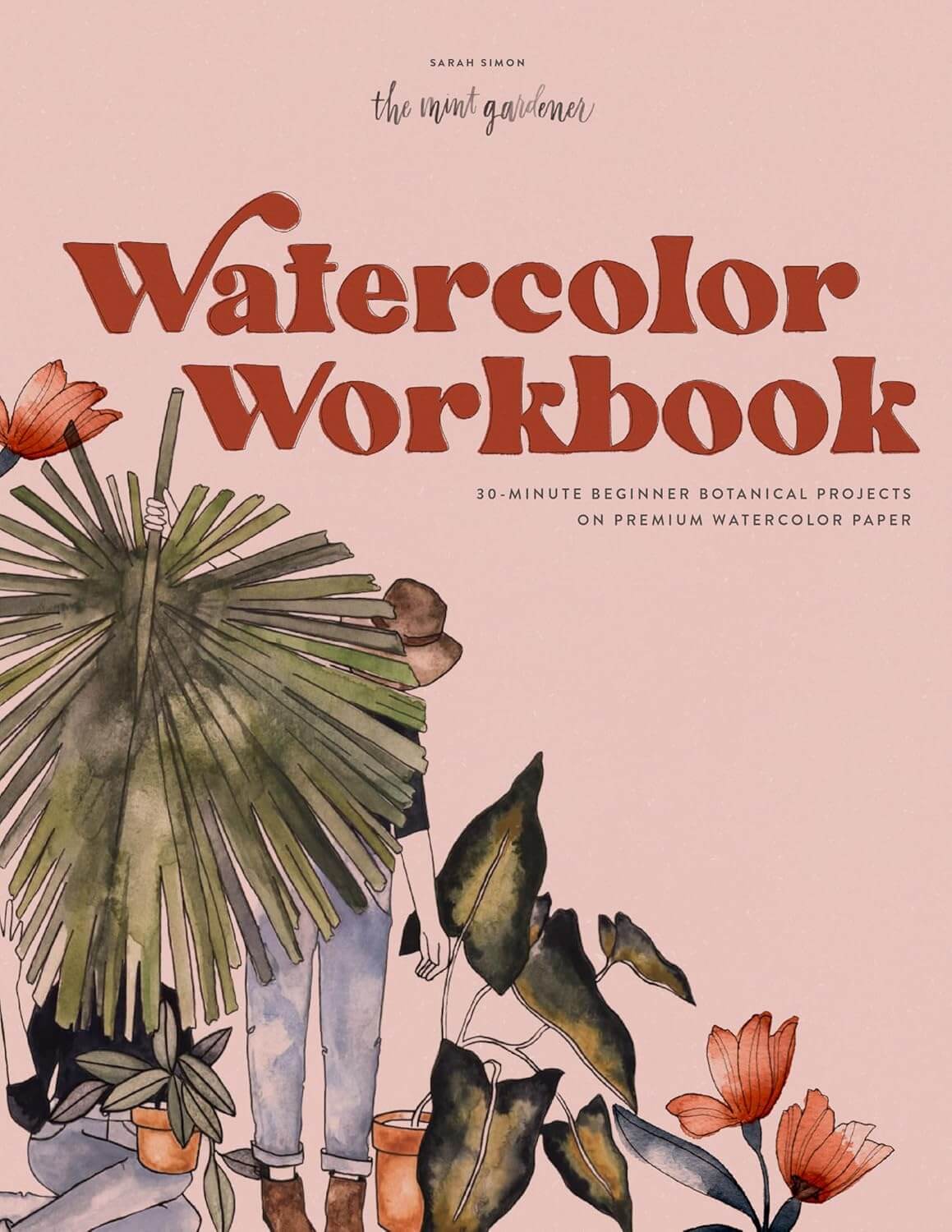
2. Watercolor Made Simple Workbook — Sarah Simon
| Author | Sarah Simon |
| Publisher | Rockport Publishers |
| Pages | 144 |
| Dimensions | 8.5 x 11 inches, spiral-bound lay-flat |
| Price | ~$19 |
| Best For | True beginners, the blank-page problem, painting without drawing skills |
The concept is elegant: the sketches are already done for you, printed on actual watercolor paper, bound inside the book. You show up with brushes and paint. Nothing else is required.
Simon's 20 projects cover the subjects most beginners actually want to paint — flowers, animals, simple botanical motifs — and each comes with detailed color-mixing guidance alongside a finished example showing exactly what you're aiming for. The spiral binding means the book lies completely flat, which matters more than you'd expect. Trying to paint against a page that keeps springing back up is genuinely irritating after the first ten minutes.
What I keep returning to: the color-mixing instructions before each project. Simon gives you specific pigment combinations for every color in every painting, which removes the most frustrating part of learning watercolor — figuring out why your colors come out muddy when hers look luminous. It's almost always a mixing problem, not a painting problem, and this book explains that before it becomes an issue.
The honest downside: once you've worked through the 20 projects, the book is finished — it's a consumable. And because the sketches are provided, it doesn't help you develop drawing skills or compositional thinking. It's a gateway into the medium, not a permanent reference. For that, you want Rainey or MacKenzie alongside it.
The bottom line: The most accessible entry point into watercolor currently in print. Excellent as a gift for someone who's been curious about painting but intimidated by the blank page.
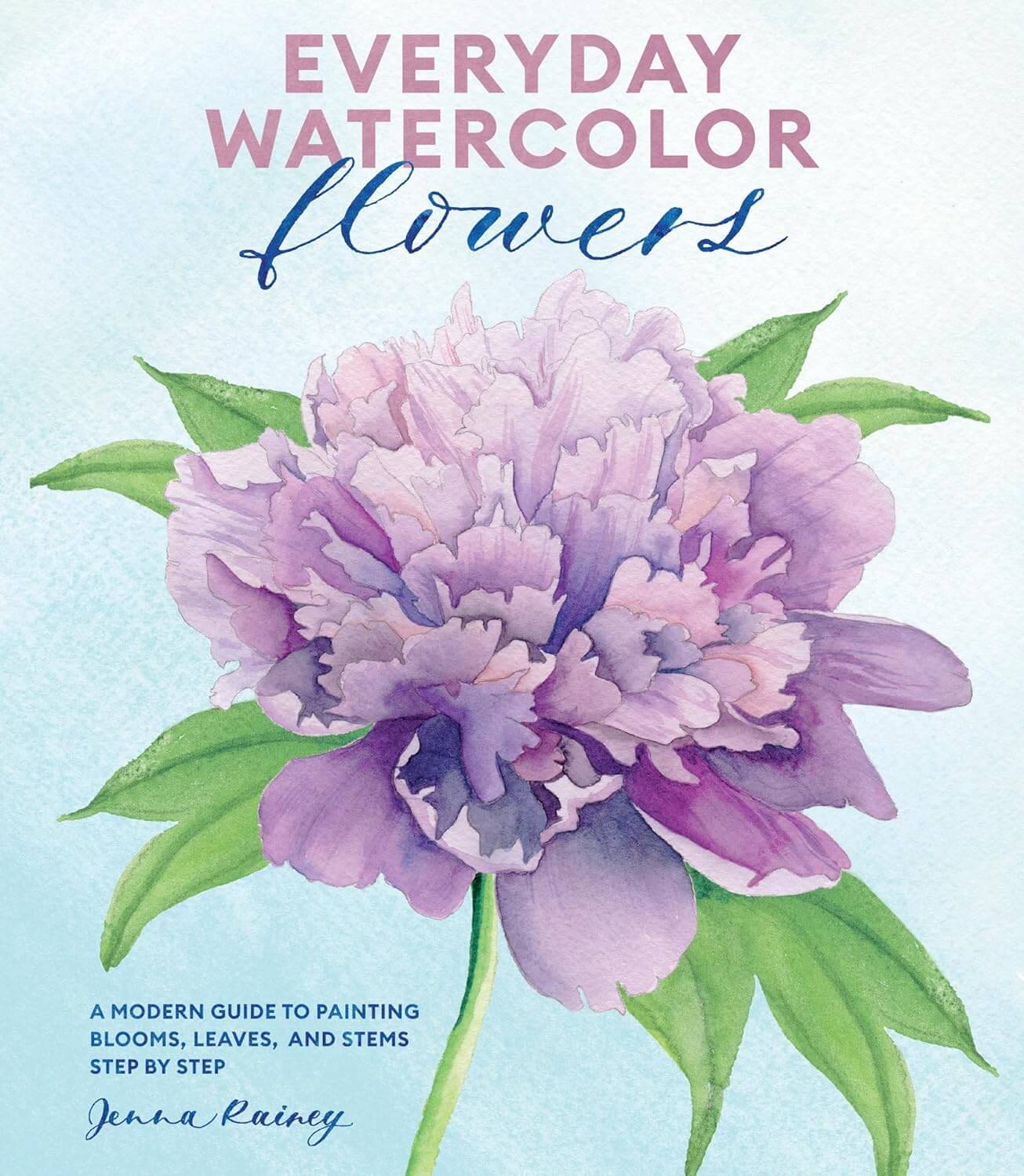
3. Everyday Watercolor Flowers — Jenna Rainey
| Author | Jenna Rainey |
| Publisher | Ten Speed Press |
| Pages | 208 |
| Dimensions | 8.0 x 0.7 x 9.1 inches |
| Price | ~$22 |
| Best For | Anyone drawn to botanical subjects, gift for a creative friend, display alongside painting |
The follow-up to Everyday Watercolor narrows the focus to botanicals — 25+ flowers, leaves, and plants, each broken down by shape before they're broken down by technique. It's a sharper book than the original, probably because Rainey knew exactly what she was doing the second time.
What distinguishes this from other botanical watercolor guides is how she organizes the flowers. A dahlia and a chrysanthemum teach similar skills. A tulip and an iris require similar thinking about petal structure. Grouping by form rather than by species makes the learning transfer across subjects in a way most flower-painting books don't manage.
The photography is good enough that this one lives on my coffee table between painting sessions. It's not a pure art book — the focus is instructional throughout — but Rainey's work photographs beautifully, and Ten Speed Press consistently produces books that look as good closed as they do open.
What I keep returning to: the section on loose florals in chapter four. Rainey's approach to painting impressionistic flowers — letting the watercolor bloom outward rather than controlling every edge — is something I've used in every botanical painting since reading it. It changed how I think about when to stop.
The honest downside: if you've already worked through Everyday Watercolor, the foundational chapters will feel repetitive. And the style — colorful, contemporary, loosely whimsical — isn't the right fit if you want to learn classical botanical illustration or a more realist approach. Rainey's aesthetic is specific, and this book teaches her aesthetic rather than a neutral set of skills.
The bottom line: The best watercolor florals book available, and pretty enough to display on a coffee table when you're not actively painting from it.
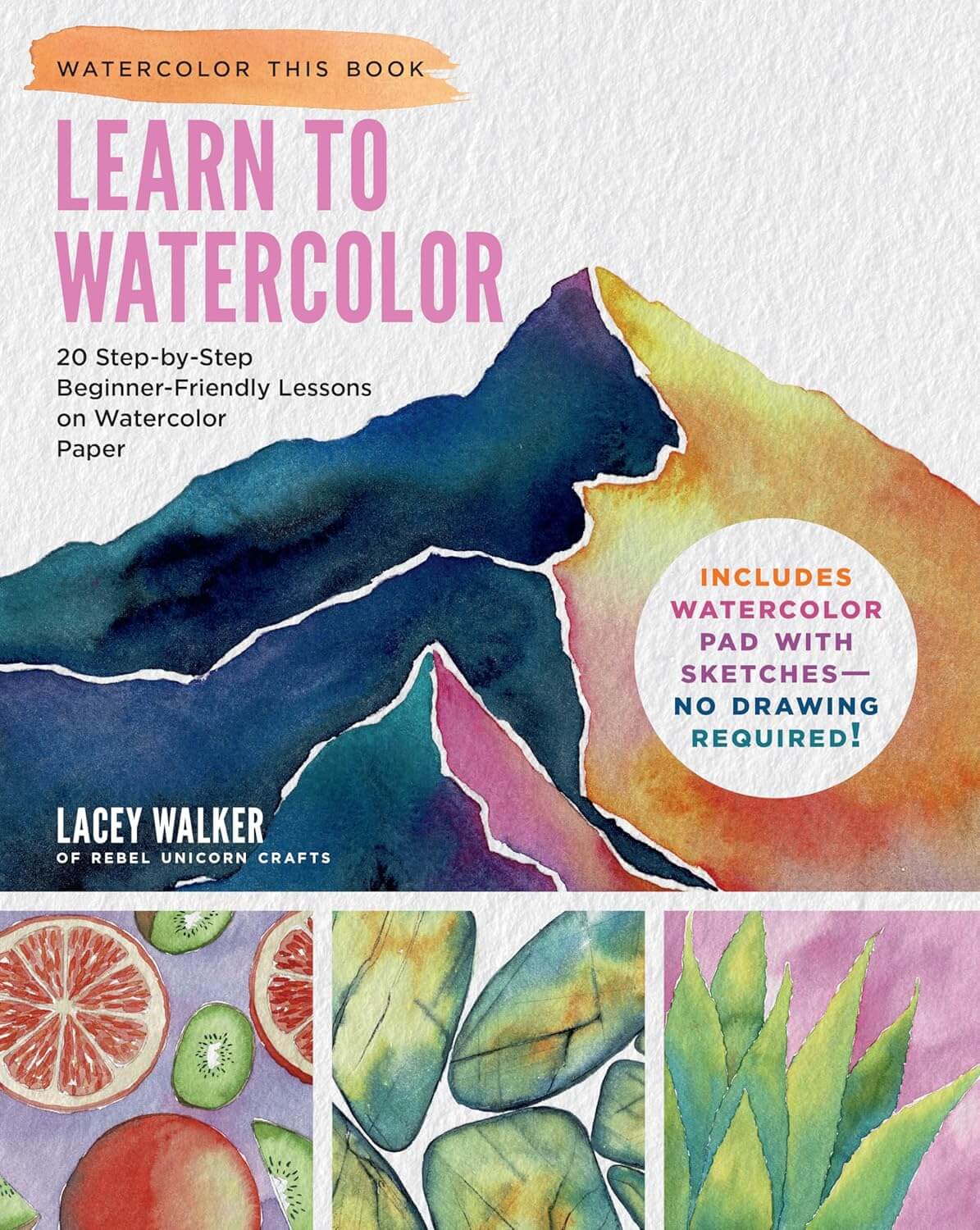
4. Learn to Watercolor — Lacey Walker
| Author | Lacey Walker |
| Publisher | Rockport Publishers |
| Pages | 160 + included watercolor pad |
| Dimensions | 8.5 x 11 inches |
| Price | ~$24 |
| Best For | True beginners who want the most guided possible start, gift with everything included |
Walker's book comes with an attached watercolor pad — real watercolor paper, pre-drawn sketches ready to paint. No drawing. No blank page. No wondering where to start. You open the book, read the short lesson, and the sketch you're painting is right there.
The 20 projects span a wider range of subjects than Simon's workbook — botanicals, animals, patterns, loose landscapes — and each includes a QR code linking to a video tutorial of Walker painting the same project. The combination of printed instruction, pre-drawn sketch, and video guidance makes this the most hand-held approach to learning watercolor currently available.
What I keep returning to: the early lessons on water-to-paint ratios. Walker explains, with visual swatches and side-by-side examples, exactly why the amount of water on your brush changes everything about how pigment behaves. It's the lesson most beginners need before anything else, and she makes it clearer than I've seen it done anywhere.
The honest downside: the QR code video integration creates a dependency on having your phone nearby while painting, which some people find distracting. And like Simon's workbook, the pre-drawn sketches mean this book teaches painting but not composition or observational drawing.
The bottom line: The most beginner-friendly watercolor book currently in print. The right gift for someone who has always wanted to try watercolor but genuinely doesn't know where to start.
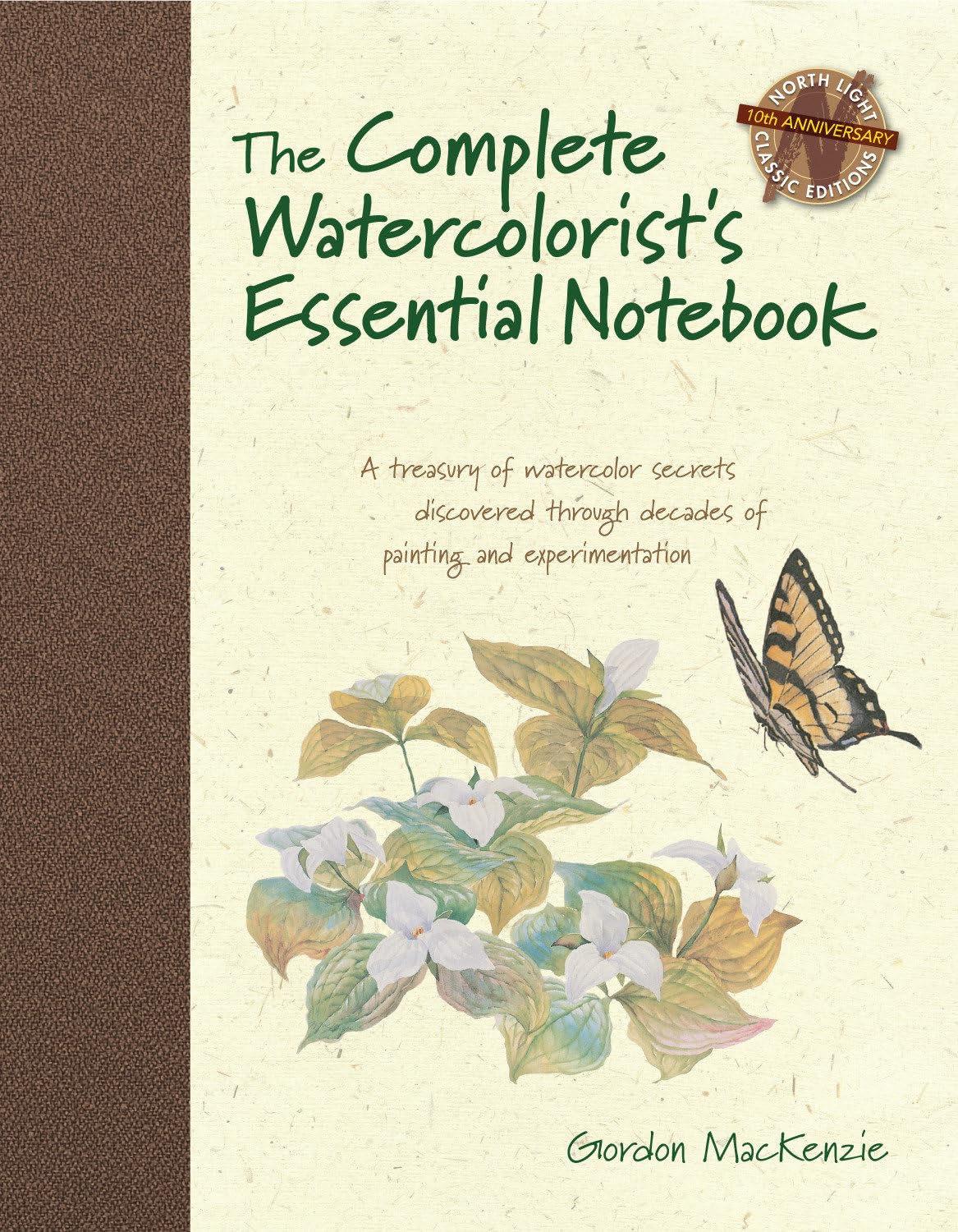
5. The Complete Watercolorist's Essential Notebook — Gordon MacKenzie
| Author | Gordon MacKenzie |
| Publisher | North Light Books |
| Pages | 288 |
| Dimensions | 8.5 x 10.9 inches, hardcover |
| Price | ~$35 |
| Best For | Intermediate painters who want to understand the medium, serious hobbyists |
This is the book you want after you've finished the beginner guides and started asking harder questions. MacKenzie spent decades teaching watercolor, and this anniversary edition collects principles rather than projects — the underlying logic of why watercolor works the way it does.
The book covers color theory, value, composition, edges, and the specific properties of the medium in a way that changes how you see your own paintings. MacKenzie doesn't give you techniques to copy. He gives you ways of thinking that make you better at developing your own techniques — which is a more useful thing and a harder thing to write.
What I keep returning to: the chapter on edges. MacKenzie explains the difference between hard, soft, and lost edges with watercolor examples that made me look back at everything I'd painted and understand exactly what wasn't working. It's the kind of insight that's obvious in retrospect and completely opaque until someone shows you once.
The honest downside: this is a reference book, not a workbook. There are no step-by-step projects to follow. If you're looking for guided practice with something to paint at the end of each session, you'll be frustrated. It's a book you read, mark up with pencil, and return to every few months.
The bottom line: The best book for intermediate painters who want to understand what they're doing rather than just copy what someone else has done. Pairs well with any of the project-based books on this list.
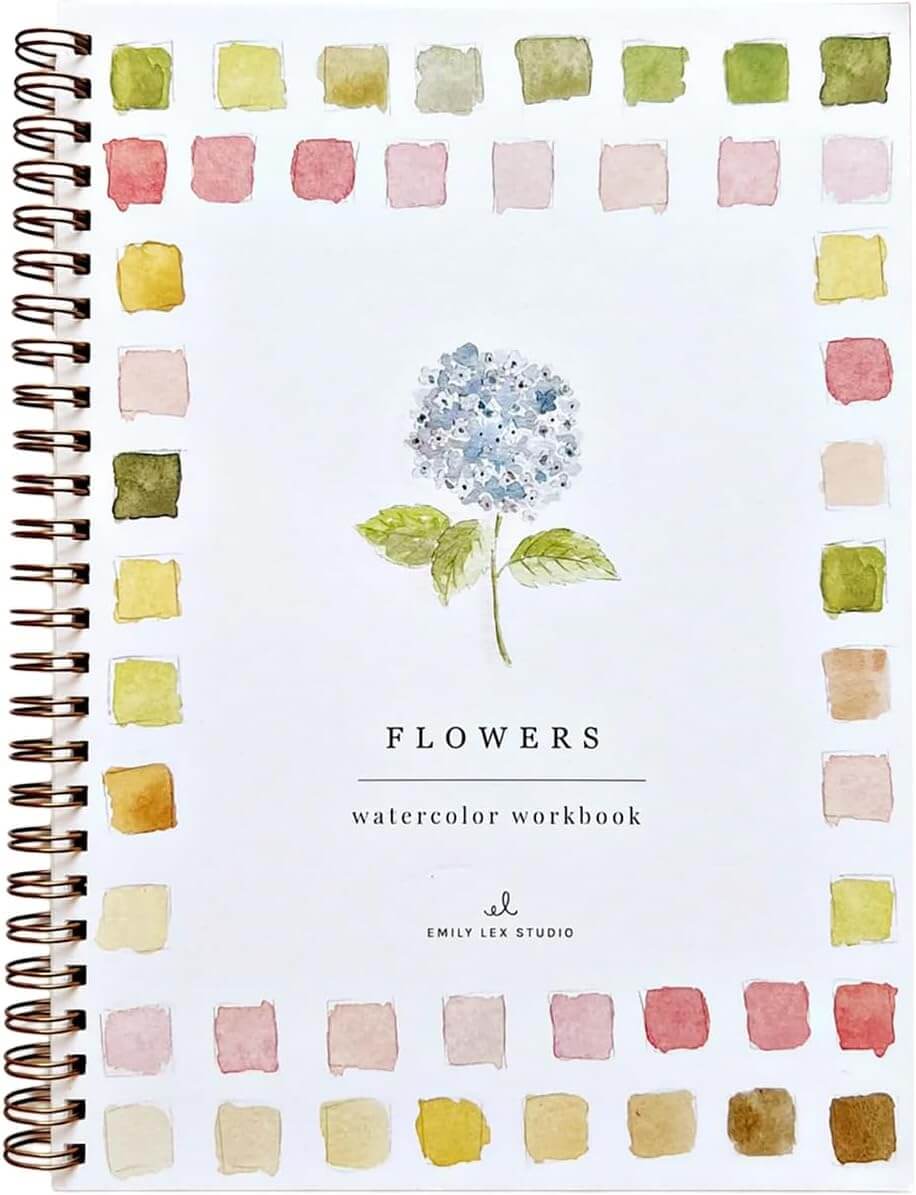
6. Emily Lex Watercolor Workbooks
| Creator | Emily Lex |
| Publisher | Emily Lex Studio |
| Pages | ~48 per volume |
| Dimensions | 6.5 x 9 inches, spiral-bound lay-flat |
| Price | ~$28 per volume |
| Best For | Gift for any skill level, painting with kids, the most portable option |
Emily Lex launched the spiral-bound lay-flat watercolor workbook before anyone else had thought to make one. Pre-drawn sketches on premium cold-press paper, small enough to fit in a bag, designed to make painting feel genuinely low-stakes. The format has since been widely copied. The original is still the best.
The workbooks come in themed volumes — Flowers, Birds, Garden, Autumn, Baking, Seaside, Animals, and more. Each contains 16–20 sketched scenes with color-mixing guidance at the start. The paper is custom cold-press, thick enough to handle wet washes without buckling. The lay-flat spiral binding means the book stays open without being held down, which turns out to matter a lot when both your hands are busy.
What I keep returning to: the way these make painting social. I've watched complete beginners and practiced painters work through the same book in the same afternoon. The format removes performance pressure — you're not creating from scratch, you're adding color to something that already has structure — and that reframe makes people noticeably braver with their brushstrokes.
The honest downside: at roughly $28 per volume with 16–20 paintings per book, these cost more per painting than larger instructional books. Emily Lex primarily sells through her own studio shop rather than Amazon, which some people find inconvenient to order from.
The bottom line: The best watercolor gift currently available. Especially good for people who want something to do together, or for anyone who needs the blank-page problem solved before they'll pick up a brush.
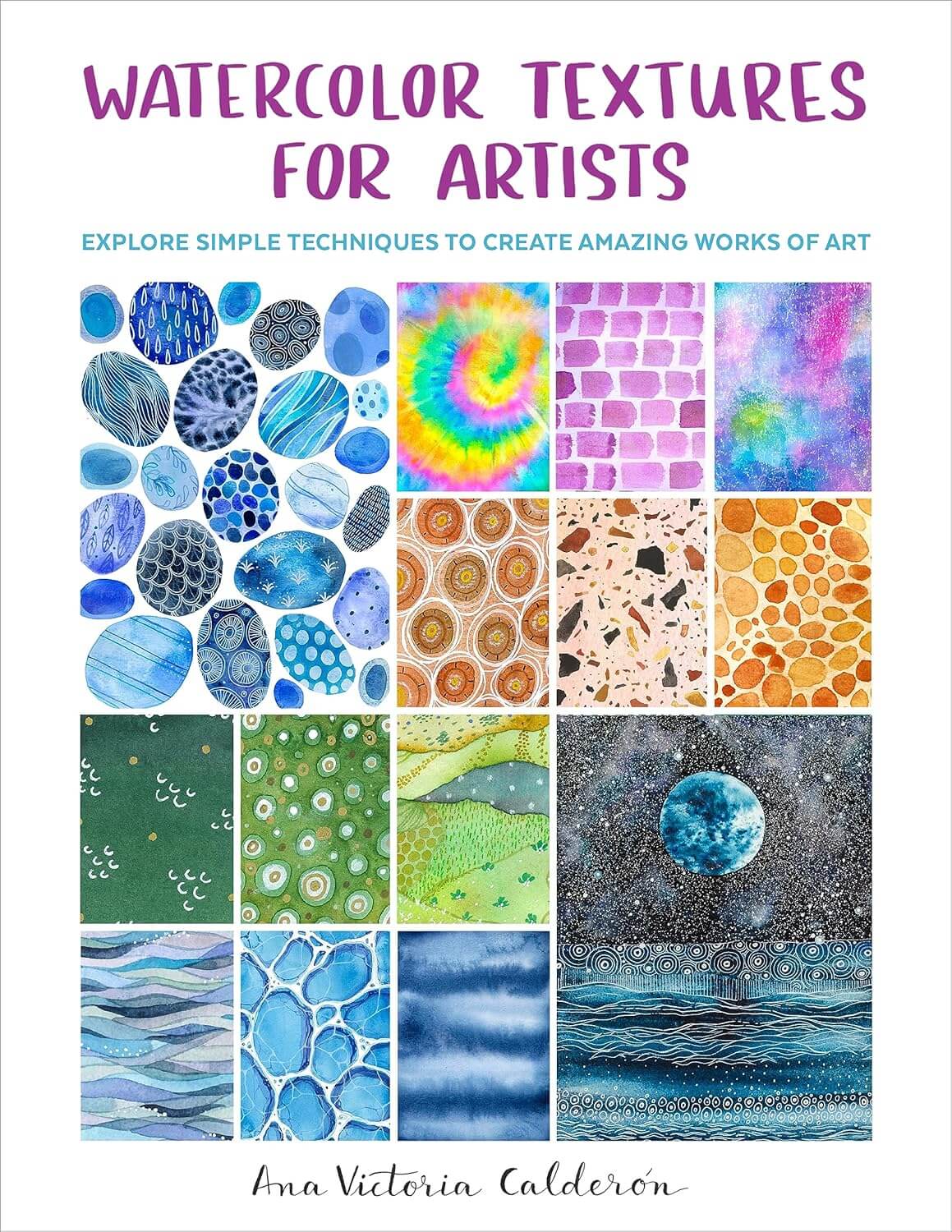
7. Watercolor With Me in the Forest — Ana Victoria Calderón
| Author | Ana Victoria Calderón |
| Publisher | Quarry Books |
| Pages | 160 |
| Dimensions | 8.5 x 10 inches |
| Price | ~$22 |
| Best For | Anyone drawn to forest and botanical subjects, intermediate beginners wanting a distinct style |
Calderón's approach sits between Rainey's loose contemporary style and classical botanical illustration — more considered than the former, more accessible than the latter. This book is built around forest subjects: mushrooms, ferns, berries, pine cones, owls, deer, the full vocabulary of northern woodland. The aesthetic is immediately recognizable and consistently beautiful.
The lessons progress in a way that makes sense: basic washes first, then wet-on-wet effects, then layering, then finished compositions that combine multiple techniques. The color palette guides feel more sophisticated than the average beginner book — Calderón is teaching you to see color relationships, not just mix specific colors to hit a target.
What I keep returning to: the mushroom projects in chapter three. Calderón captures the specific quality of watercolor that makes it ideal for organic subjects — the way pigment blooms into wet areas, the unpredictability that becomes an advantage once you understand it. The mushroom paintings look like what watercolor should look like, which sounds obvious but is actually hard to teach.
The honest downside: the forest theme means narrower subject matter than a book like Rainey's. If you're more interested in urban subjects, portrait work, or pure abstraction, this isn't the right book. And the style — while genuinely beautiful — is specific enough that it might conflict with the direction you're trying to develop.
The bottom line: The best watercolor book for anyone drawn to botanical and nature subjects. A beautiful enough object to display alongside the coffee table books on this list.
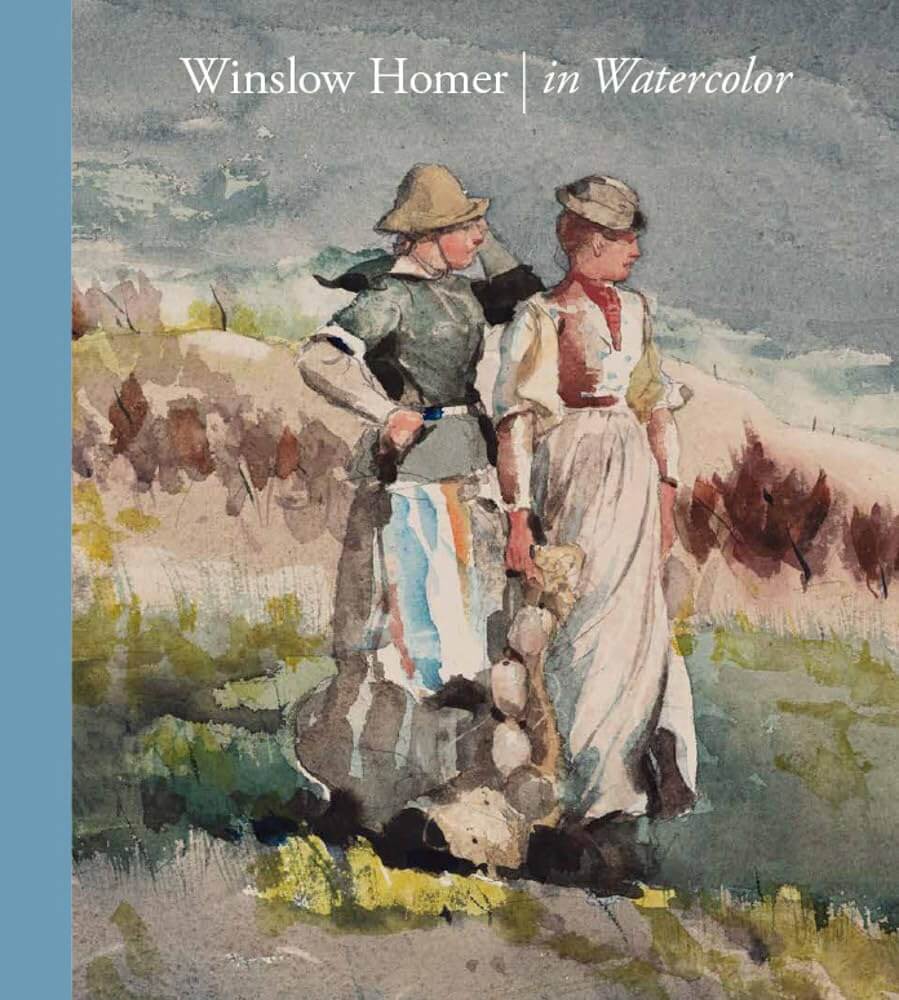
8. Winslow Homer: Watercolors
| Authors | Various contributors |
| Publisher | National Gallery of Art / Bulfinch Press |
| Pages | 320 |
| Dimensions | 11.5 x 10.5 inches, hardcover |
| Price | ~$55 |
| Best For | Art lovers, serious collectors, display alongside other fine art books |
Winslow Homer is the argument for watercolor as a serious medium. He came to it late in his career — the oil paintings came first — but the watercolors are where his eye became truly extraordinary. The light on water, the quality of weather, the relationship between color and atmosphere: Homer understood things about watercolor that most painters who worked exclusively in the medium never figured out.
This book collects his watercolor work comprehensively, with reproduction quality that holds up at large format and scholarly essays that explain what he was doing technically and why it mattered. The large-format presentation gives the paintings the space they require — watercolors in particular lose something at smaller sizes, and this book gets the scale right.
What I keep returning to: the Bahamas and Florida work from the 1880s and 1890s. Homer painted the tropical light with a directness that still reads as contemporary — the colors are accurate to that specific quality of Caribbean atmosphere in a way that feels almost photographic, except photographs from that era obviously couldn't capture color. I've used these paintings as reference while working on landscapes with similar light conditions. A century and a half later, they're still useful.
The honest downside: this is an art history book as much as an appreciation book. The scholarly apparatus is substantial, and some sections read as exhibition catalog essays — dense, contextual, written for an audience already familiar with American art history. If you want Homer's watercolors without the academic framing, smaller gift editions exist. This one is for readers who want the full picture.
The bottom line: The best watercolor coffee table book for anyone who wants to understand what the medium is capable of at its highest level. The one book on this list that belongs equally on a desk and a coffee table.
How to Choose
If you've never painted before and the blank page feels like a genuine obstacle, start with a workbook — either Lacey Walker or Emily Lex. The sketches are already drawn. Your only job is adding paint. Once you've worked through a workbook and found yourself wanting to understand why things work the way they do, Rainey's Everyday Watercolor is the right next step.
If you already have some experience and want to actually improve rather than just produce more paintings, the MacKenzie notebook will do more for your development than any project-based book on this list. It won't give you things to paint. It will give you ways of seeing that change everything you paint afterward.
If you're buying as a gift, Emily Lex is the safest choice for someone who wants a low-pressure creative activity. Rainey's Everyday Watercolor Flowers works as both a practical gift and a book beautiful enough to display. The Winslow Homer is right for someone who loves art and doesn't necessarily want to make it.
Frequently Asked Questions
What's the difference between a watercolor workbook and an instructional book?
A workbook contains paper you paint directly inside — the sketches are pre-drawn on real watercolor paper, and your job is to add paint. An instructional book teaches techniques you practice on separate paper. Workbooks are easier to start with. Instructional books develop more transferable skills.
Do I need to know how to draw before learning watercolor?
Not if you start with a workbook — the drawing is done for you. If you're using an instructional book like Rainey's, basic sketching helps, but most beginners find simple outline sketches are sufficient for the projects.
What supplies do I need alongside these books?
A basic set of watercolor paints (Winsor & Newton Cotman or similar), a few round brushes in sizes 4, 8, and 12, and 140lb cold-press watercolor paper. Most workbooks include their own paper. Budget around $50–70 for a solid beginner setup.
Which watercolor book is best for kids?
The Emily Lex workbooks work well with children from around age 8 — the small format, pre-drawn sketches, and approachable subjects keep it accessible. Adults typically help with color mixing for younger painters.
Is Jenna Rainey's book good for intermediate painters?
Everyday Watercolor is strongest for beginners. Everyday Watercolor Flowers has more to offer intermediate painters. For anyone past beginner level who wants to genuinely develop, the MacKenzie notebook offers the most.
I've been collecting and reviewing books for over eight years, starting with my design studio library in Austin. Every book on this list has been in my hands. Follow on Instagram for monthly additions to the collection.