14 Best Car Coffee Table Books (2026)
After years of building this collection, these fourteen automotive coffee table books have earned permanent shelf space — I break down photography quality, content depth, and who each book is actually for.

I started collecting car books after inheriting my grandfather's 1972 Porsche 911 — suddenly I wanted to understand not just how to maintain it, but the design philosophy behind it. What began as research turned into a genuine obsession. After acquiring over two dozen automotive volumes (and making a few expensive mistakes), these fourteen have earned permanent spots on my shelf. I break down photography quality, editorial depth, and who each book is actually for — from casual enthusiasts to serious collectors.
Disclosure: This article contains affiliate links. If you purchase through these links, I earn a small commission at no extra cost to you. Every book recommended here has been personally reviewed — I only feature titles I'd display in my own home.
My Top 3 Picks at a Glance
Before diving into the full list, here's where I'd start depending on your situation:
- Best Overall: The Atlas of Car Design — 650+ cars across 30 countries, the most comprehensive single volume on automotive design ever published
- Best for Storytelling: A Man & His Car — 80+ personal narratives that make you feel something, not just look at specs
- Best for Brand Loyalists: The Ferrari Book — 416 pages of XXL-format Maranello excellence with exclusive design sketches
Now, let's get into each book.
The Definitive Car Design Books
1. The Atlas of Car Design: The World's Most Iconic Cars
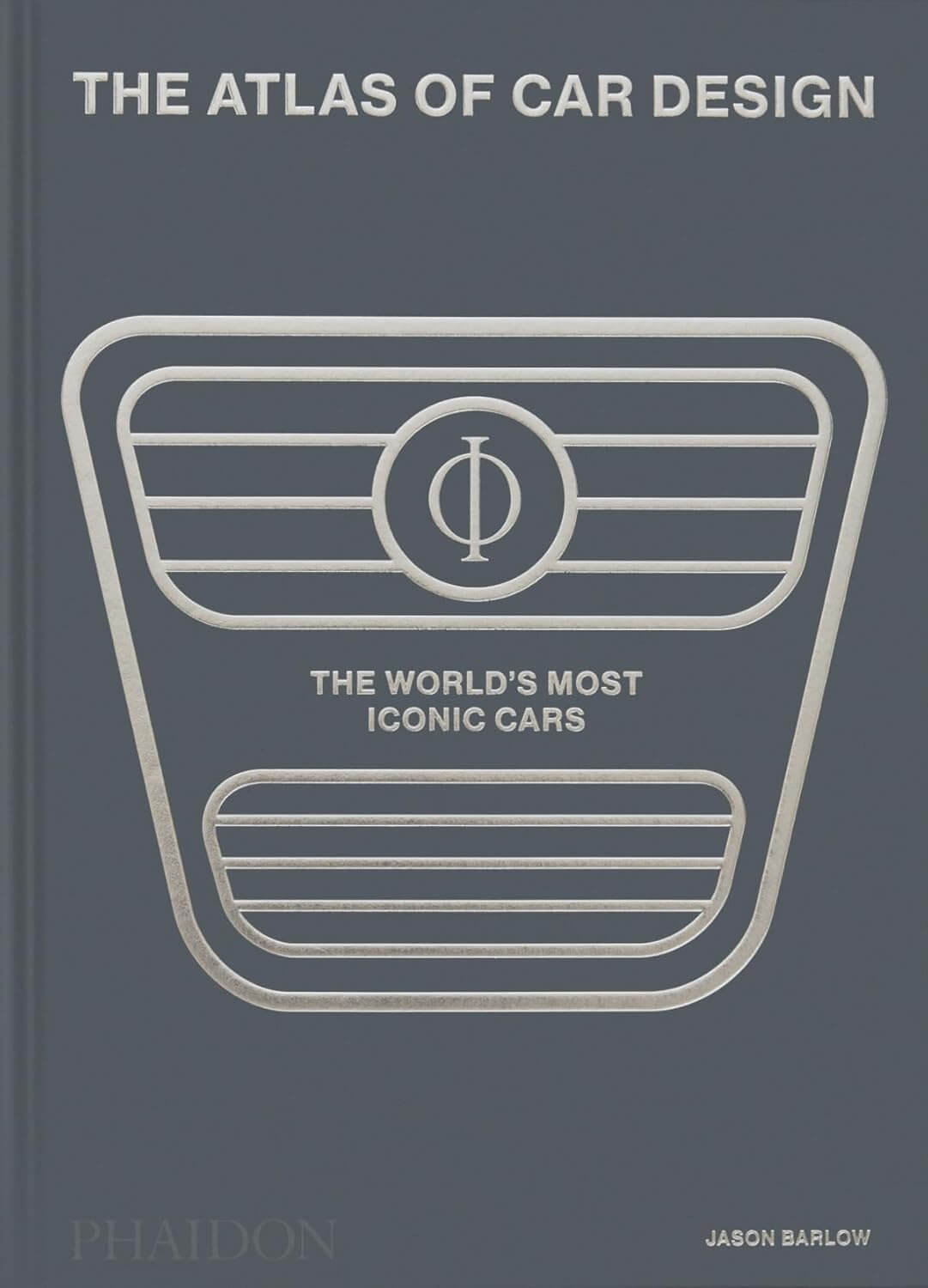
| Author | Jason Barlow, Guy Bird, Brett Berk |
| Publisher | Phaidon |
| Pages | 568 |
| Format | Oversized hardcover |
| Language | English |
I bought this after realizing I couldn't articulate why certain cars felt "right" while others didn't. This book finally gave me the vocabulary — and changed how I look at automotive design entirely.
What makes it essential: This Phaidon masterpiece surveys 650+ cars from 190 manufacturers across 30 countries, organized geographically and chronologically from 1893 to today. Unlike most automotive encyclopedias that feel like spec sheets, the Atlas weaves period photography, studio shots, and original advertising into coherent narratives. Japanese cult classics sit alongside Italian icons, German engineering marvels share pages with American muscle, and each entry explains not just what makes the car significant, but why it matters in the broader context of design history. Doug DeMuro calls it "a fantastic book that captures the quirks and features of car design through the years" — and he's right.
The honest downside: At 568 pages and roughly 4kg, this is genuinely heavy — you need a sturdy table. The comprehensive scope means individual cars get limited pages; enthusiasts of specific marques will want dedicated monographs alongside this. The €70 price is fair for the content but still a commitment. And some might find the geographic organization less intuitive than chronological.
The bottom line: The best single-volume automotive design reference available. This should be your first purchase — it provides the foundation that makes every other book on this list more meaningful.
2. A Man & His Car: Iconic Cars and Stories from the Men Who Love Them
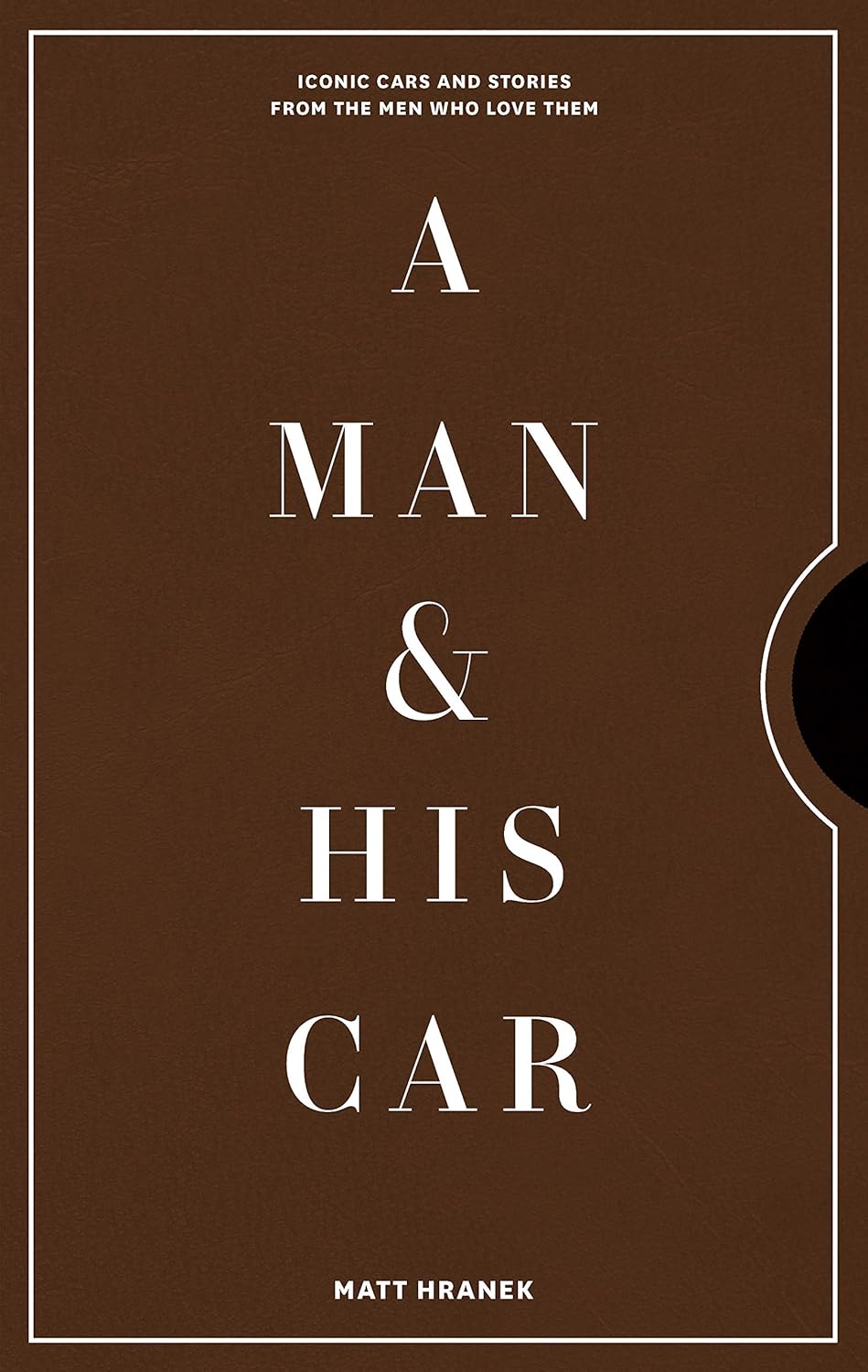
| Author | Matt Hranek |
| Publisher | Artisan |
| Pages | 240 |
| Dimensions | 11.7 x 7.4 x 1.2 inches |
| Language | English |
This is the car book I recommend to people who think they're not interested in cars. The storytelling hook gets them in; the emotional connection happens naturally.
What makes it unique: Matt Hranek's award-winning book features 80+ personal stories from celebrities, collectors, and everyday enthusiasts — and what surprised me was how genuinely moving many of these narratives are. Jay Leno talks about his 1955 Buick Roadmaster with the kind of reverence usually reserved for family heirlooms. Shaquille O'Neal discusses his International trucks. Kevin Costner reflects on the Shelby Mustang from Bull Durham. Ed Burns shares memories of his 1969 Oldsmobile Cutlass Supreme. These aren't spec sheets disguised as stories — they're real emotional connections captured beautifully. The photography is more intimate than you'd expect, often showing cars in their natural habitat rather than sterile studio settings.
The honest downside: At 240 pages, this is lighter than comprehensive surveys — you'll finish it wanting more. The focus on American celebrities means limited international perspective. Some stories feel brief; certain cars deserve deeper exploration. And the narrative approach means less technical information for spec-oriented readers.
The bottom line: The most accessible car book for general audiences — and the one guests will actually pick up and read. Named a Robb Report Best Coffee Table Book and praised by Fortune as "automotive joy." Essential if you want emotional resonance over technical depth.
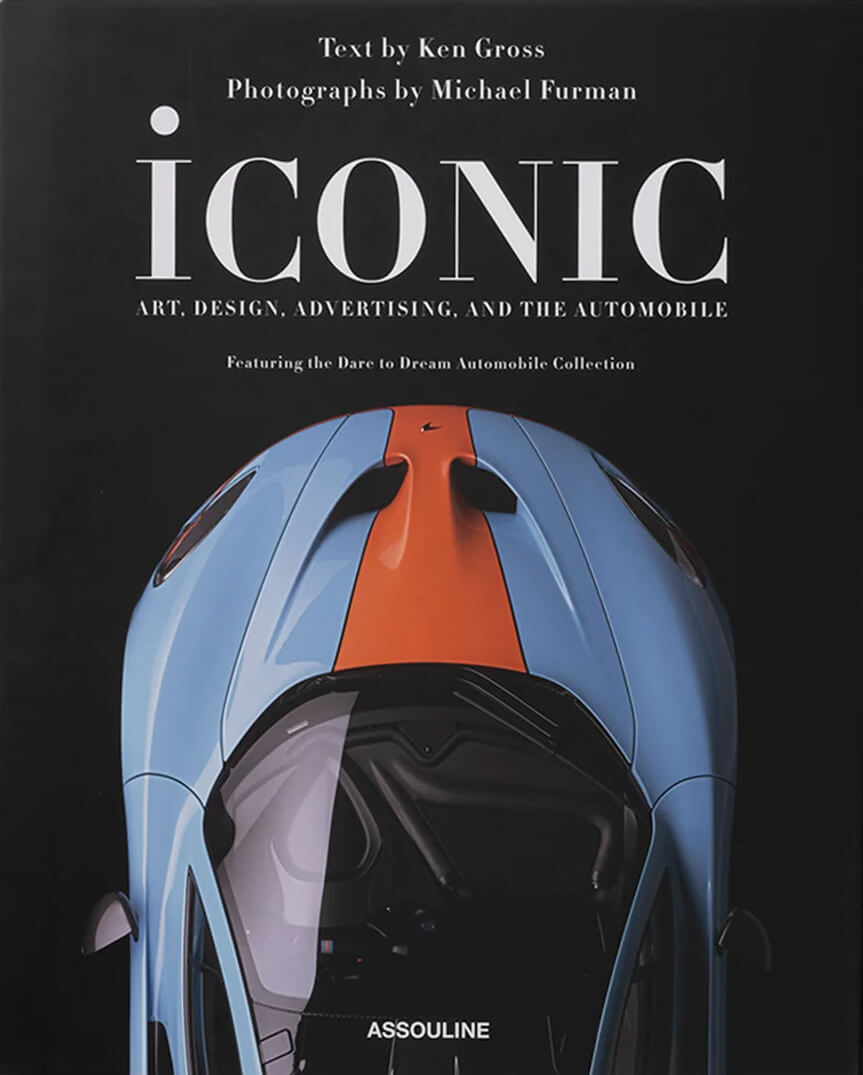
3. ICONIC: Art, Design, Advertising, and the Automobile
| Author | Ken Gross |
| Photographer | Michael Furman |
| Publisher | Assouline |
| Pages | 342 |
| Dimensions | 10 x 13 x 2 inches |
| Language | English |
I discovered this through a collector friend who described it as "what happens when museum curation meets automotive journalism." He was right — this treats cars as cultural artifacts rather than mere machines.
What makes it exceptional: This Assouline luxury publication explores Miles S. Nadal's Dare to Dream Automotive Museum with interviews featuring Jay Leno, Bruce Meyer, and BMW's legendary designer Chris Bangle on what makes a car truly iconic — not just beautiful or fast, but culturally significant. Michael Furman's photography captures Gulf Oil-liveried Ford GTs, Aston Martin DB5s, and Mercedes-Benz 300 SLs with museum-quality precision. The accompanying essay by Chuck Porter on automotive advertising is genuinely insightful, explaining how cars become cultural symbols through media representation.
The honest downside: At €125, this is firmly collector's pricing — you're paying for the Assouline brand premium. The museum focus means limited breadth; you're seeing one collection's perspective. Some might find the theoretical approach (what makes something "iconic"?) less engaging than straight automotive documentation. And at 342 pages, certain cars get thinner treatment than they deserve.
The bottom line: Essential for collectors who already have the foundational books and want something that elevates the conversation. The photography and editorial perspective justify the premium for serious enthusiasts.
Italian Legends
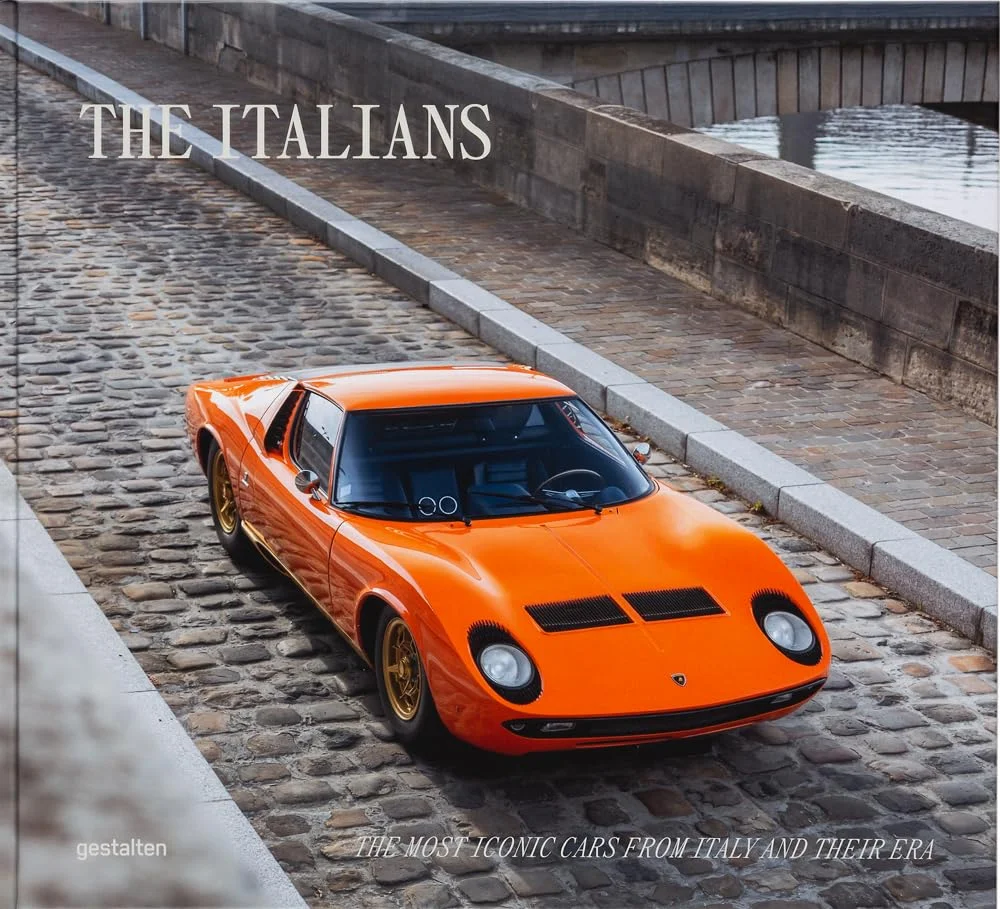
4. Beautiful Machines – The Italians: The Most Iconic Cars from Italy and Their Era
| Editor | gestalten |
| Publisher | gestalten |
| Pages | 320 |
| Dimensions | 11.75 x 10.5 inches |
| Language | English |
Italy is the homeland of "La Bella Macchina" — and this book finally gave me the context to understand why Italian design houses shaped the entire global industry.
What makes it essential: This gestalten publication chronicles Italian automotive design from the 1920s to the early 2000s, celebrating the legendary design houses that influenced everything from Ferraris to Fiats. Pininfarina. Zagato. Bertone. Giugiaro. Gandini. Ghia. These names appear throughout automotive history, and this book finally gives them comprehensive treatment. The combination of archival and contemporary images reveals fascinating stories behind Italy's most desirable automobiles — stories of rivalry, innovation, and an almost religious devotion to aesthetic beauty.
The honest downside: At 320 pages covering 80+ years of design history, individual cars and designers get limited depth. The design-house focus means less attention to specific models than brand-specific books. Some archival images show their age compared to contemporary photography. And the €90 price is significant for what's essentially a survey rather than deep-dive.
The bottom line: Works best as a companion to brand-specific Ferrari or Lamborghini books — providing design context that makes those volumes more meaningful. Essential for understanding WHY Italian cars look the way they do.
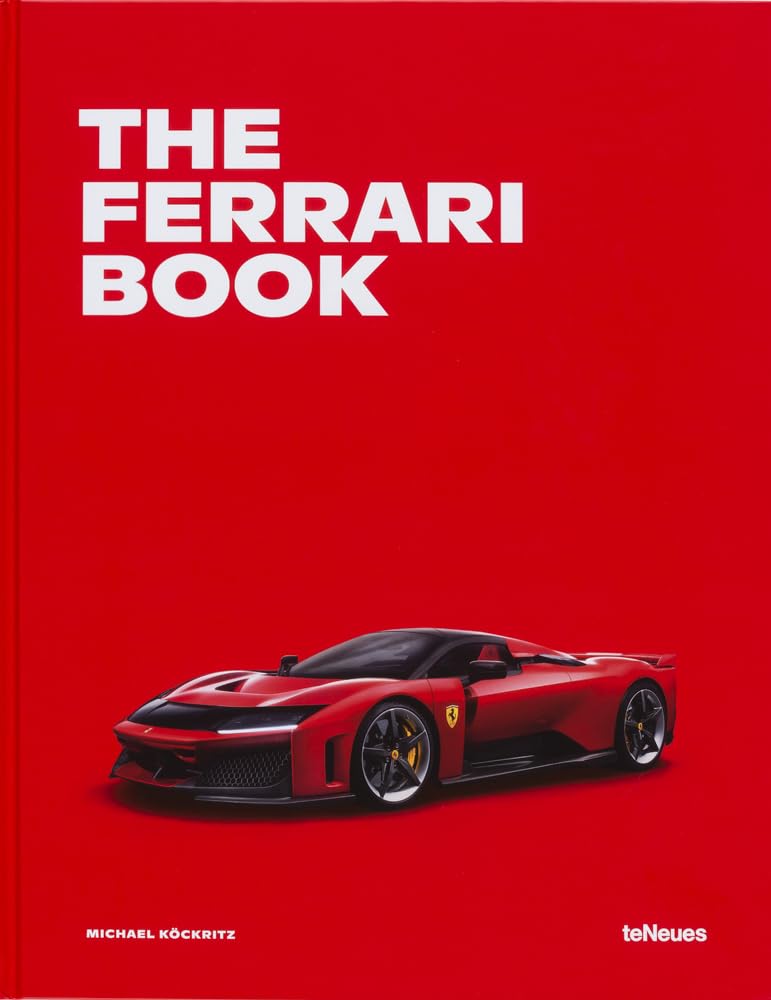
5. The Ferrari Book
| Author | Michael Köckritz |
| Publisher | teNeues |
| Pages | 416 |
| Dimensions | 29.5 x 37.7 cm (XXL format) |
| Language | English, German, French, Italian |
When I first handled this book, the XXL format immediately made an impression. At 29.5 x 37.7 cm and 416 pages, this is the largest Ferrari book I've encountered that still functions as a genuine coffee table piece rather than requiring a dedicated display stand.
What makes it the definitive Ferrari volume: Michael Köckritz and the ramp magazine team trace Ferrari from Enzo's founding vision in 1947 through to today's hybrid hypercars. The exclusive design sketches offer glimpses into the creative process you simply won't find elsewhere — preliminary drawings that show how iconic shapes evolved from concept to production. Technical details satisfy without overwhelming, and interviews with Ferrari insiders provide perspectives that help explain decisions that might otherwise seem purely aesthetic. Part of teNeues' acclaimed Car Book Series.
The honest downside: The XXL format (nearly 30x38cm) requires significant display space — measure your table before purchasing. At €125, this is premium pricing. The multilingual format (English, German, French, Italian) either adds international appeal or fragments your reading experience depending on preference. And the focus on road cars means racing history gets compressed treatment.
The bottom line: The definitive single-volume Ferrari tribute. Essential for anyone with genuine Maranello passion. Skip this if you're looking for motorsport history — for racing coverage, Le Mans 100 serves better.
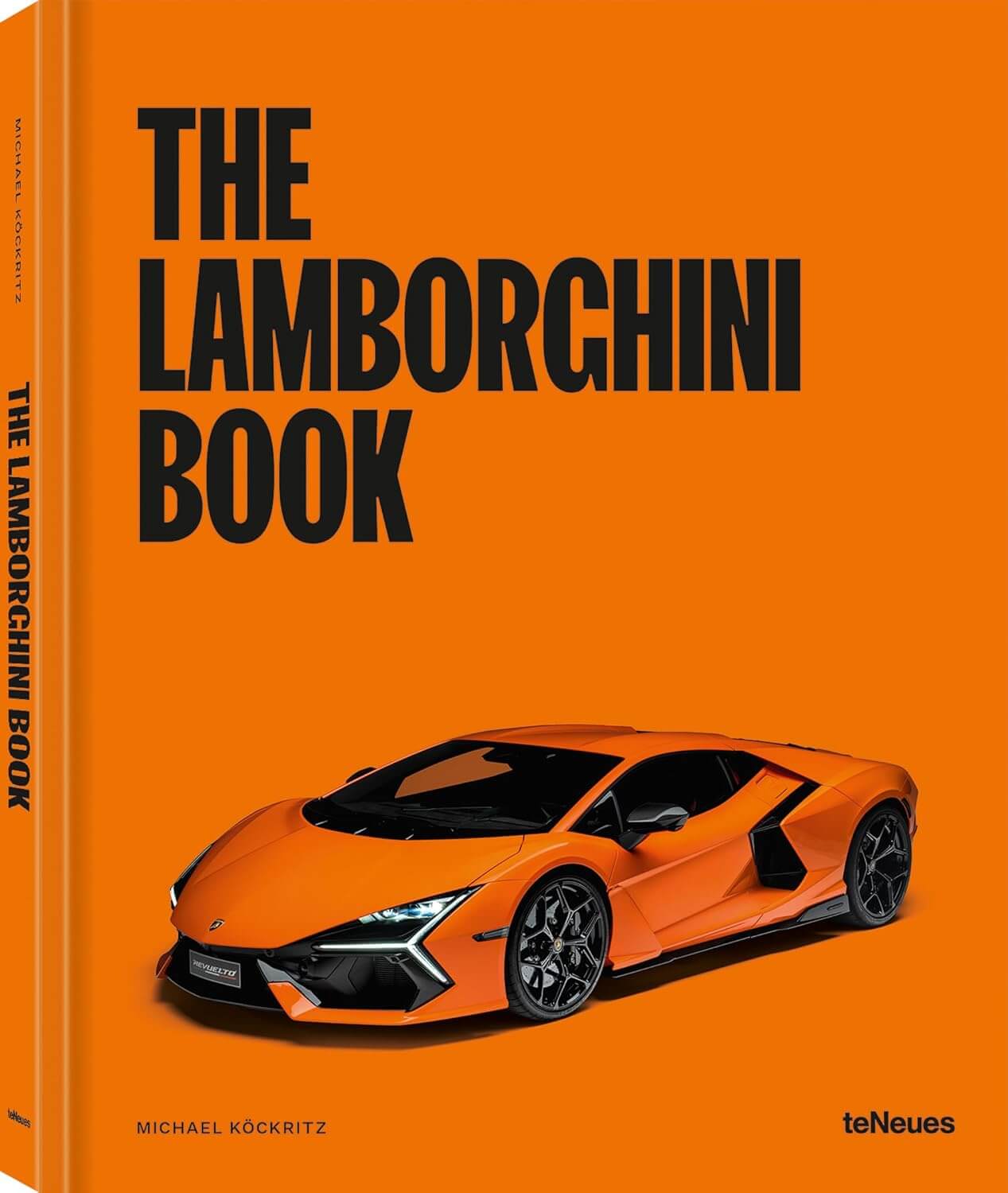
6. The Lamborghini Book
| Author | Michael Köckritz |
| Publisher | teNeues |
| Pages | 304 |
| Dimensions | 37 x 29 cm |
| Language | English, German |
Published for Lamborghini's 60th anniversary, this book understands that Lamborghinis are designed to be looked at — and treats them accordingly.
What makes it exceptional: The Countach. The Aventador. The 350 GT. Each model receives treatment that matches its flamboyant character. Expert interviews and exclusive design sketches reveal the thinking behind Lamborghini's deliberately provocative aesthetic choices — why they chose sharp angles when Ferrari went curved, why they painted cars colors no one else dared. The sections featuring famous owners including Rod Stewart and Gerhard Berger add human interest without feeling like celebrity filler. Lamborghini CEO Stephan Winkelmann also appears, providing insider perspective on brand direction.
The honest downside: At 304 pages versus Ferrari's 416, Lamborghini coverage feels slightly thinner despite similar pricing (€135 vs €125). The bilingual format (English/German only) limits reach compared to Ferrari's four languages. Some might find the brand's deliberately outrageous aesthetic exhausting over 300+ pages. And the anniversary timing means the book ends before recent models.
The bottom line: Essential for Lamborghini loyalists. If you're choosing between this and The Ferrari Book, follow your heart — but honestly, they complement each other beautifully as a pair, representing the two philosophies of Italian supercar design.
German Precision
7. The Porsche Book
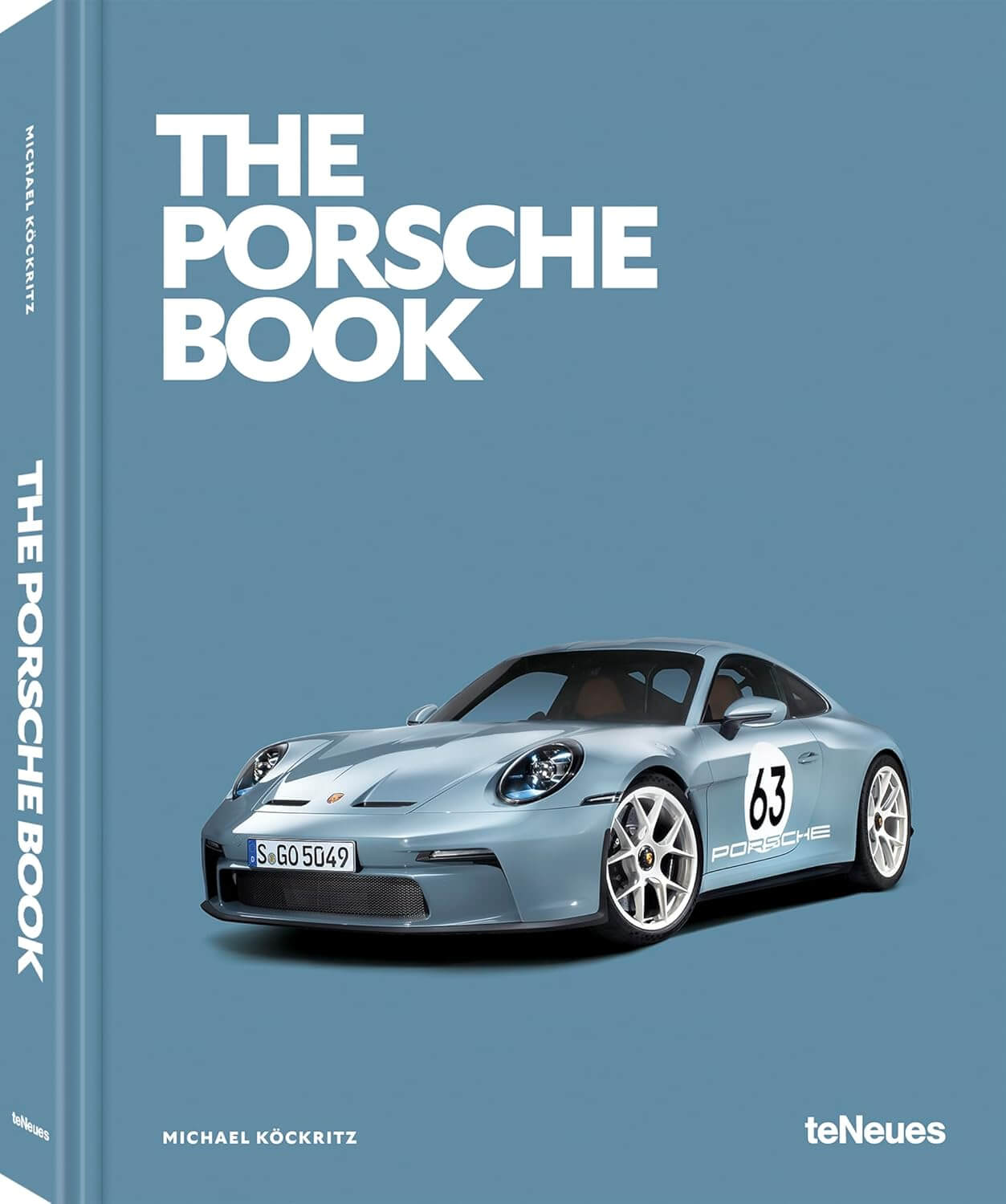
| Author | Michael Köckritz |
| Publisher | teNeues |
| Pages | 304 |
| Dimensions | 29 x 37 cm |
| Language | English, German |
This book takes a different approach than the Italian volumes — appropriately so, given Porsche's engineering-first philosophy. Where Ferrari and Lamborghini books emphasize passion, this one respects precision.
What makes it the definitive Porsche volume: Michael Köckritz delivers high-gloss imagery, exclusive design sketches, and technical details on all series models — yes, including comprehensive 911 coverage across generations. The expert interviews with Porsche insiders reveal the myth behind "Porschefahren" — that unique driving experience Porsche owners constantly reference but rarely articulate well. The engineering emphasis suits Stuttgart's philosophy perfectly; you understand not just what these cars look like but why they perform the way they do.
The honest downside: The XXL format (29x37cm) requires display space you may not have. At €125, this matches Ferrari/Lamborghini pricing despite fewer pages. The engineering focus can feel less emotionally engaging than Italian drama. And the bilingual format means half the text isn't in your language unless you're fluent in both English and German.
The bottom line: Essential for Porsche enthusiasts. The engineering depth distinguishes this from competitors — you'll understand the 911's evolution not just aesthetically but mechanically.
8. Mercedes-Benz Milestones
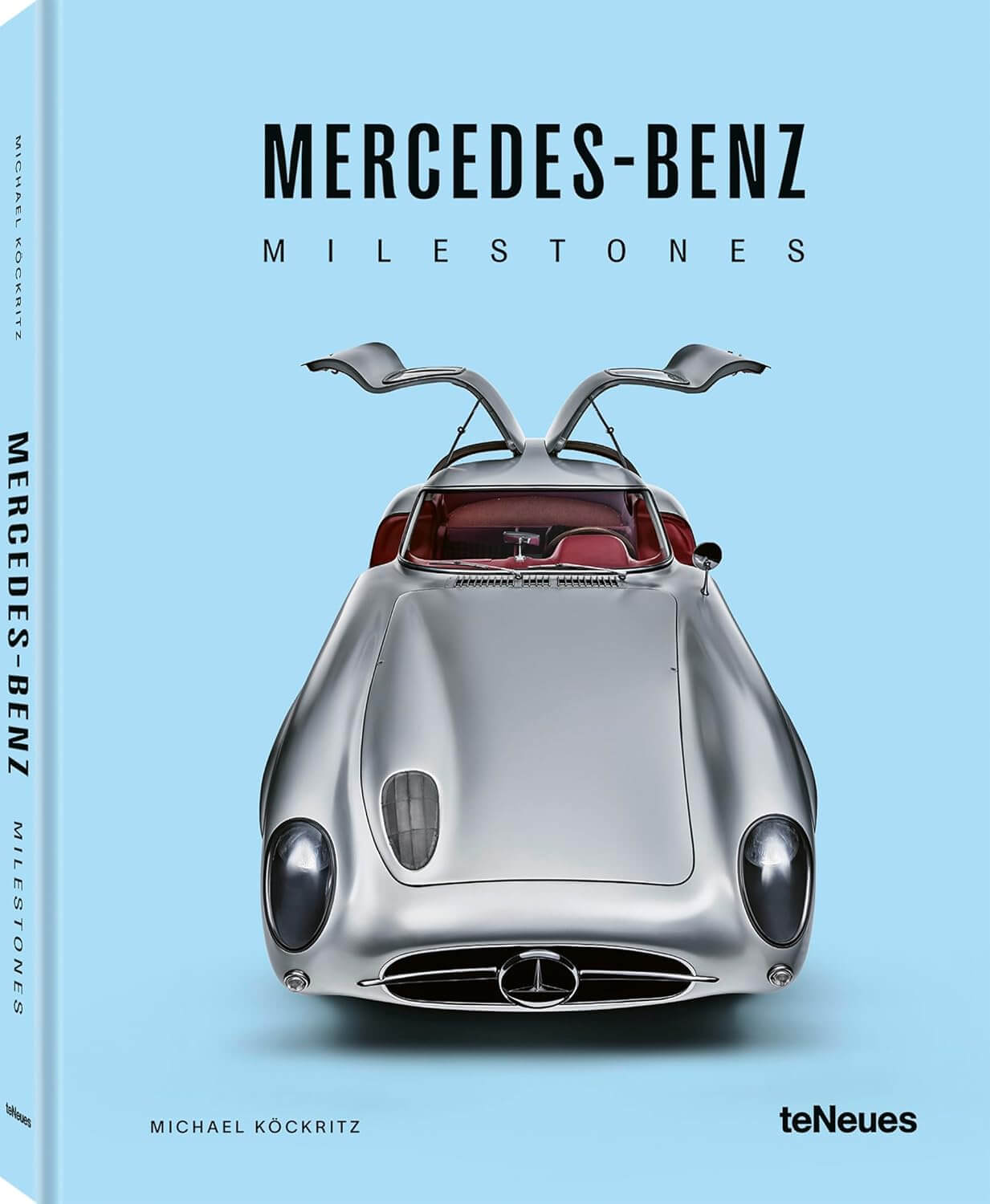
| Author | Michael Köckritz |
| Publisher | teNeues |
| Pages | 224 |
| Dimensions | 21.5 x 14 cm |
| Language | English, German |
The Milestones series from teNeues takes a more accessible approach — smaller format, lower price point, and curated selection rather than exhaustive coverage.
What makes it valuable: Approximately 40 models spanning from Mercedes-Benz's founding to the futuristic EQ electric series. A-Class, S-Class, E-Class, G-Class, AMG variants, racing models, and classics all receive attention proportional to their historical importance. The highlight is the exclusive interview with Gorden Wagener, Head of Global Design at Mercedes-Benz — understanding his design philosophy adds context that makes subsequent pages more meaningful.
The honest downside: At 224 pages and compact format (21.5x14cm), this is more reading book than display piece. The curated 40-model selection means your favorite might be absent. Less visual impact than XXL-format competitors. And the Milestones format prioritizes breadth over depth for any individual model.
The bottom line: Excellent entry point for Mercedes enthusiasts or anyone wanting to understand the brand's significance without committing to a massive volume. Pairs naturally with BMW Milestones for German luxury comparison.
9. BMW Milestones
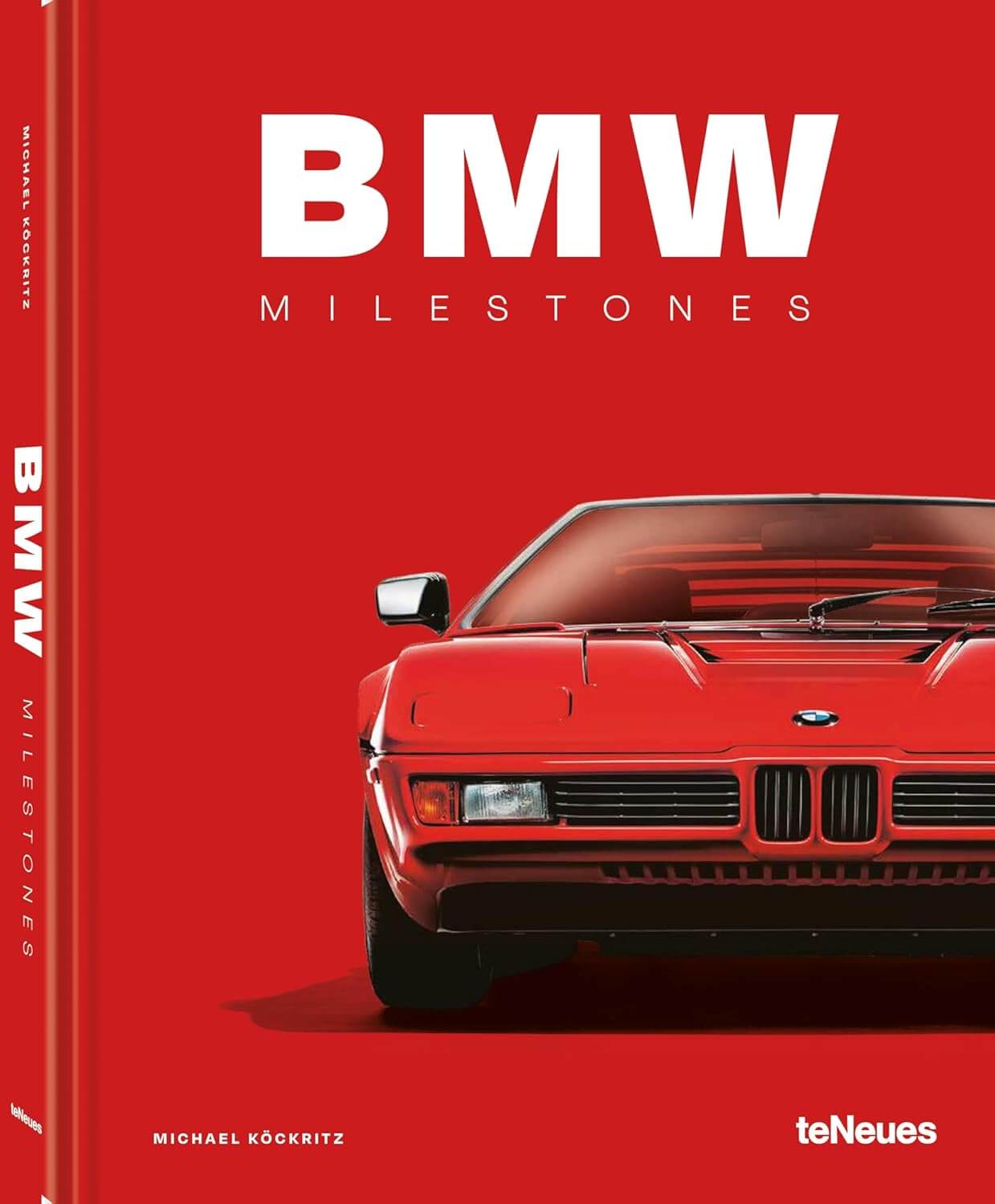
| Author | Michael Köckritz |
| Publisher | teNeues |
| Pages | 224 |
| Dimensions | 21.5 x 14 cm |
| Language | English, German |
Following the same Milestones format as Mercedes, this book explores Munich's flagship brand through its most important models and defining moments.
What makes it worthwhile: A comprehensive journey through Bayerische Motorenwerke's history — special stories, stunning photography, and the key milestones that defined one of Germany's most prestigious automotive brands. The consistent teNeues format means this sits perfectly alongside Mercedes-Benz Milestones, allowing direct comparison of how two German luxury philosophies evolved differently.
The honest downside: The same limitations as Mercedes Milestones apply: compact format limits visual impact, 224 pages means compressed coverage, and the curated selection will disappoint completists. The bilingual format fragments reading experience. And serious BMW enthusiasts will want something more comprehensive.
The bottom line: Best purchased alongside Mercedes-Benz Milestones for a German luxury pairing at €140 total. Solid entry point, but dedicated BMW fans should consider more substantial volumes.
10. Porsche 75 Years: There Is No Substitute (Leather Edition)
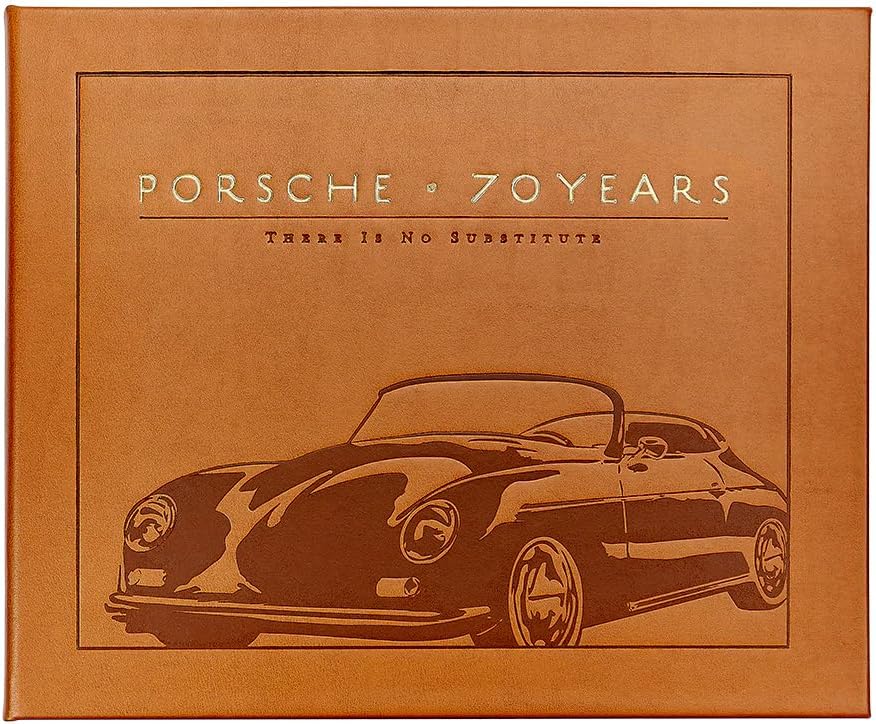
| Author | Randy Leffingwell |
| Publisher | Graphic Image |
| Pages | 256 |
| Dimensions | 12.25 x 10 x 1 inches |
| Binding | Hand-bound bonded leather |
This is the collector's choice — the book you buy for someone who already has everything, or to mark a significant occasion.
What justifies the premium: Randy Leffingwell traces Porsche's complete story from the first 356 to the 918, combining contemporary photos with rare historical images and in-depth analysis. But the real distinction is the presentation: hand-bound in bonded leather by Graphic Image, developed in collaboration with Porsche. The tactile experience of handling this book differs fundamentally from standard hardcovers. Available with gold personalization (up to three characters), making it an exceptional personalized gift.
The honest downside: At €210, you're paying significantly for binding and collectibility rather than content alone. The 256 pages offer less coverage than The Porsche Book's 304 pages at nearly half the price. The leather binding requires more careful storage and handling. And if personalization doesn't matter to you, the premium is harder to justify.
The bottom line: Essential as a gift for serious Porsche enthusiasts or collectors marking milestones. For personal reference, The Porsche Book offers better content-to-price ratio. This is about heirloom quality, not just information.
British Elegance
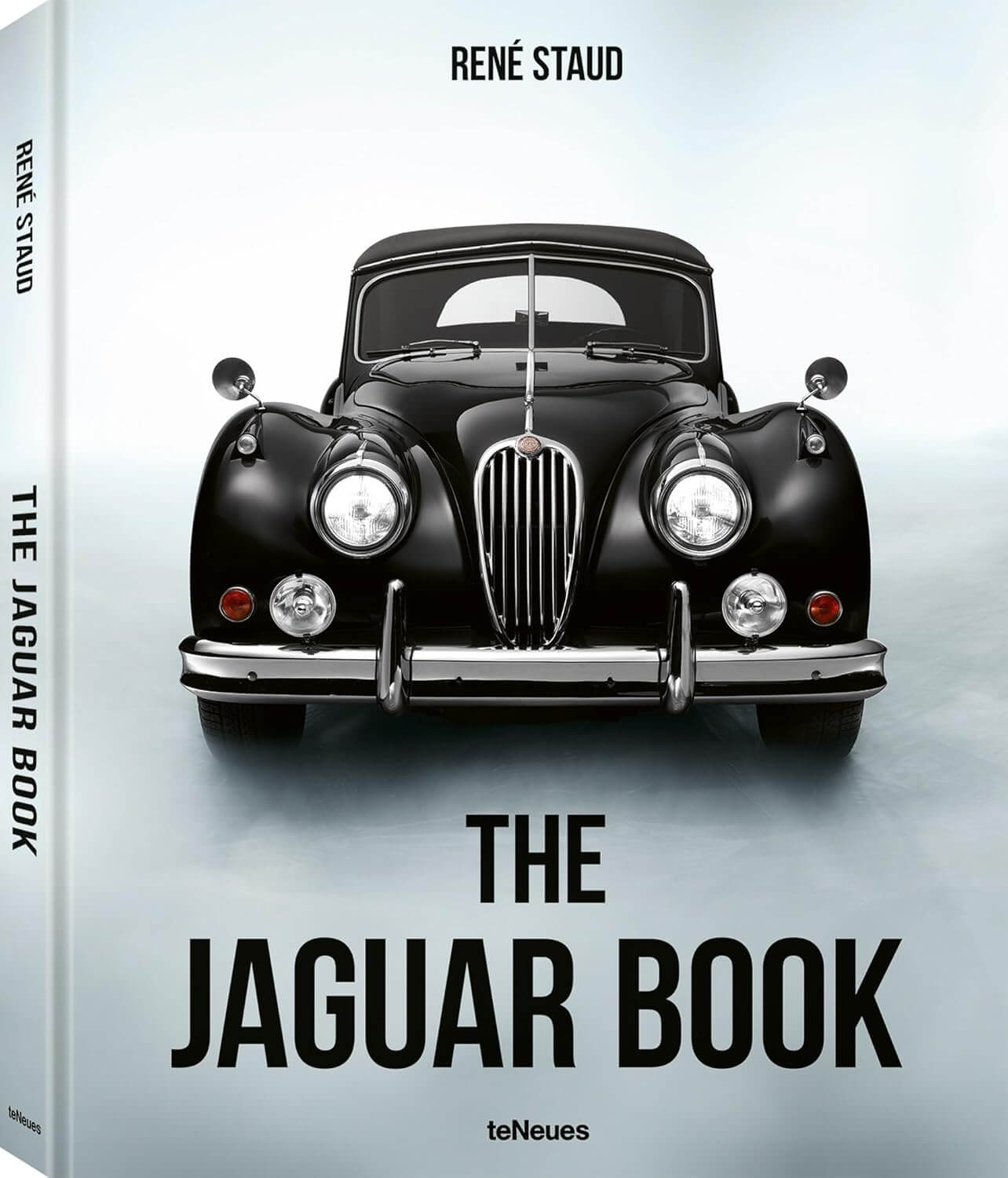
11. The Jaguar Book
| Author | Jürgen Lewandowski |
| Photographer | René Staud |
| Publisher | teNeues |
| Pages | 272 |
| Dimensions | 34 x 27.5 cm |
| Language | English, German |
Released for the E-Type's 60th anniversary, this book captures something essential about British automotive elegance — that specific combination of refinement and restraint.
What makes it exceptional: René Staud's masterful photography is the star here. The 175 stunning photographs capture the E-Type, XK 140, SS 90, Mark 2, and the electric I-Pace with a consistency of vision that lesser automotive books lack. Staud understands how to photograph curves, how light plays across British Racing Green, how to capture presence. The racing history highlights add drama, and legendary film appearances (James Bond's Spectre, Harold and Maude) connect these cars to broader cultural moments.
The honest downside: At €150, this is premium pricing for 272 pages — less content than comparably-priced Italian volumes. The Jaguar marque has less contemporary relevance than Ferrari or Porsche, which may limit appeal. The photography-forward approach means less technical or historical depth. And the bilingual format fragments the reading experience.
The bottom line: Essential for Jaguar enthusiasts and anyone who appreciates automotive photography as art. René Staud's work alone justifies the purchase for serious collectors.
Motorsport & Racing
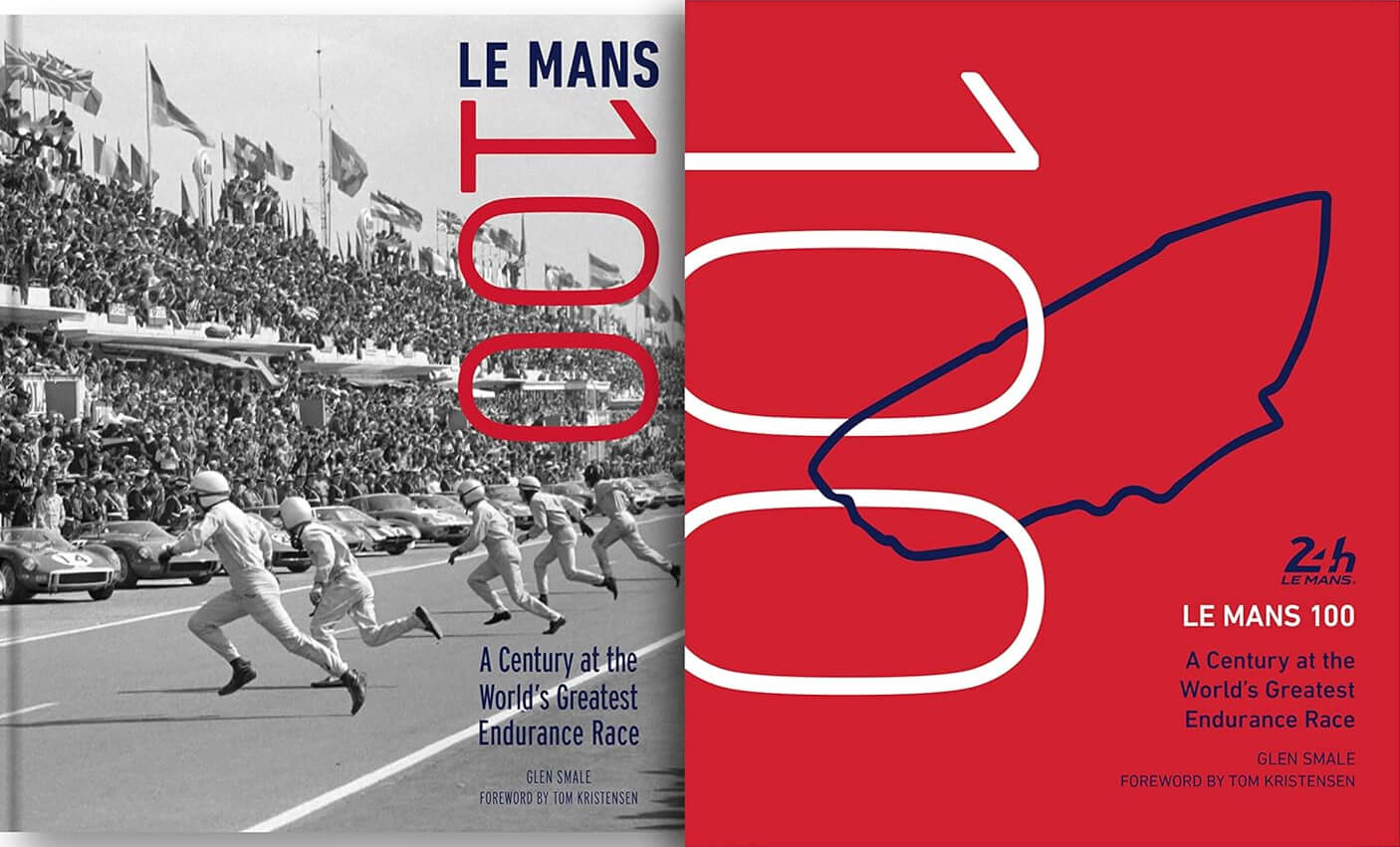
12. Le Mans 100: A Century at the World's Greatest Endurance Race
| Author | Glen Smale |
| Foreword | Tom Kristensen (9x Le Mans winner) |
| Publisher | Motorbooks |
| Pages | 240 |
| Photos | 250+ (including foldout posters) |
If you want racing history rather than road car celebration, this is the book. Period.
What makes it the definitive racing volume: Glen Smale's year-by-year history captures 100 years of drama, tragedy, and triumph at the Circuit de la Sarthe. Tom Kristensen — nine-time Le Mans winner — provides the foreword, setting an appropriately reverential tone. The 250+ photographs include foldout posters, and coverage of Porsche, Ferrari, Ford, Jaguar, Audi, and Toyota victories provides comprehensive manufacturer perspective. But what I found most compelling were the human stories: Juan Manuel Fangio, Stirling Moss, Carroll Shelby, Dan Gurney, Ken Miles, Jackie Ickx. The Ford vs Ferrari battles. The tragic 1955 accident. All documented with meticulous care and genuine emotional weight.
The honest downside: At 240 pages covering 100 years, individual races get compressed treatment — landmark years deserve dedicated chapters. The racing focus means less relevance for road car enthusiasts. Some foldout posters feel gimmicky rather than essential. And Motorbooks production quality, while solid, doesn't match Phaidon or Taschen standards.
The bottom line: Essential for motorsport enthusiasts. If the Ford v Ferrari film sparked your interest, this book provides the depth that movie could only hint at. The best racing-focused automotive book available.
American Muscle
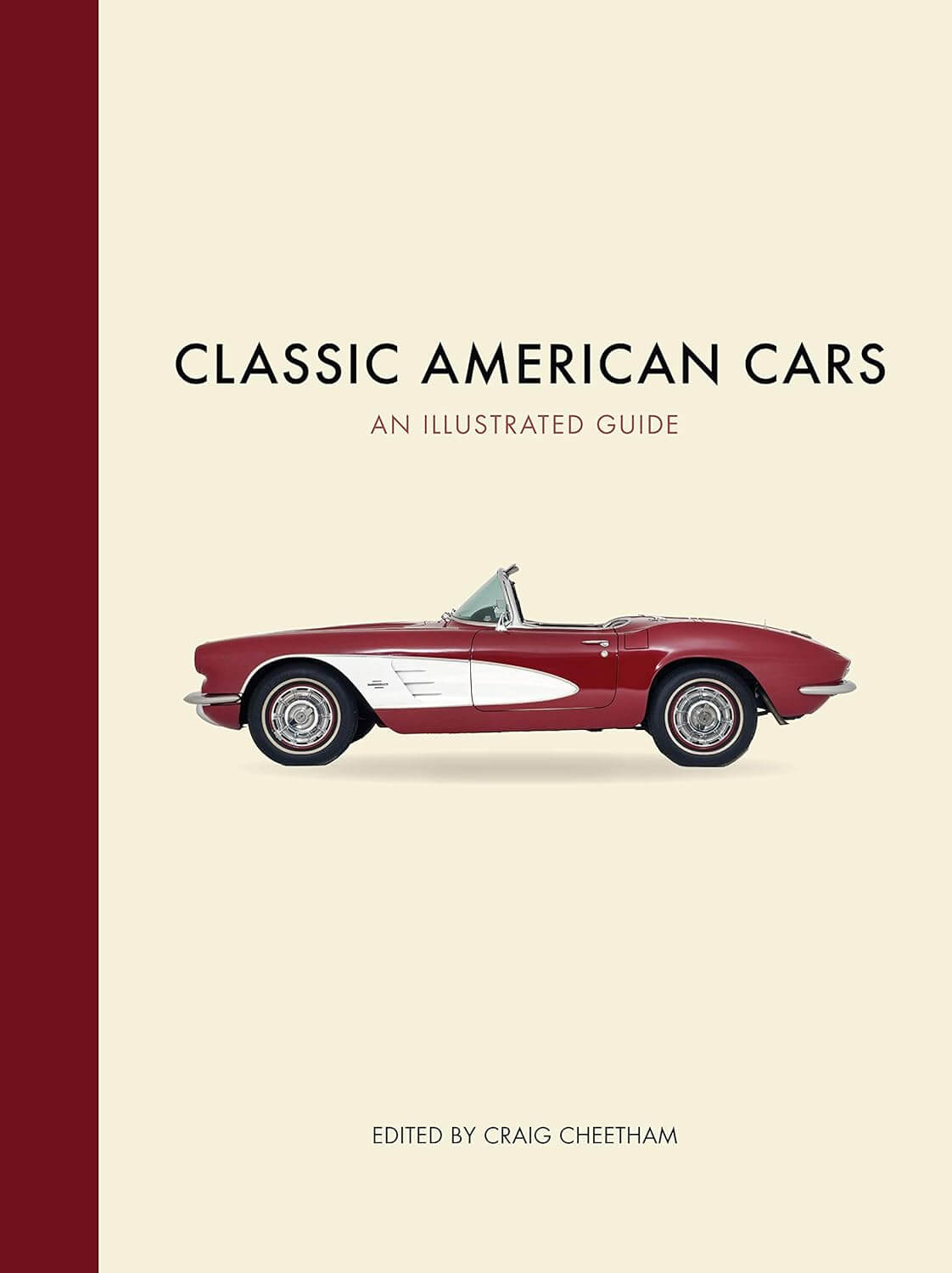
13. Classic American Cars: An Illustrated Guide
| Author | Craig Cheetham |
| Publisher | Chartwell Books |
| Pages | 320 |
| Photos | 1,000+ full-color images |
| Language | English |
This Chartwell Books volume offers remarkable breadth at an accessible price point — the budget pick for American automotive history.
What makes it valuable: Over 1,000 full-color images across 320 pages cover more than 75 of America's greatest automobiles, from the Model T to the '57 Cadillac Eldorado and late '60s Plymouth Roadrunner. Comprehensive specification panels satisfy detail-oriented readers. Fighter plane-inspired designs of the 1940s, tailfins of the 1950s, muscle cars of the 1960s — each era gets vivid documentation that explains the cultural context behind the chrome.
The honest downside: The €30 price reflects production quality that doesn't match premium publishers — paper stock is lighter, binding less robust, photography less consistently excellent. Some images show their age or source limitations. The encyclopedic approach means less narrative depth. And the focus on quantity over quality means no single car gets the treatment it deserves.
The bottom line: Exceptional value for anyone wanting American automotive history without significant investment. Buy this for breadth, supplement with focused volumes for depth on specific eras or models you love.
Car Culture & Lifestyle
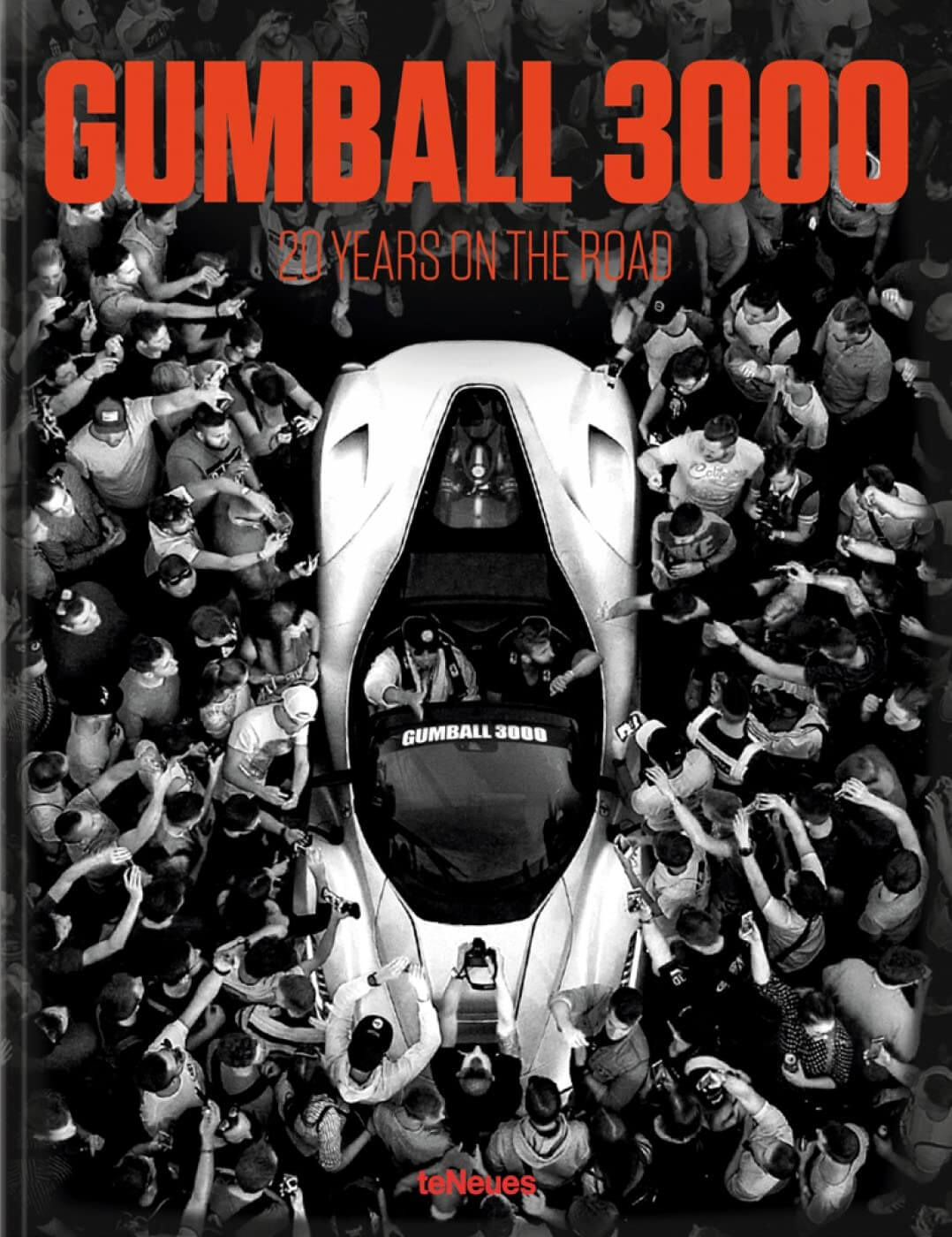
14. Gumball 3000: 20 Years on the Road
| Publisher | teNeues |
| Pages | 160 |
| Photos | 150 color and B&W photographs |
| Language | English |
This is the outlier in my collection — less about automotive purity, more about the culture and spectacle that cars can create.
What makes it different: David Hasselhoff. Snoop Dogg. Tony Hawk. Lewis Hamilton. deadmau5. The Gumball 3000 rally brings together supercars, celebrities, and legendary parties across continents in a best-of compilation celebrating 20 years of automotive culture at its most exuberant. This isn't serious automotive journalism — it's documentation of cars as lifestyle, as status symbol, as excuse for adventure. The energy is completely different from every other book on this list.
The honest downside: At 160 pages, this is the thinnest book in this guide. The €100 price feels steep for content density — you're paying for the cultural cachet rather than editorial depth. The celebrity focus can feel superficial compared to design-focused volumes. And the spectacle approach may grate on purists who see cars as engineering achievements rather than party accessories.
The bottom line: Works best for someone who already has the essential design books and wants something with completely different energy. Essential for understanding cars as contemporary cultural phenomenon rather than historical artifact.
Quick Comparison
| Book | Best For | Price | Pages | My Rating |
|---|---|---|---|---|
| The Atlas of Car Design | Complete overview | €70 | 568 | ★★★★★ |
| A Man & His Car | Storytelling | €45 | 240 | ★★★★★ |
| ICONIC | Museum-quality | €125 | 342 | ★★★★ |
| Beautiful Machines – Italians | Italian design context | €90 | 320 | ★★★★ |
| The Ferrari Book | Ferrari fans | €125 | 416 | ★★★★★ |
| The Lamborghini Book | Lambo fans | €135 | 304 | ★★★★½ |
| The Porsche Book | Porsche fans | €125 | 304 | ★★★★★ |
| Mercedes-Benz Milestones | Mercedes entry point | €70 | 224 | ★★★★ |
| BMW Milestones | BMW entry point | €70 | 224 | ★★★★ |
| Porsche 75 Years Leather | Luxury gift | €210 | 256 | ★★★★½ |
| The Jaguar Book | British elegance | €150 | 272 | ★★★★ |
| Le Mans 100 | Racing history | €75 | 240 | ★★★★★ |
| Classic American Cars | American muscle | €30 | 320 | ★★★★ |
| Gumball 3000 | Car culture | €100 | 160 | ★★★½ |
How I'd Spend Different Budgets
Under €50: Classic American Cars (€30) for 320 pages of American history — unmatched value-per-page. Or A Man & His Car (€45) for emotional storytelling that transcends specs.
€50-100: The Atlas of Car Design (€70) alone provides the best foundation for any automotive library. Or combine A Man & His Car (€45) + Le Mans 100 (€75) = €120 for storytelling + racing coverage.
€100-200: Two paths here. Survey approach: Atlas of Car Design (€70) + A Man & His Car (€45) + Le Mans 100 (€75) = €190 for comprehensive coverage across design, stories, and racing. Or brand-focused: The Ferrari Book (€125) + Beautiful Machines – Italians (€90) = €215 for deep Italian focus.
€200-400: Build a serious foundation: Atlas of Car Design (€70) + The Ferrari Book (€125) + The Porsche Book (€125) + Le Mans 100 (€75) = €395 covers comprehensive survey plus two definitive marque monographs plus racing history.
€500+: The complete serious library: Atlas of Car Design (€70) + A Man & His Car (€45) + The Ferrari Book (€125) + The Lamborghini Book (€135) + The Porsche Book (€125) + Le Mans 100 (€75) = €575 for survey, storytelling, Italian rivals, German precision, and motorsport. Add ICONIC (€125) at €700 for collector's perspective.
Frequently Asked Questions
Which car coffee table book should I start with?
For comprehensive foundation: The Atlas of Car Design (€70) — 568 pages covering 650+ vehicles provides the vocabulary and context that makes every other book more meaningful. For accessibility: A Man & His Car (€45) if you want something guests will actually pick up and read. For brand loyalty: Jump straight to The Ferrari Book, Lamborghini Book, or Porsche Book if you know your allegiance.
Are expensive automotive coffee table books worth the investment?
The €125-150 brand monographs (Ferrari, Lamborghini, Porsche, Jaguar) offer depth and photography quality unavailable in surveys — essential for enthusiasts of those specific marques. The €210 Porsche leather edition adds collectibility and gift potential. But The Atlas of Car Design at €70 proves value isn't always correlated with price. Buy expensive books for specific depth; build breadth with affordable surveys.
What's the best car coffee table book for gifts?
For personalization: Porsche 75 Years Leather Edition (€210) can be embossed with initials. For accessibility: A Man & His Car (€45) works for anyone, not just car enthusiasts. For brand loyalists: Match the recipient's garage — Ferrari, Porsche, and Lamborghini books are safe bets for owners. For racing fans: Le Mans 100 (€75) captures motorsport drama beautifully.
Which book is best for understanding specific brands?
Ferrari: The Ferrari Book (€125) — 416 pages of definitive Maranello coverage. Lamborghini: The Lamborghini Book (€135) — 60th anniversary comprehensive treatment. Porsche: The Porsche Book (€125) or leather edition (€210) for collectors. Jaguar: The Jaguar Book (€150) — René Staud's photography is exceptional. Mercedes/BMW: The Milestones series (€70 each) provides solid introductions.
I want to understand racing history — which books?
Le Mans 100 (€75) is the definitive motorsport volume, covering a century of endurance racing. The brand monographs (Ferrari, Porsche) touch on racing but focus primarily on road cars. For comprehensive motorsport coverage, Le Mans 100 should be your first and potentially only racing book.
Which car coffee table books are best for display?
Largest impact: The Ferrari Book, Lamborghini Book, and Porsche Book in XXL format (29-37cm) make genuine statements. Most elegant: ICONIC (€125) and The Jaguar Book (€150) have sophisticated design. Most versatile: The Atlas of Car Design (€70) provides presence without overwhelming smaller tables.
Last updated: January 2025. Prices fluctuate — I'll update when I notice major changes.