8 Best Bauhaus Coffee Table Books (2026)
After six months building out the modernism section of my design library, these 8 Bauhaus coffee table books earned permanent shelf space — I break down the scholarship, print quality, and who each book is actually for.
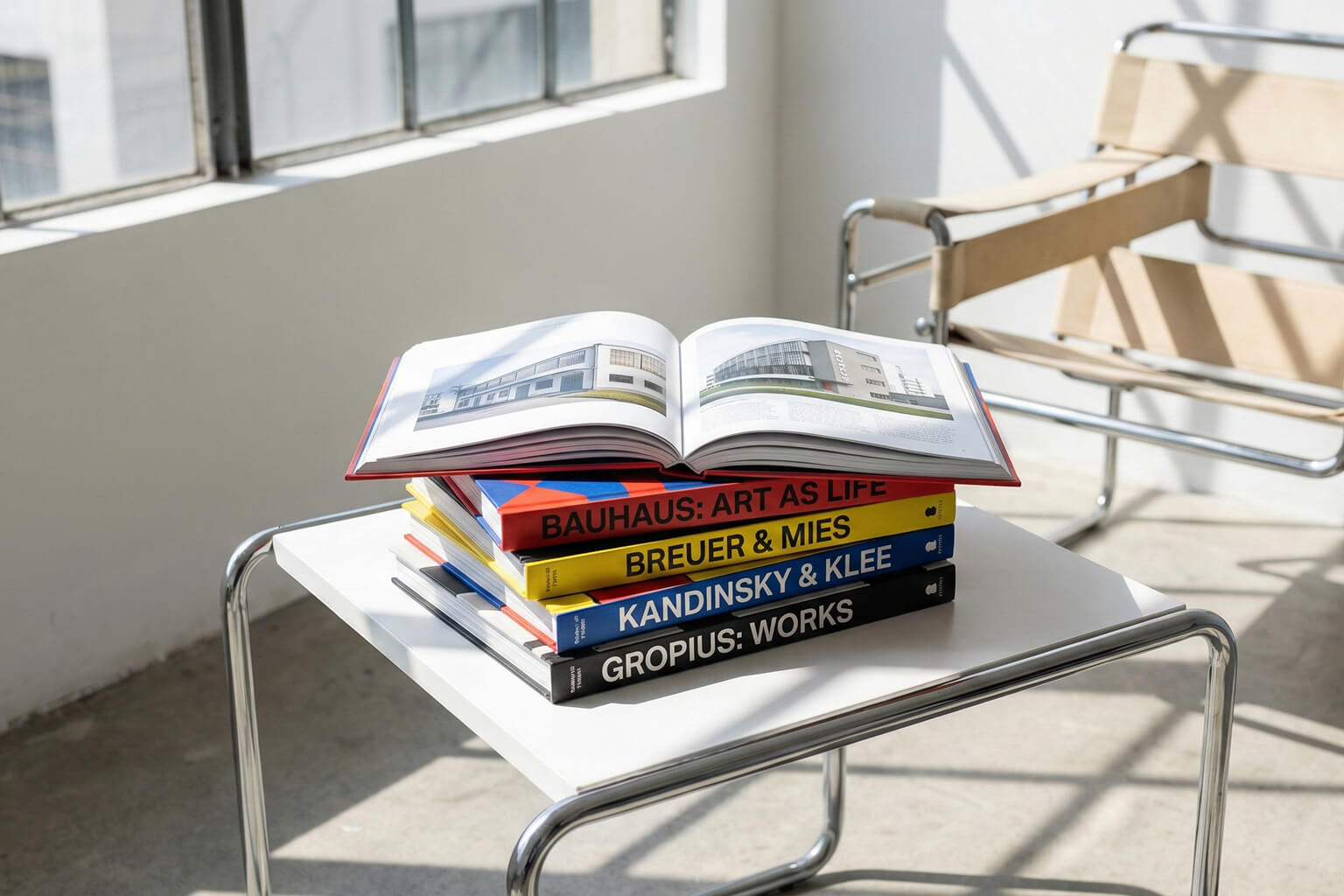
After six months diving deep into Bauhaus literature for my design library, these eight books earned permanent shelf space. I break down the scholarship, print quality, and who each book is actually for — from architecture students to serious collectors.
Disclosure: This article contains affiliate links. If you purchase through these links, I earn a small commission at no extra cost to you. Every book recommended here has been personally reviewed — I only feature titles I'd display in my own home.
My Top 3 Picks at a Glance
Before diving into the full list, here's where I'd start depending on your situation:
- Best Overall: Bauhaus by Magdalena Droste — the definitive reference, unmatched depth
- Best for Gift-Giving: Bauhaus Style by Assouline — luxurious production, contemporary relevance
- Best Value: Mies van der Rohe by Claire Zimmerman — serious scholarship at $20
Now, let's get into each book.
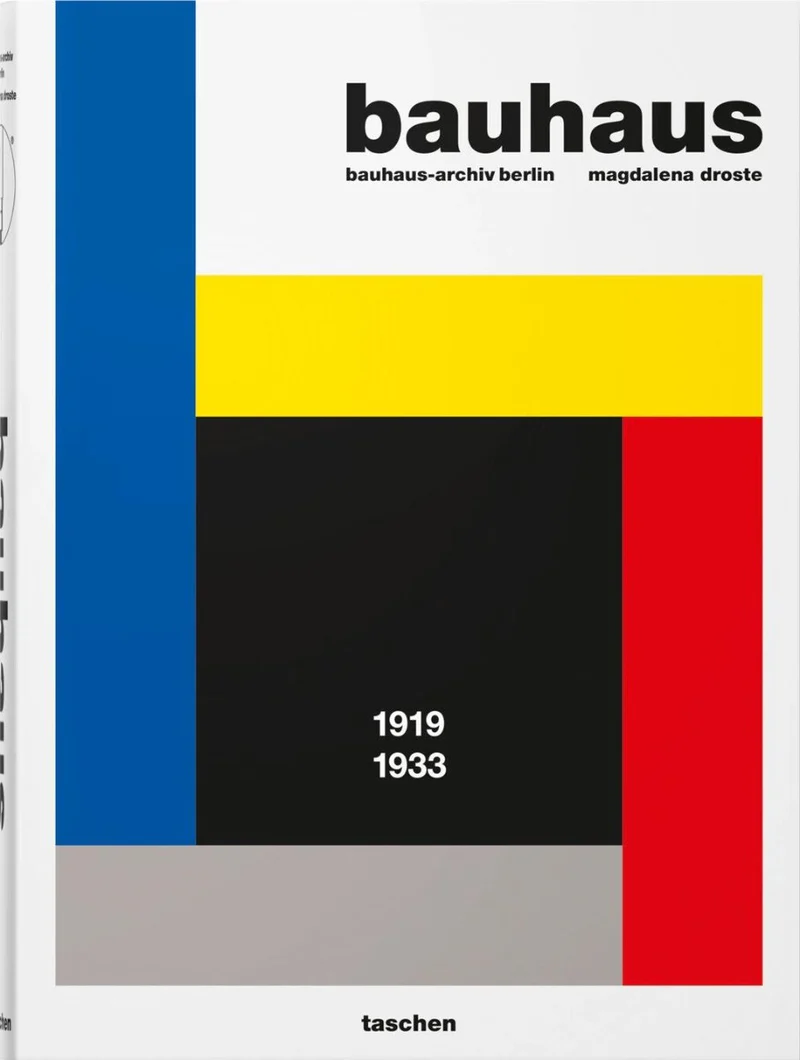
1. Bauhaus by Magdalena Droste (Taschen)
| Author | Magdalena Droste |
| Publisher | Taschen |
| Pages | 400 |
| Dimensions | 10.1 x 1.6 x 14.2 inches |
| Weight | 5.1 lbs |
| Best For | Comprehensive reference |
This was the first Bauhaus book I bought, and it's still the one I recommend most. Created with the Bauhaus-Archiv in Berlin, it's essentially a portable museum — over 550 illustrations spanning the school's entire 14-year history.
What I love: The depth is staggering. When I wanted to understand Marianne Brandt's metalwork evolution, I found a complete visual timeline from pages 178-195. The textile section on Anni Albers (around page 220) includes weaving samples I'd never seen in any other publication. The paper is a heavy semi-gloss that reproduces the Dessau building photography beautifully.
The honest downside: At 5+ pounds, this isn't a casual browse. And while the comprehensiveness is a strength, it can feel overwhelming for newcomers — there's no gentle on-ramp here. The binding is solid but tight; it doesn't lay flat easily on spreads.
The bottom line: If you're buying one Bauhaus book, this is it. The scholarship-to-price ratio is unmatched.
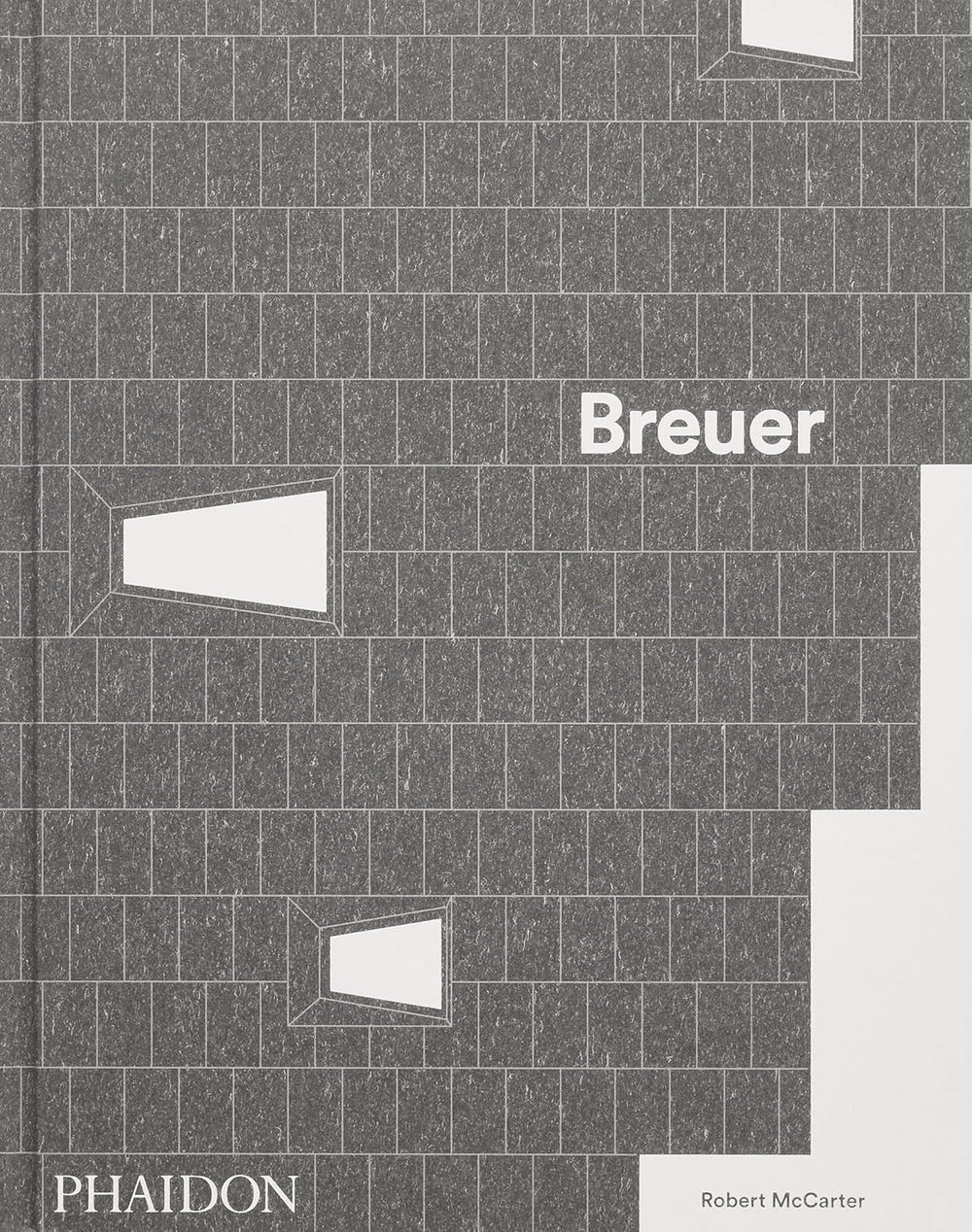
2. Breuer by Robert McCarter (Phaidon)
| Author | Robert McCarter |
| Publisher | Phaidon |
| Pages | 352 |
| Dimensions | 11.2 x 1.8 x 14.5 inches |
| Weight | 6.8 lbs |
| Best For | Architecture & furniture collectors |
The most comprehensive Breuer monograph ever published — and I don't say that lightly. McCarter covers both the architecture (Whitney Museum, UNESCO Headquarters) and the furniture (Wassily Chair, Cesca Chair) with equal scholarly rigor.
What sets it apart: The furniture photography was shot specifically for this publication. When you see the Wassily Chair on page 67, you're looking at newly commissioned work that captures the tubular steel in ways I've never seen before. The chapter connecting his Bauhaus training to his postwar American projects (pages 180-220) filled gaps in my understanding I didn't know I had.
What I wish was different: At $150, this is a serious investment. The weight (nearly 7 pounds) makes it unwieldy for casual reading. And if you're primarily interested in furniture rather than architecture, about 60% of the book won't directly serve that interest.
The bottom line: The definitive Breuer study. Essential for serious modernism collectors, but probably overkill for casual interest.
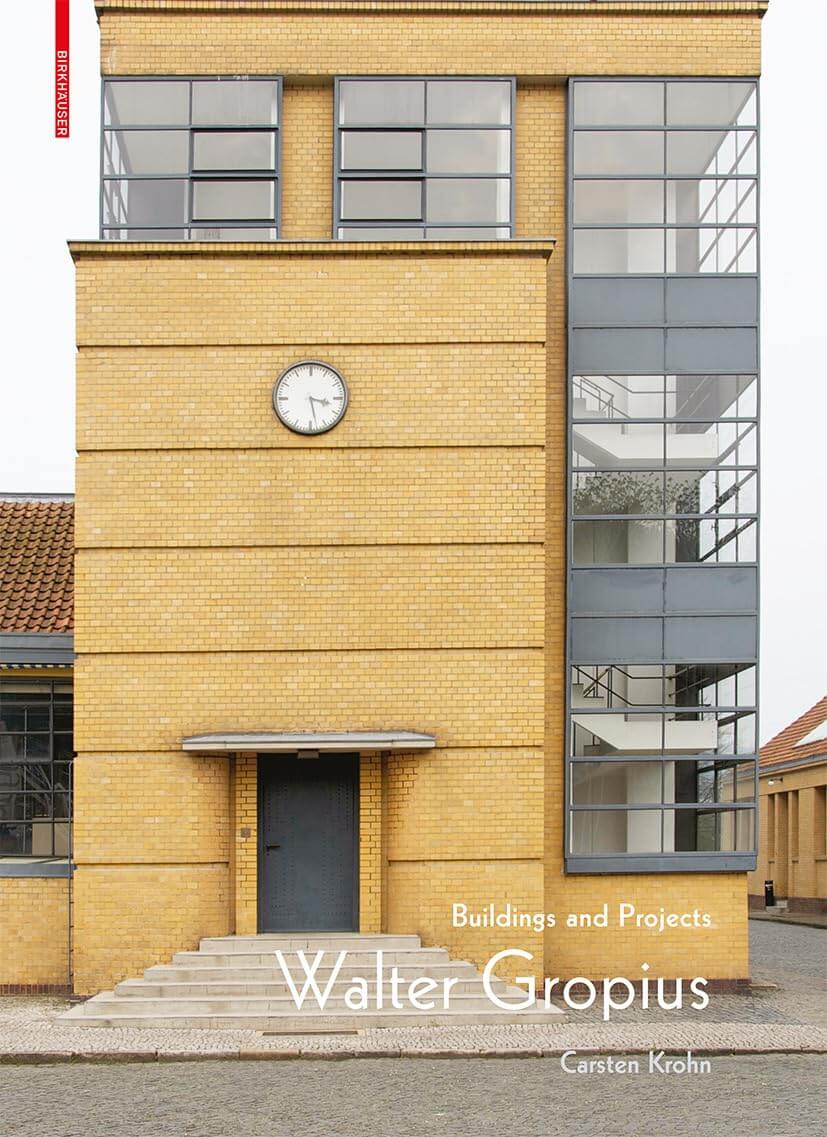
3. Walter Gropius: Buildings and Projects by Carsten Krohn
| Author | Carsten Krohn |
| Publisher | Birkhäuser |
| Pages | 208 |
| Dimensions | 9.4 x 0.9 x 12.6 inches |
| Weight | 2.9 lbs |
| Best For | Architecture historians |
I bought this expecting another greatest-hits overview. Instead, I got documentation of all 74 known Gropius buildings — including early works he never publicized and projects I'd genuinely never heard of.
The revelation: The Siemensstadt Housing Development section (pages 98-112) shows Gropius's social housing vision in newly restored condition. Krohn photographed many buildings himself, and his contemporary images reveal details missing from historical documentation. The Harvard Graduate Center coverage finally helped me understand Gropius's American evolution.
The limitation: This is an architecture book, full stop. No furniture, no graphic design, no workshop documentation. If you want the complete Bauhaus story, this won't give it to you. Also, the academic tone can feel dry compared to more narrative approaches.
The bottom line: The most complete Gropius architectural record available. Essential for architecture students and historians, but too specialized for general Bauhaus interest.
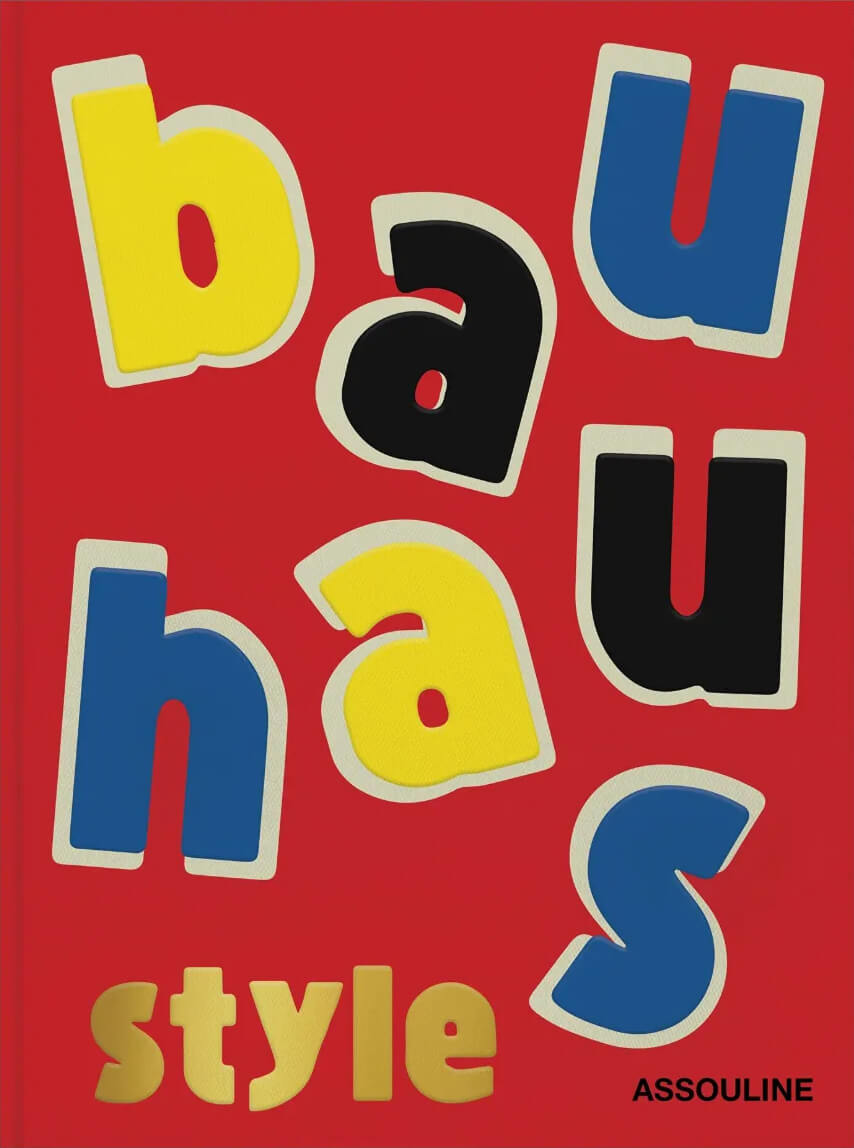
4. Bauhaus Style by Mateo Kries (Assouline)
| Editor | Mateo Kries |
| Publisher | Assouline |
| Pages | 300 |
| Dimensions | 10.2 x 1.4 x 13.0 inches |
| Weight | 4.6 lbs |
| Best For | Design professionals & gifts |
This is the Bauhaus book I gift most often. Mateo Kries directs the Vitra Design Museum, and his curatorial eye shows — rather than just documenting history, he traces 100 years of Bauhaus influence into contemporary design.
Why it works: The visual dialogues between 1920s originals and modern interpretations are genuinely illuminating. Page 156 places a classic Bauhaus poster next to contemporary fashion that uses the same geometric principles — suddenly the connection clicks. The Assouline production quality (linen cover, heavy stock) makes it feel like a luxury object.
The trade-off: This is not a scholarly reference. If you want technical depth or archival documentation, look elsewhere. The contemporary focus means less historical context than academic alternatives. And at $120, you're paying for presentation as much as content.
The bottom line: The book for understanding why Bauhaus still matters. Perfect for working designers and anyone who wants beauty over academic rigor.
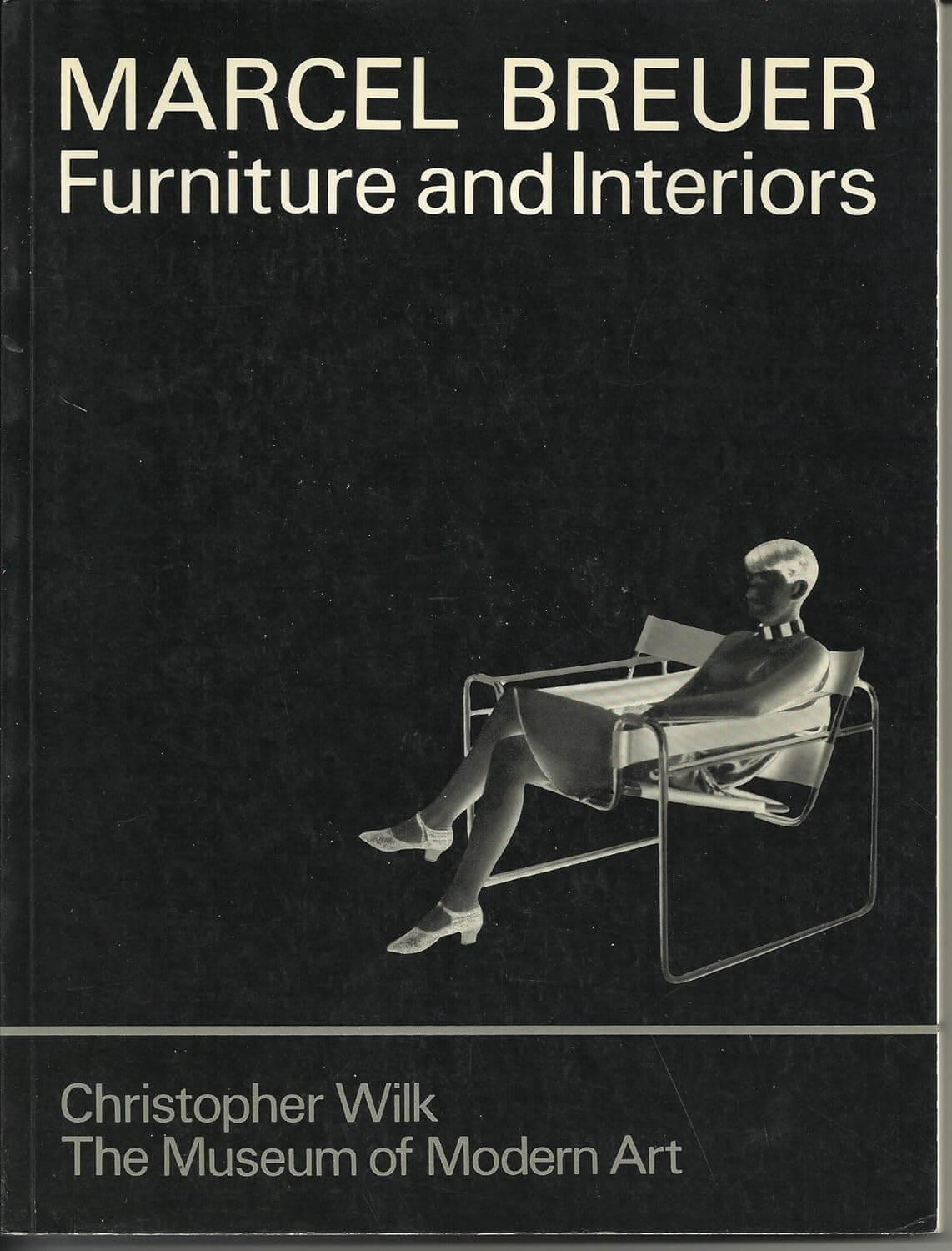
5. Marcel Breuer: Furniture and Interiors by Christopher Wilk (MoMA)
| Author | Christopher Wilk |
| Publisher | Museum of Modern Art |
| Pages | 192 |
| Dimensions | 9.0 x 0.8 x 11.5 inches |
| Weight | 2.2 lbs |
| Year | 1981 |
| Best For | Furniture historians & collectors |
This 1981 MoMA publication was the first comprehensive study of Breuer's furniture design — and in many ways, it's still the best. Christopher Wilk interviewed Breuer himself; that primary source access is irreplaceable.
What makes it irreplaceable: Breuer's own essay "The House Interior" (pages 12-24) gives you his design philosophy in his own words. The 199 photographs document everything from his earliest wooden experiments at the Bauhaus to the tubular steel revolution. Technical drawings show construction details you won't find elsewhere.
The catch: This book is out of print. Expect to pay $35-150 depending on condition. The black-and-white photography, while historically valuable, lacks the visual impact of contemporary publications. Finding a copy in good condition requires patience.
The bottom line: The definitive furniture-focused Breuer study. Worth hunting down for serious collectors, but the McCarter Phaidon book is a more accessible alternative.
6. Bauhaus Architecture by Axel Tilch & Hans Engels (Prestel)

| Author | Axel Tilch |
| Photographer | Hans Engels |
| Publisher | Prestel |
| Pages | 152 |
| Dimensions | 9.5 x 0.7 x 11.8 inches |
| Weight | 2.1 lbs |
| Best For | Travel planning & photography |
I bought this before a Bauhaus architecture tour through Germany, and it proved invaluable. Hans Engels photographed 65 buildings across Europe — many in newly restored condition that historical photos don't capture.
The practical value: Each building gets site plans and current condition notes. When I visited the Dessau Bauhaus, I used Engels' photos (pages 34-52) to identify details I would have missed otherwise. The chronological arrangement helped me understand how Bauhaus architectural thinking evolved from Weimar to Dessau to dissolution.
What's missing: This is a photo book, not a scholarly text. The commentary is informative but brief. If you want deep analysis of why these buildings matter, you'll need to supplement with Krohn or Droste. Some coverage feels thin — the Budapest and Prague sections deserved more pages.
The bottom line: The best visual survey of surviving Bauhaus architecture. Essential for travel planning, less essential for academic understanding.
7. The Spirit of the Bauhaus edited by Olivier Gabet (Thames & Hudson)
| Editor | Olivier Gabet |
| Publisher | Thames & Hudson |
| Pages | 264 |
| Dimensions | 9.6 x 1.1 x 11.4 inches |
| Weight | 3.4 lbs |
| Best For | Multiple scholarly perspectives |
Published with the Musée des Arts Décoratifs, this multi-author approach gives you what single-author books can't: diverse scholarly voices examining different facets of Bauhaus influence. Nicholas Fox Weber from the Albers Foundation contributes alongside other leading experts.
The unique strength: The workshop-by-workshop structure (ceramics, metalwork, textiles, glass, theater, architecture, photography) reveals the interdisciplinary nature of Bauhaus education. The textile chapter (pages 112-138) gave me more insight into Gunta Stölzl's contributions than I'd found anywhere else.
The trade-off: Multiple authors means uneven quality. Some chapters feel more like exhibition catalog entries than deep analysis. The book lacks the narrative coherence of single-author works like Droste's. At 264 pages, individual topics get less space than dedicated monographs offer.
The bottom line: The best multi-perspective overview. Excellent for understanding Bauhaus as an educational philosophy, not just a design style.
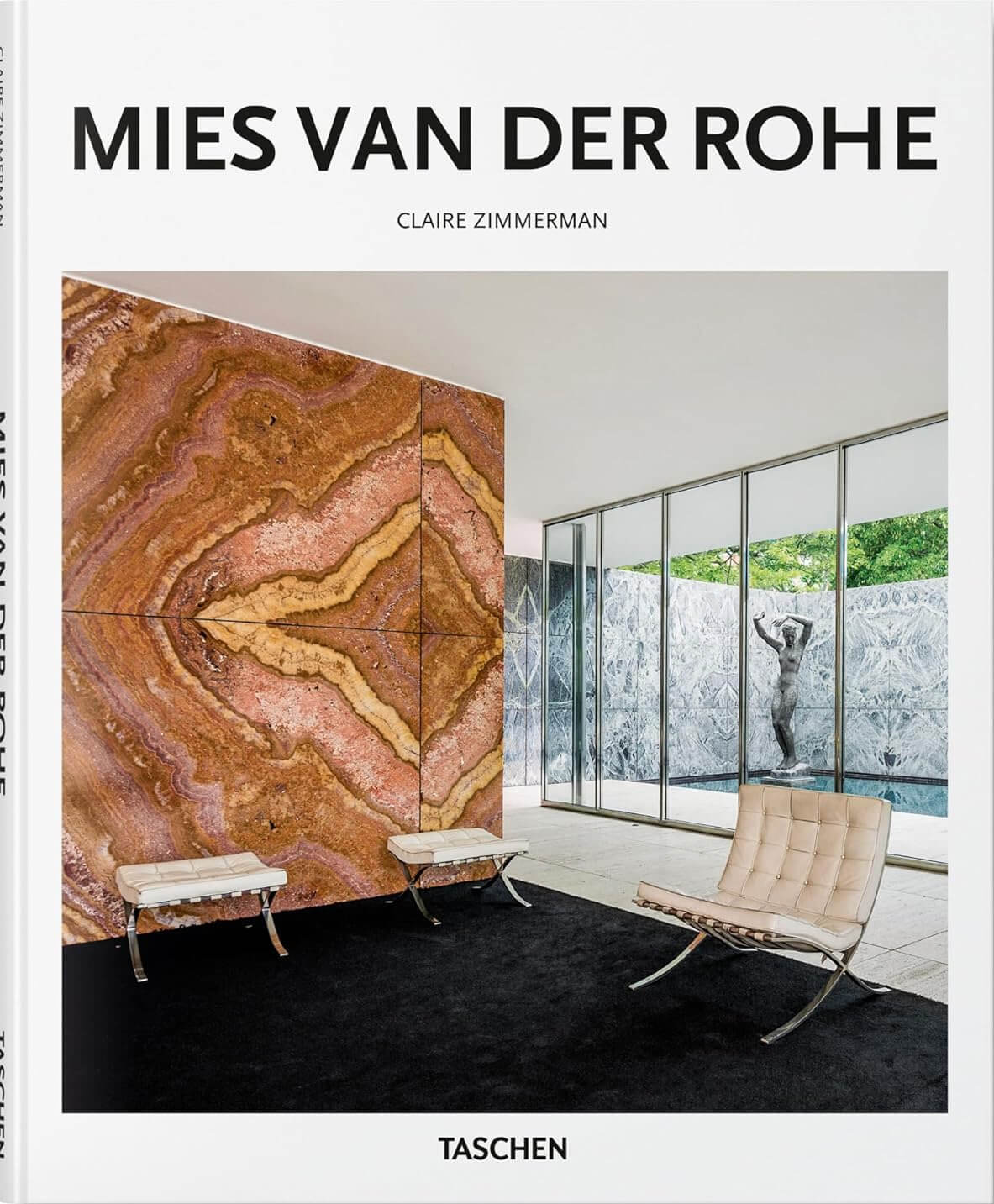
8. Mies van der Rohe by Claire Zimmerman (Taschen)
| Author | Claire Zimmerman |
| Publisher | Taschen |
| Pages | 96 |
| Dimensions | 8.5 x 0.5 x 10.2 inches |
| Weight | 1.1 lbs |
| Best For | Budget-conscious introduction |
Don't let the small format fool you — Claire Zimmerman worked on MoMA's "Mies in Berlin" exhibition, and her scholarship is serious. At $20 for 96 pages covering 20+ projects from 1906-1967, this is exceptional value.
Why I recommend it: The Barcelona Pavilion coverage (pages 34-42) provides everything a newcomer needs. Zimmerman traces Mies's evolution from early traditionalism through his revolutionary modernist phase to the American master period in a clear, accessible narrative. The Seagram Building photography is stunning for this price point.
The limitation: 96 pages means compromise. Major projects get brief treatment; minor projects get omitted entirely. This is an introduction, not a reference — you'll outgrow it if you develop serious interest. The compact format means smaller images than larger-format competitors.
The bottom line: The best entry point for Mies enthusiasts. At $20, there's zero risk — buy it, and upgrade to Phaidon or Birkhäuser if you want more.
Quick Comparison
| Book | Best For | Price | Weight | My Rating |
|---|---|---|---|---|
| Bauhaus (Droste) | Comprehensive reference | $80 | 5.1 lbs | ★★★★★ |
| Breuer (McCarter) | Architecture & furniture | $150 | 6.8 lbs | ★★★★★ |
| Walter Gropius (Krohn) | Architecture historians | $69 | 2.9 lbs | ★★★★ |
| Bauhaus Style (Kries) | Design professionals | $120 | 4.6 lbs | ★★★★½ |
| Breuer Furniture (Wilk) | Furniture collectors | $35-150 | 2.2 lbs | ★★★★ |
| Bauhaus Architecture (Tilch) | Travel planning | $55 | 2.1 lbs | ★★★★ |
| Spirit of Bauhaus (Gabet) | Multiple perspectives | $70 | 3.4 lbs | ★★★★ |
| Mies van der Rohe (Zimmerman) | Budget introduction | $20 | 1.1 lbs | ★★★★½ |
How I'd Spend Different Budgets
Under $30: Start with Mies van der Rohe by Zimmerman. Serious scholarship at an accessible price — you'll understand Bauhaus architectural principles without financial commitment.
$50-100: The Droste Bauhaus is the clear choice. Nothing else offers this depth at this price. Add Bauhaus Architecture by Tilch if you want contemporary photography of the buildings.
$100-200: Build a two-book foundation: Droste for comprehensive overview plus either Bauhaus Style (contemporary relevance) or Spirit of the Bauhaus (workshop detail).
$200+: The serious collector's approach: Droste (overview) + Breuer by McCarter (master study) + Krohn's Gropius (architectural completeness). This combination covers the movement from every angle.
Frequently Asked Questions
Which Bauhaus book should I start with?
For most people, the Droste Taschen edition offers the best balance of scholarship, visual quality, and price. If budget is a concern, Zimmerman's Mies van der Rohe at $20 provides an excellent entry point without sacrificing academic rigor.
Are these books available in German?
Most titles exist in both English and German editions. The Droste Taschen and Krohn Birkhäuser books were originally written in German; English translations maintain the same visual content. For archival depth, German editions sometimes include additional materials.
Which books cover Bauhaus women designers?
The Droste comprehensive volume and Spirit of the Bauhaus give substantial coverage to Anni Albers, Marianne Brandt, and Gunta Stölzl. For dedicated focus on women designers, consider supplementing with specialized studies outside this list.
Is the 1981 MoMA Breuer book worth hunting down?
If furniture design is your primary interest and you're willing to search, yes. The Breuer interviews are irreplaceable primary sources. However, the new McCarter Phaidon book is more accessible and includes both furniture and architecture with contemporary photography.
Which book is best for understanding Bauhaus influence on today's design?
Bauhaus Style by Assouline explicitly traces 100 years of influence, showing connections between original Bauhaus principles and contemporary applications. It's less historical, more inspirational.
Last updated: January 2026. Prices may vary. I'll update individual reviews as new editions release.