12 Best Porsche Coffee Table Books (2026)
Porsche books and 911 books worth the shelf space, compared by price, format and purpose, from a $35 photography classic to a $249 leather-bound edition.
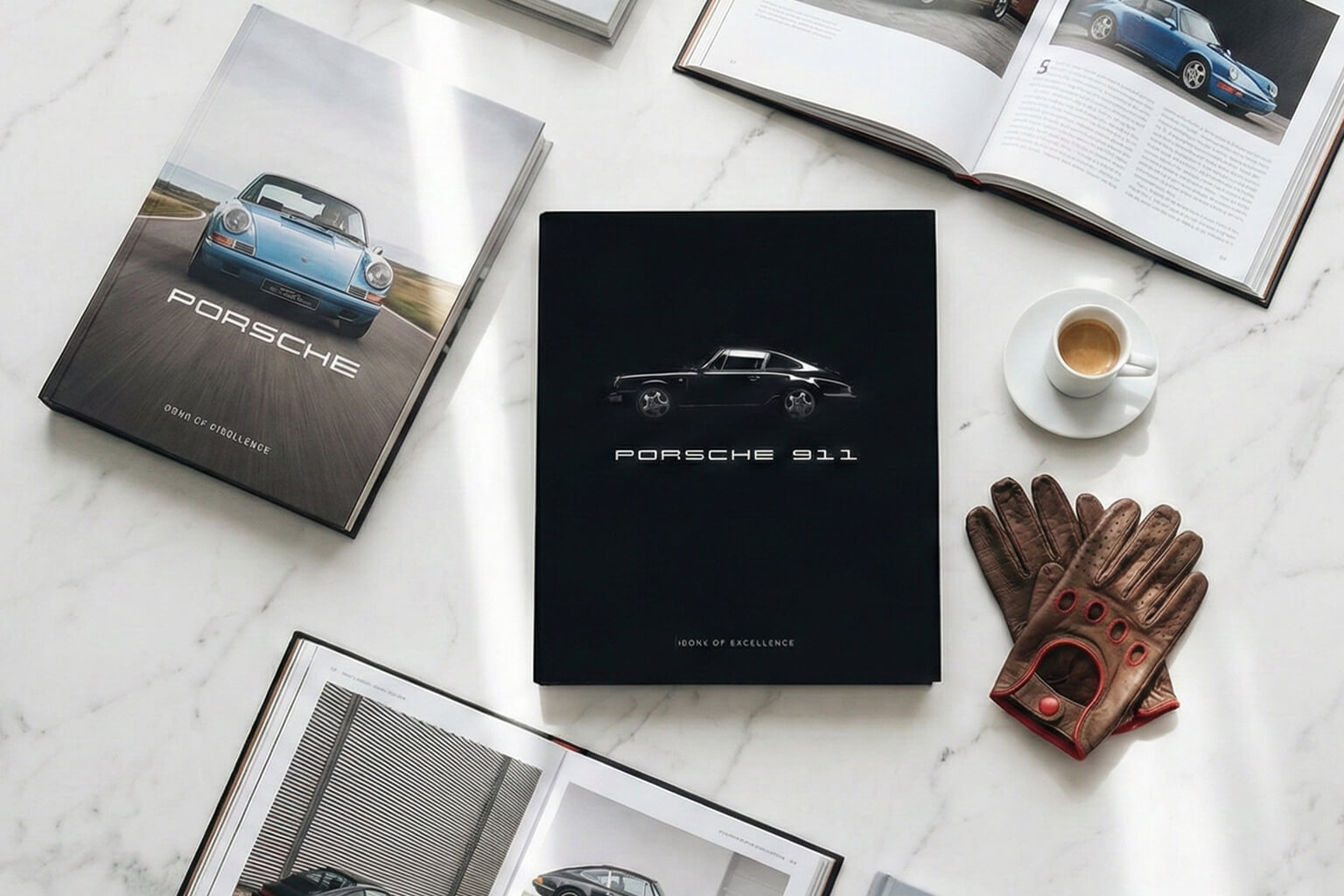
I've been collecting automotive books for over ten years, and Porsche accounts for roughly a third of my shelf space. That's not an accident: no other manufacturer's publishing partners produce books at this volume and quality. The problem is sorting through them. There are easily sixty or seventy Porsche titles in print at any given time, several of them with near-identical names, ranging from serious engineering references to lifestyle volumes with more silver foil than substance. This guide covers the twelve I'd recommend, says what each one does well and where it falls short, and untangles the two title mix-ups that catch the most buyers: Randy Leffingwell's four look-alike Porsche books, and the two different teNeues volumes both called The Porsche Book.
Disclosure: This article contains affiliate links. If you purchase through these links, I earn a small commission at no extra cost to you. No book here was sent for review. Most are on my own shelves; the three entries marked Sourced pick are ones I haven't handled yet, so those write-ups rest on publisher specifications and published reviews, and say so.
My Top 3 Picks at a Glance
- Best Overall: Porsche Milestones. 224 pages of curated brand history made with ramp magazine, covering 55 milestone models from the 356 to the 911 GT2 RS, for about $55.
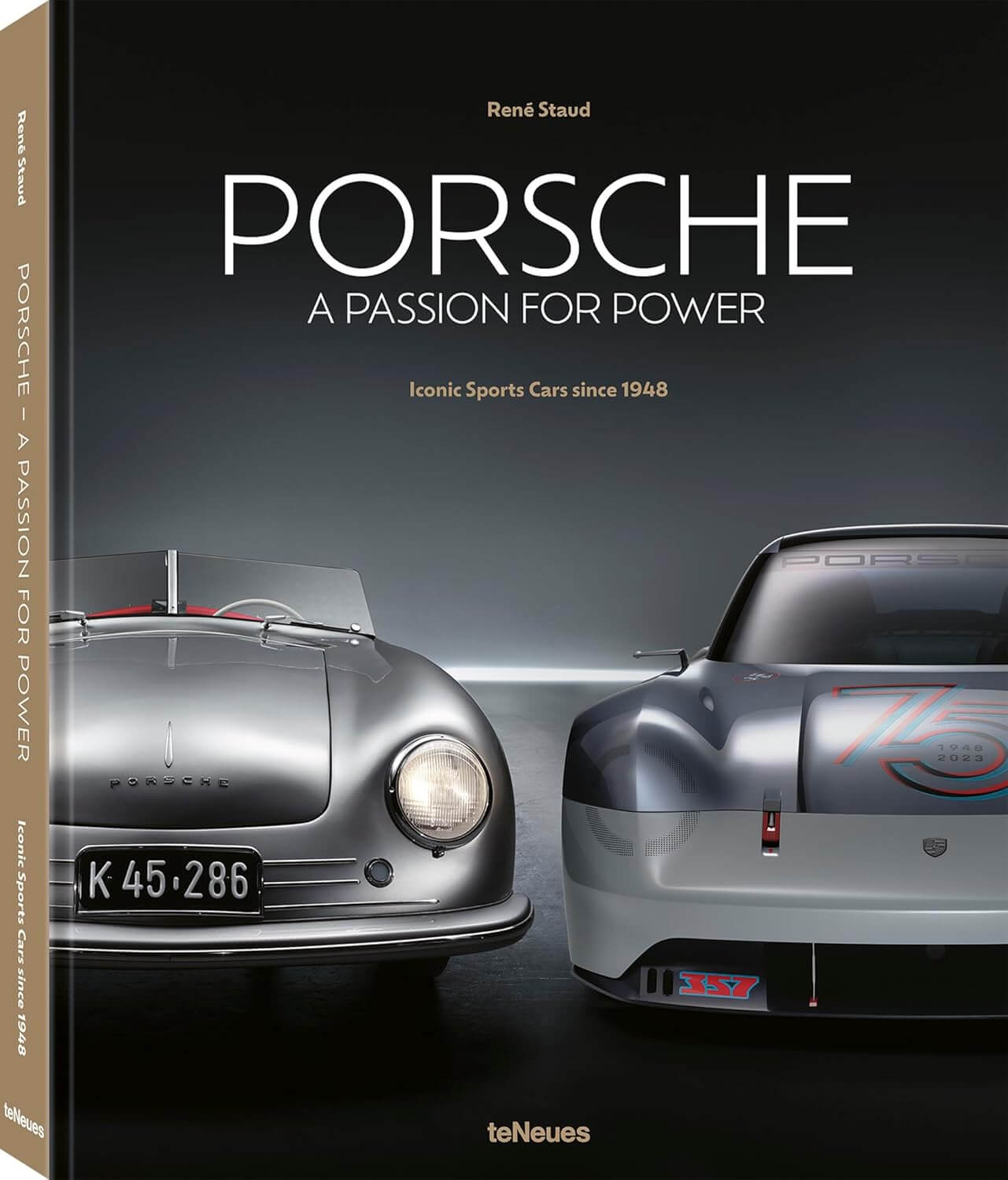
- Best for Display: Porsche: A Passion for Power. René Staud's studio photography at nearly 12 x 14 inches, under a silver foil cover.
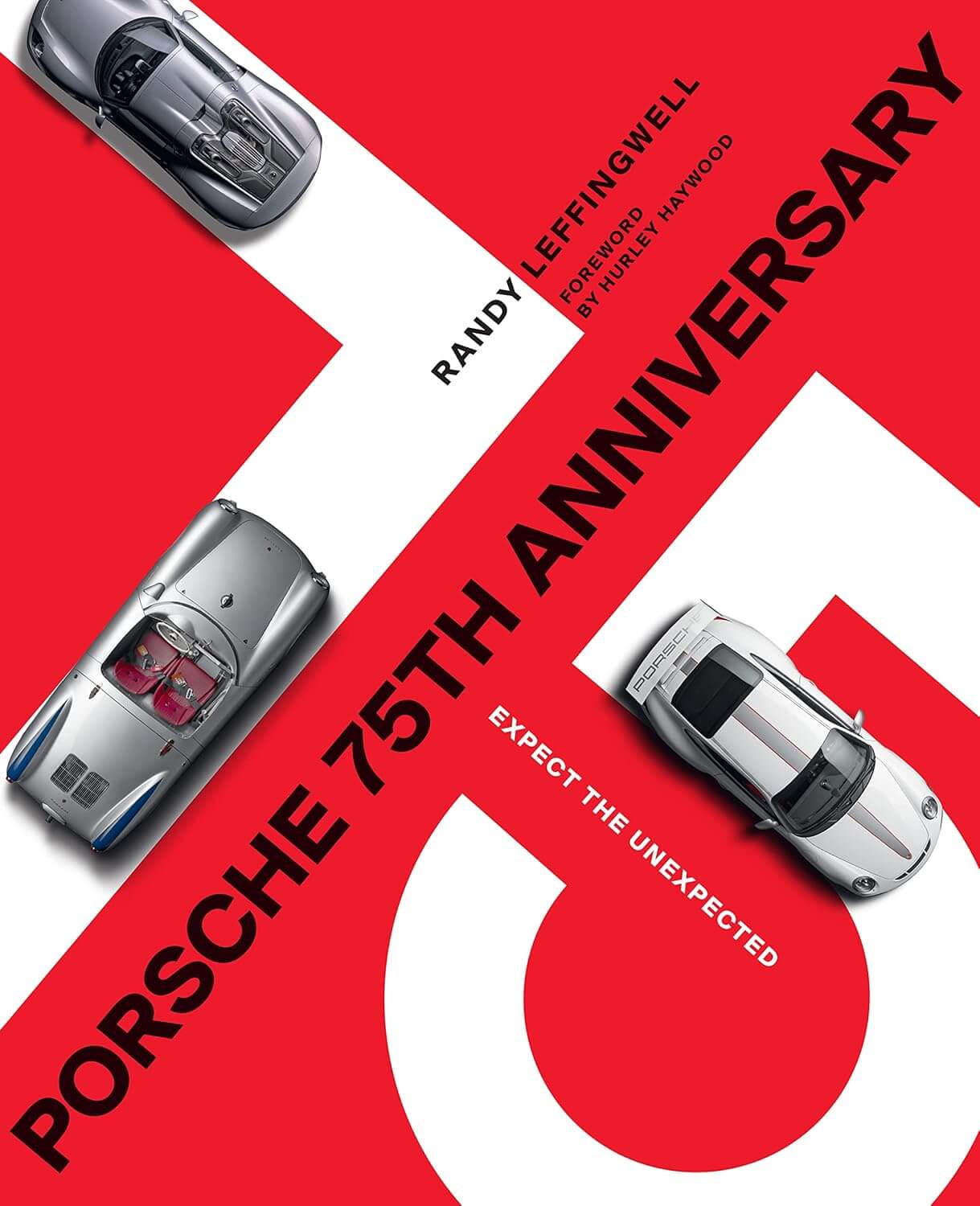
- Best Gift: Porsche 75th Anniversary: Expect the Unexpected. Randy Leffingwell's one-volume history, written with Porsche's cooperation, at $60.
Shopping by budget? Skip to Porsche Books by Budget.
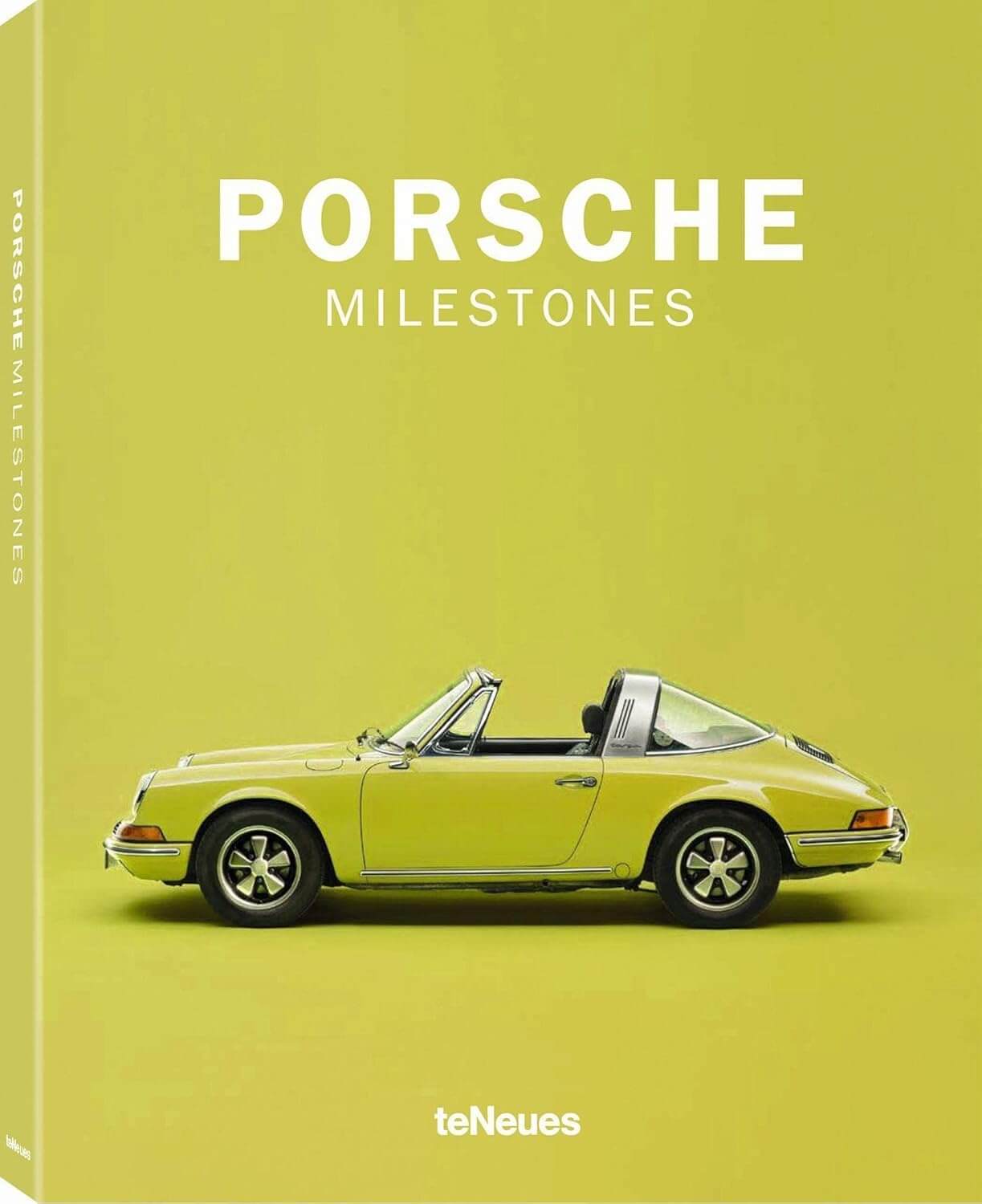
1. Porsche Milestones by Wilfried Müller (teNeues)
| Author | Wilfried Müller / ramp magazine |
| Publisher | teNeues |
| Pages | 224 |
| Dimensions | 12.6 x 9.8 inches |
| Language | English, German, French |
| Best For | Brand history & collectors |
Porsche Milestones is the best single Porsche coffee table book to start with, because it covers the whole marque rather than just the 911. Wilfried Müller spent three decades as a motorsport reporter before settling into writing about Porsche full-time, and the book is a carefully compiled walk through 55 milestone models from 1948 to 2017, produced in cooperation with the award-winning ramp magazine. The photographs come from both ramp's archive and Porsche's own Werksfoto collection, which means you're seeing cars as the factory wanted them seen alongside editorial shots that capture something less polished and more honest.
What I keep returning to: The breadth of coverage sets it apart from books that focus exclusively on the 911. The 356 gets proper treatment, six variants, as do the transaxle models (924, 944, 928) that many Porsche books quietly ignore. The motorsport lineage runs through the whole book: from the 550 to the 917 to the 919 Hybrid, each double-page spread gives a single model room to breathe. The 152 photographs are excellently reproduced, and every model gets both a full-page hero shot and contextual detail images.
The honest downside: Published in 2017, so the current 992 generation and the Taycan are absent. The trilingual text (English, German, French) means each language gets less page space than you'd expect, and the writing is concise to the point of feeling compressed in places. If you want deep technical analysis on any individual model, this book sketches rather than paints.
The bottom line: The best single-volume Porsche overview for someone who cares about the full breadth of the marque, not just the 911. Start here if you're building a Porsche library from scratch.
2. Porsche: A Passion for Power, Iconic Sports Cars since 1948 by Tobias Aichele & René Staud
| Author | Tobias Aichele (Text), René Staud (Photography) |
| Publisher | teNeues |
| Pages | 272 |
| Dimensions | 11.6 x 13.3 inches |
| Language | English, German |
| Best For | Display & visual impact |
Porsche: A Passion for Power is the Porsche book to buy if its main job is to sit on a coffee table and look the part. This is the 75th anniversary edition from teNeues, and it pairs two of the most accomplished people in Porsche publishing: René Staud behind the camera and Tobias Aichele, author of "Porsche 911: Forever Young" and "Mythos Porsche", providing the text. The book runs chronologically from the first Type 356 No. 1 through to the Taycan, and the cover is printed on silver foil with a glossy finish that makes it look like a piece of Porsche merchandise itself.
What I keep returning to: The format, nearly 12 by 14 inches, gives Staud's studio shots the space they deserve. His Magicflash lighting technique renders the curves of a 550 Spyder or a 959 with a dimensionality that smaller-format books can't match. Aichele's model chronology in the back is useful as a reference, covering production numbers, engine specifications, and key dates for every significant model.
The honest downside: There's significant overlap with The Porsche 911 Book (#6) if you already own that volume: Staud is photographing many of the same cars, just in a larger format. The bilingual English/German text means neither language gets as much room as a single-language edition would. At nearly six pounds and the highest price among the overviews, it's the wrong pick if you mainly want to read.
The bottom line: The strongest display piece on this list, with enough data in the back to earn its keep as a reference. If you want to read rather than look, take Milestones or the 75th Anniversary instead.
3. Porsche 75th Anniversary: Expect the Unexpected by Randy Leffingwell
| Author | Randy Leffingwell, Foreword by Hurley Haywood |
| Publisher | Motorbooks |
| Pages | 256 |
| Dimensions | 9.8 x 12 inches |
| Weight | ~3.5 lbs |
| Best For | Gift-giving & actually reading |
Porsche 75th Anniversary: Expect the Unexpected is the best Porsche book to give as a gift, because it's the one most likely to be read cover to cover. Randy Leffingwell has authored over sixty automotive titles, a dozen of them on Porsche, and has interviewed more than 200 Porsche engineers, stylists, model makers, racers, and managers over three decades. The book was created with Porsche's cooperation, which means factory archive access most authors don't get. The foreword by Hurley Haywood, five-time Daytona winner and three-time Le Mans champion, all in Porsches, sets the tone.
What I keep returning to: The structure is built around Porsche's most surprising decisions rather than a straight chronological march. You get the pre-history, Ferdinand Porsche's work on the Mercedes SSK and the Auto Union Grand Prix cars, before arriving at the postwar 356. The chapters on the Cayenne's controversial launch and the Taycan's development are some of the most insightful writing about Porsche's business strategy I've found in any book. Archive images appear throughout, accompanied by quotes from key personnel.
The honest downside: Buyer reviews on Amazon mention occasional typos in text and captions, which is disappointing at this price. The density of model numbers can make some chapters hard going for readers who don't already know the lineup. This is a reading book as much as a looking book; for pure visual impact, the Staud volumes are better suited.
The bottom line: The current one-volume Porsche history, and the gift that says you took the time to find something good. Leffingwell has four Porsche books with confusingly similar titles; the table under #5 shows which is which.
4. The Porsche Book by Michael Köckritz (teNeues)
| Author | Michael Köckritz / ramp editorial team |
| Publisher | teNeues (The Car Book Series) |
| Pages | 304 |
| Dimensions | 11.4 x 14.6 inches |
| Language | English, German |
| Best For | The largest-format brand overview |
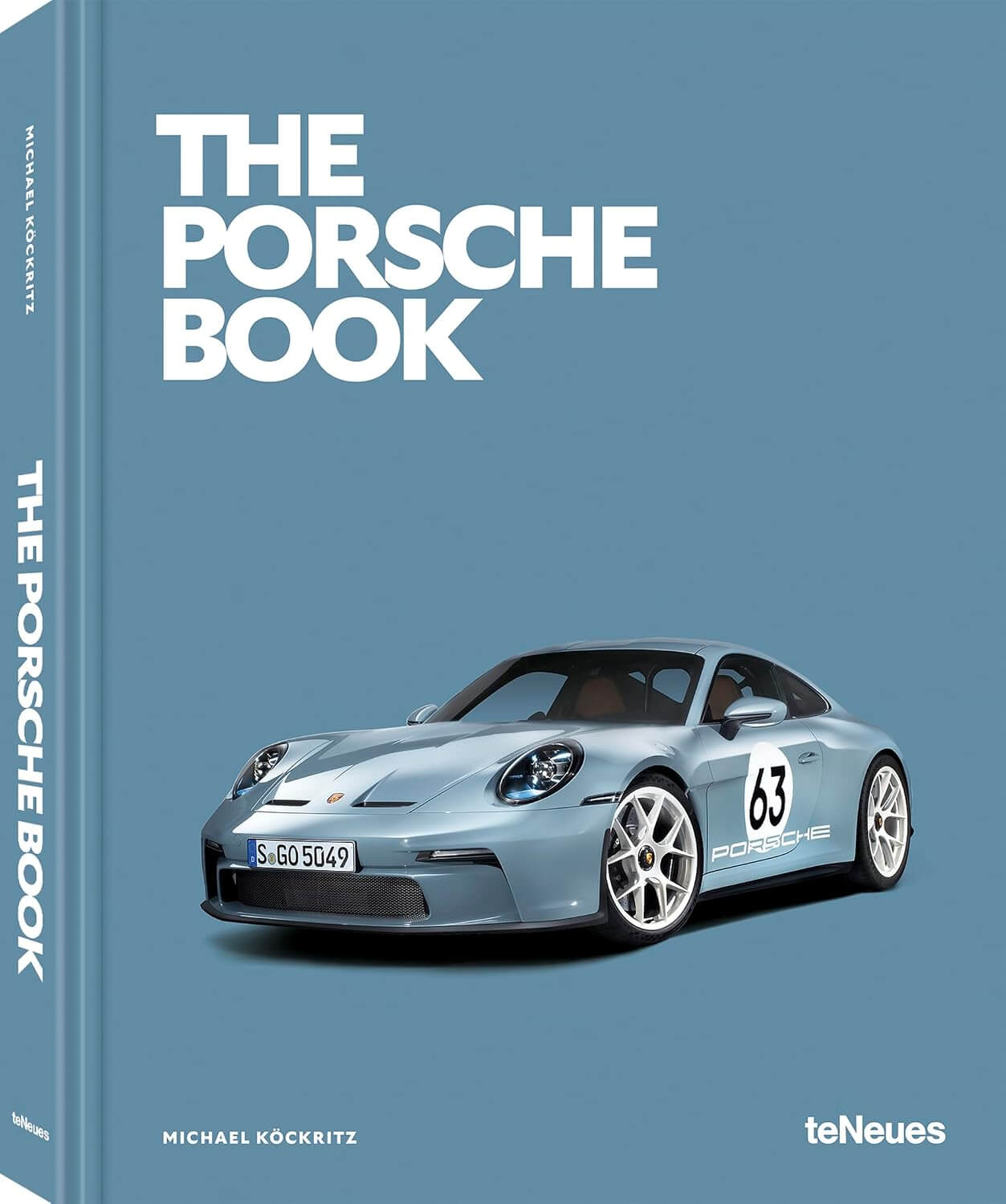
The Porsche Book by Michael Köckritz is the biggest current Porsche overview in print: 304 pages at 11.4 x 14.6 inches, published by teNeues in September 2024. Köckritz founded ramp, the same car-culture magazine behind Porsche Milestones, and the book follows ramp's approach: author essays, interviews with Porsche insiders, around 250 color images in an avant-garde layout, design sketches, and an overview of all production models with technical data at the back.
What sets it apart: It's the only recent overview that treats Porsche as a pop-culture subject as much as an engineering one, and it's seven years newer than Milestones, so the current model range is included. The cover shows a light blue 911 S/T.
The honest downside: At around $125 it costs more than twice what Milestones does for a broadly similar brief. Bilingual text again. And the title is a trap, which matters if you're buying online.
Two different books are called "The Porsche Book". Both are teNeues, both are oversized, and retailers mix them up:
| The Porsche Book (Köckritz) | The Porsche Book (Orel) | |
|---|---|---|
| Author | Michael Köckritz / ramp | Frank M. Orel (photos), Elmar Brümmer (text) |
| Published | September 2024 | 2010; small-format reissue; extended edition 2018 |
| Pages | 304 | 304 (2010), 368 (2018 "The Best Porsche Images by Frank M. Orel") |
| Format | 11.4 x 14.6 in | 11.4 x 14.6 in (2018 extended) |
| Character | Brand and culture overview, interviews, model data | Location photography, image-led |
| How to tell | Light blue 911 S/T on the cover | Orel's name in the subtitle or author line |
If a listing shows "The Porsche Book" at a steep discount, check the author line: it is usually a remaindered Orel edition, a fine photography book but not the 2024 overview.
The bottom line: Choose it over Milestones if you want the newest, largest overview and the budget allows. Otherwise Milestones covers 80% of the ground at under half the price.
5. Porsche 70 Years: There Is No Substitute by Randy Leffingwell (and the leather-bound edition)
| Author | Randy Leffingwell, studio photography by Michael Furman |
| Publisher | Motorbooks (2017); leather edition by Graphic Image |
| Pages | 256 |
| Dimensions | 10 x 12.3 inches, 4.35 lbs |
| Price | $60 list (hardcover), $210–249 (bonded leather) |
| Best For | Decor & personalized gifts |
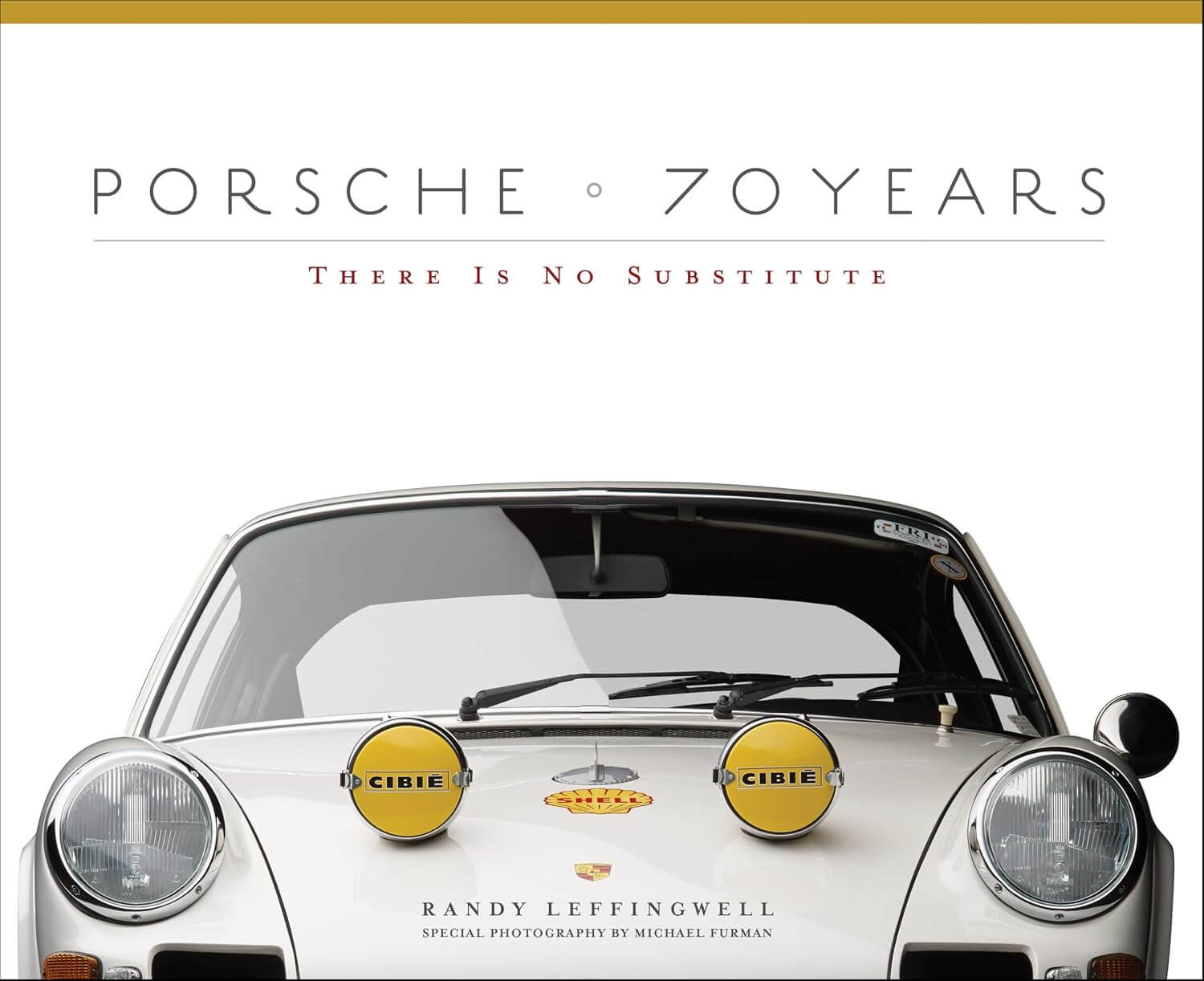
Porsche 70 Years: There Is No Substitute is the Porsche book you see at Pottery Barn, West Elm and Nordstrom, because it is the one Graphic Image rebinds by hand in bonded leather, with optional gold personalization. Inside, both versions are the same 256-page Motorbooks title from 2017: Leffingwell's marque history from the first 356 to the 918 Spyder, made with Porsche's cooperation, with a closing look at the Mission E concept that became the Taycan. The PCA's review describes it as a comprehensive look at seven decades of road and competition cars.
What sets it apart: The leather edition is the only Porsche book on this list that works as an object before it's opened, which is what most people searching for a Porsche coffee table book as a gift are after. The standard hardcover carries Michael Furman's studio photography alongside factory renderings and period images.
The honest downside: The content stops in 2017, and Leffingwell's own 75th Anniversary (#3) supersedes it as a history. If you're buying to read, buy #3. The leather edition costs roughly four times the hardcover for the same pages.
Leffingwell's four Porsche books, untangled. All four are Motorbooks hardcovers around $60, all four show up in the same search results, and they are easy to confuse:
| Title | Published | Pages | Covers | Structure | Buy it if |
|---|---|---|---|---|---|
| Porsche 70 Years: There Is No Substitute | 2017 | 256 | Whole marque, 356 to 918 | Milestone cars and events, chronological | You want the leather-bound edition |
| Porsche 75th Anniversary: Expect the Unexpected | 2022 | 256 | Whole marque, through the Taycan | Built around Porsche's surprising decisions | You want the current one-volume history |
| Porsche 911 60 Years | 2024 | 304 | 911 only | Sixty cars, one per year from 1964 to 2024 | You want a browsable 911 book |
| The Complete Book of Porsche 911, 4th Edition | 2025 | n/a | 911 only | Year-by-year reference to every model | You want the 911 reference work |
The bottom line: Buy the leather edition as a statement gift, ideally personalized. For the same author's best writing, buy the 75th Anniversary.
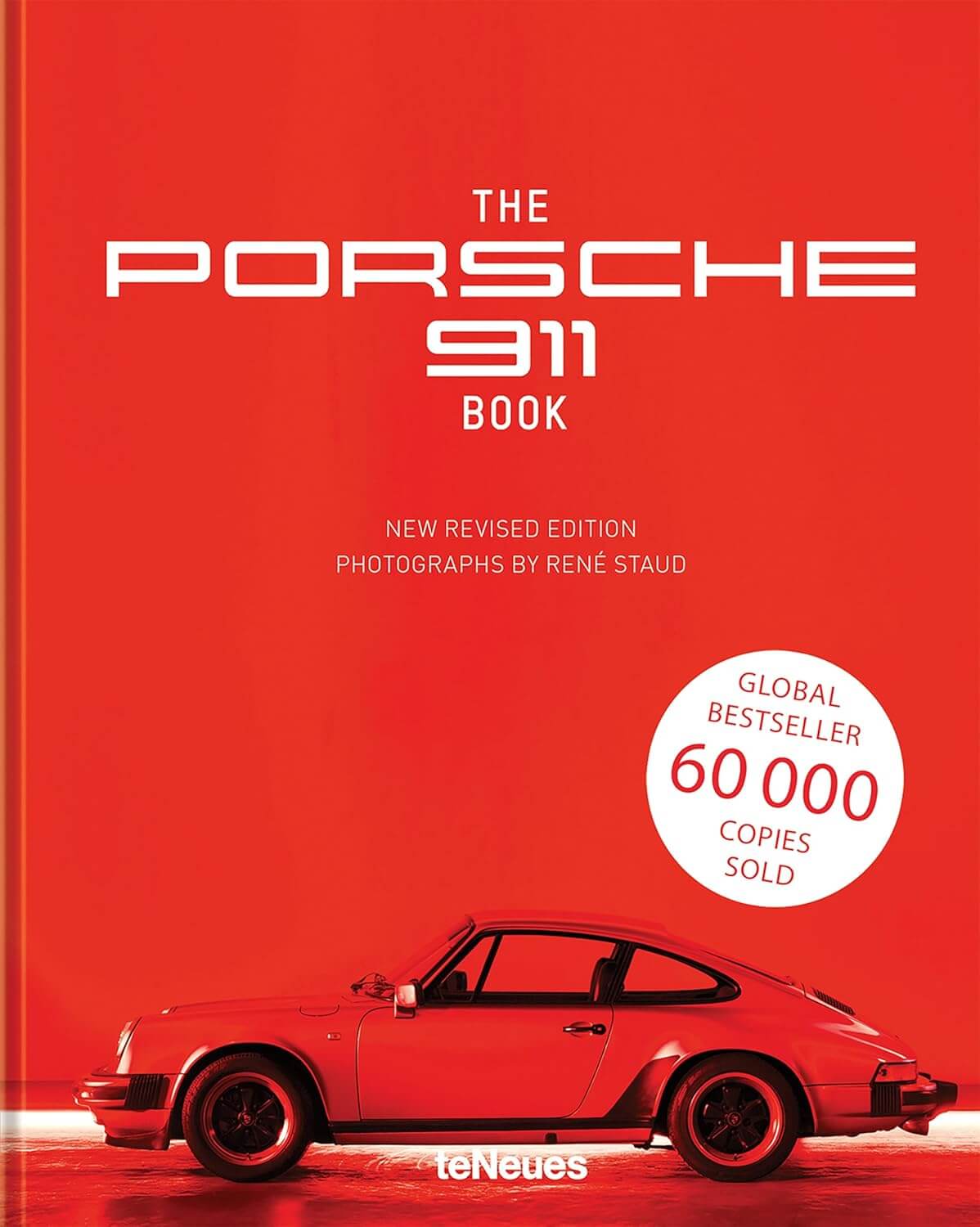
6. The Porsche 911 Book by René Staud & Jürgen Lewandowski (teNeues)
| Author | René Staud (Photography), Jürgen Lewandowski (Text) |
| Publisher | teNeues |
| Pages | 192 |
| Dimensions | 9.4 x 7.7 inches |
| Language | English, German, French |
| Best For | 911 photography on a budget |
The Porsche 911 Book is the best-value Porsche book you can buy: René Staud's 911 studio photography for about $35. Staud is widely regarded as the finest studio automotive photographer working today, and his patented Magicflash lighting system, designed specifically for car photography, produces images that make sheet metal look liquid. This revised edition has sold over 40,000 copies since its original 2013 release. The text by former Süddeutsche Zeitung automotive editor Jürgen Lewandowski provides solid historical context without competing with the images.
What I keep returning to: The way Staud lights the Carrera RS 2.7's ducktail spoiler: the curve catches light in a way that makes the design logic immediately visible. Every variant from the original 901 through to the 991 generation gets this treatment, with detail shots of dashboard instruments, close-ups of badge typography, and full-profile studio shots that reveal design evolution across generations. This is how you understand why the 911's silhouette hasn't fundamentally changed in sixty years.
The honest downside: At 192 pages and 9.4 x 7.7 inches, this is a lap-and-shelf book, not a table centerpiece; for that, the same photographer's A Passion for Power (#2) is the larger sibling. The revised edition doesn't cover the 992 generation, and Staud's studio style means you won't find the atmospheric, on-location photography of Porsche Escapes (#10).
The bottom line: The definitive 911 photography book and the easiest recommendation here under $40.
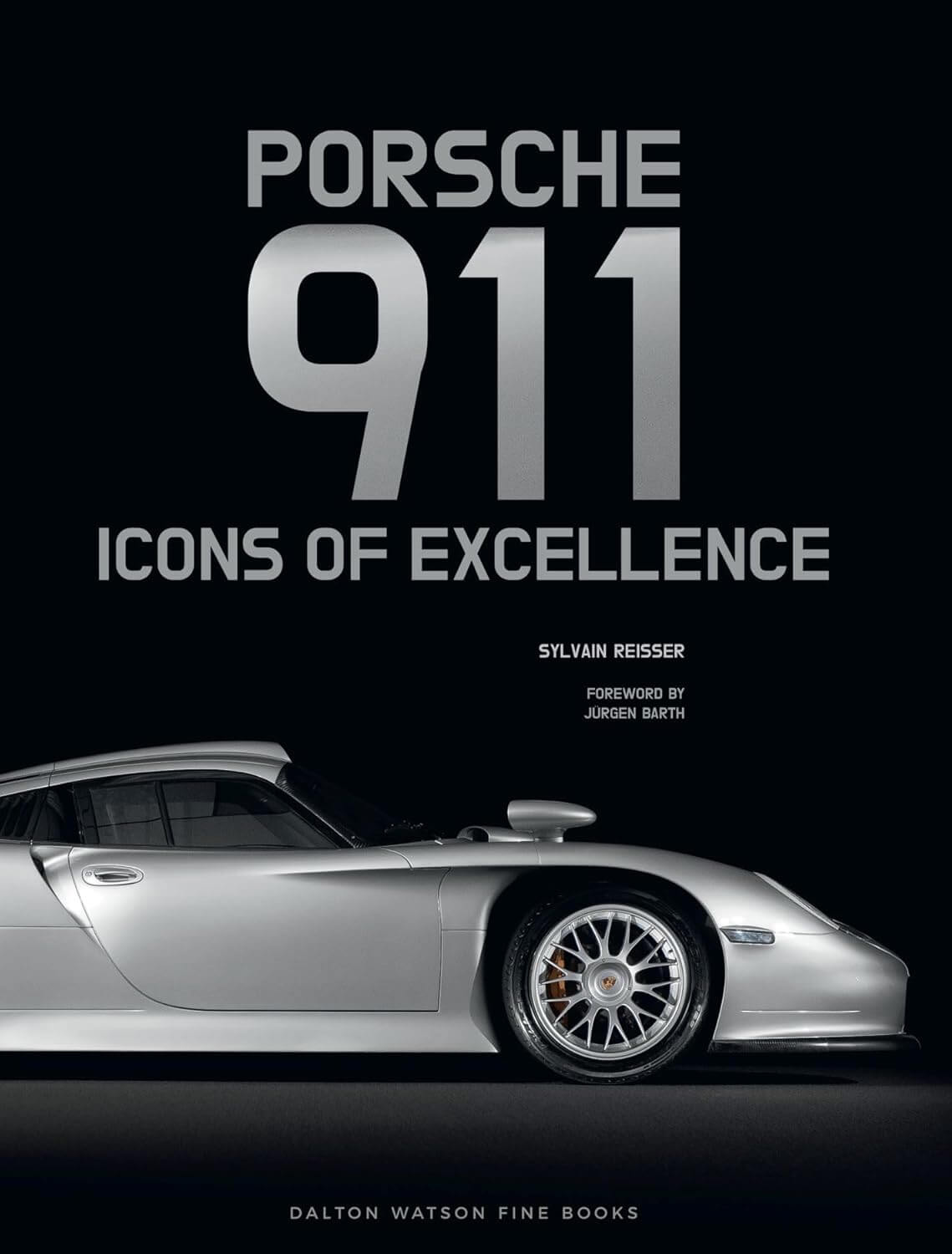
7. Porsche 911: Icons of Excellence by Sylvain Reisser
| Author | Sylvain Reisser, Foreword by Jürgen Barth |
| Publisher | Dalton Watson Fine Books (March 2026) |
| Pages | 224 |
| Dimensions | 9.25 x 12.3 inches |
| Images | 261 photographs |
| Best For | 911 owners & technical deep-dives |
Porsche 911: Icons of Excellence is the 911 book for someone who already knows the car: seventy-five exceptional 911s, from the 1963 Type 901 prototype to the 2025 Spirit 70 special edition. Sylvain Reisser is an automotive journalist with over thirty-five years of experience, a juror for the Voiture de l'Année award, and a contributor to L'Année Automobile. Dalton Watson is a boutique publisher known for serious automotive reference books, and the Porsche Club of America's review called it an excellent primer that concentrates on the standout cars and explains why they matter.
What I keep returning to: The curation. Rather than trying to cover every 911 variant, which would fill several thousand pages, Reisser selects the models that moved the needle. The 2.2 ST that won the 1970 Monte Carlo Rally, the 1972 Carrera RS with its ducktail, the one-off Carrera S "1 Million" built to honor the millionth 911: each gets detailed treatment with high-quality photography and concise, informed text. The foreword by Jürgen Barth adds racing credibility.
The honest downside: The focused scope means this is deliberately not comprehensive; for every 911 generation in production detail you need Leffingwell's Complete Book of Porsche 911 (see the table under #5). It rewards existing knowledge more than it teaches from scratch. One buying warning: Helmin & Sorgenfri publish a different book, Porsche 911 by Sharon Kleinman, in a series that is also called "Icons of Excellence". It has 256 pages, measures 9.45 x 11 inches and costs $65. Check for Reisser's name and the Dalton Watson imprint before ordering.
The bottom line: A highlight reel of the most significant and collectible 911s, written by someone who knows which highlights matter. The right gift for someone who already owns a 911.
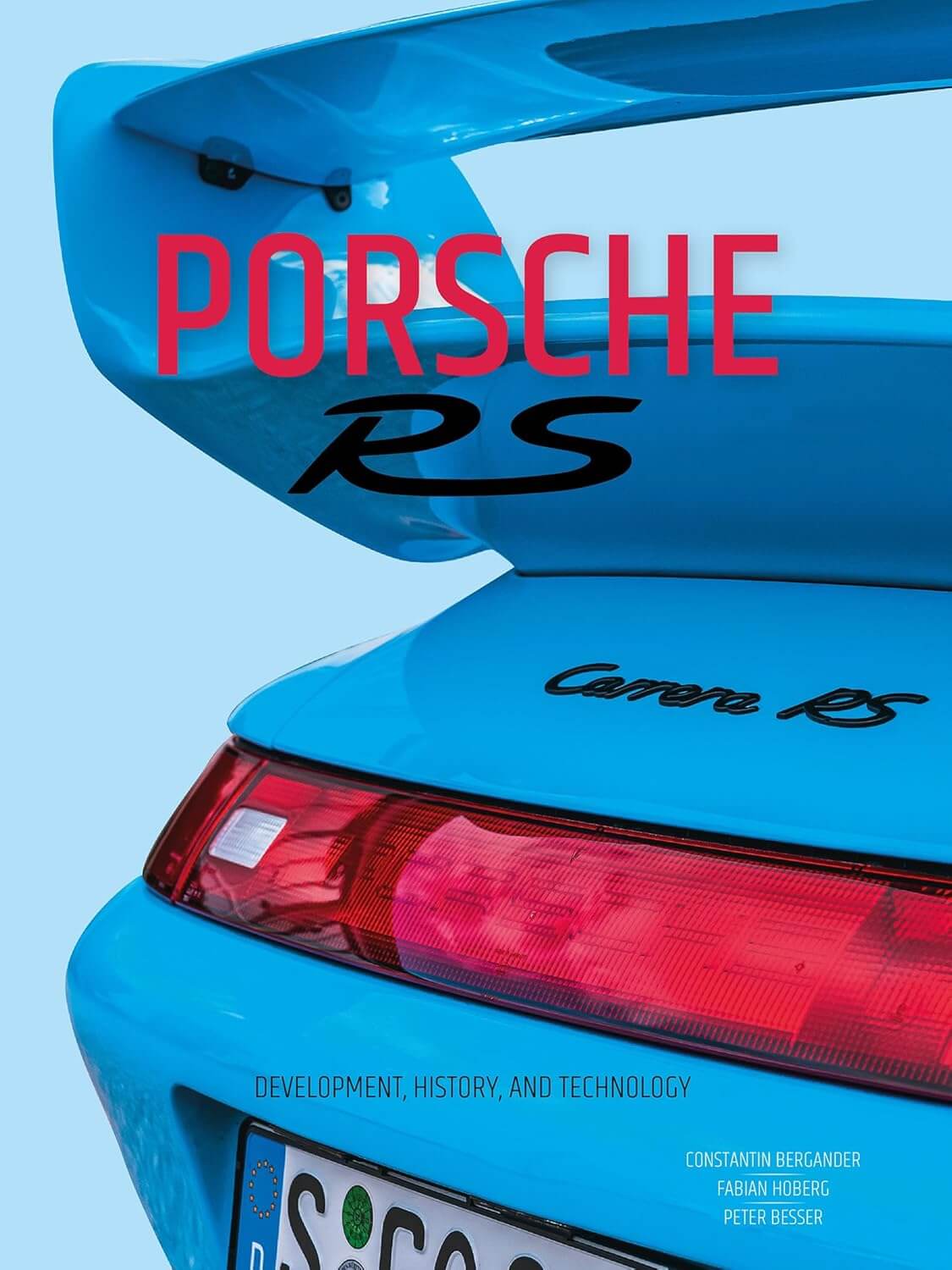
8. Porsche RS: Development, History, and Technology by Constantin Bergander & Fabian Hoberg
| Author | Constantin Bergander, Fabian Hoberg (Text), Peter Besser (Photography) |
| Publisher | Schiffer |
| Pages | 256 |
| Dimensions | 9.25 x 12.25 inches |
| Images | 280+ color photographs |
| Best For | Motorsport enthusiasts & RS collectors |
Porsche RS is the definitive book on Porsche's most extreme road-legal cars, from the 550 RS and 1500 RS through the first 911 RS to the 992 GT3 RS. For more than fifty years the letters "RS", Renn Sport, have marked those machines, and this book was produced in cooperation with Porsche to tell the complete story. The two Berlin-based automotive journalists bring technical depth, and photographer Peter Besser captures these cars with an emotional intensity that factory press shots rarely achieve.
What I keep returning to: The engineering evolution is told through the details that matter to enthusiasts: the progression from the Carrera RS 2.7's ducktail to the 992 GT3 RS's drag reduction system, from thin sheet metal bodies to carbon fiber doors, from 2.7-liter naturally aspirated engines to the 4.0-liter high-revving units with rigid valve trains. The quotes from engineers, designers, and development team members give you the "why" behind decisions that shaped each generation. The technical specification section at the back is comprehensive enough to serve as a reference for collectors evaluating specific models.
The honest downside: This is an engineering book with beautiful photographs, not a photography book with engineering content. If aerodynamic load figures and valve-train specifications don't excite you, significant portions of the text will feel dense. The exclusive focus on RS models means no coverage of GT3, Turbo, or other high-performance 911 variants outside the RS designation.
The bottom line: If you've ever stood in front of a Carrera RS 2.7 and wondered exactly what makes it a $700,000 car, this book has the answer.
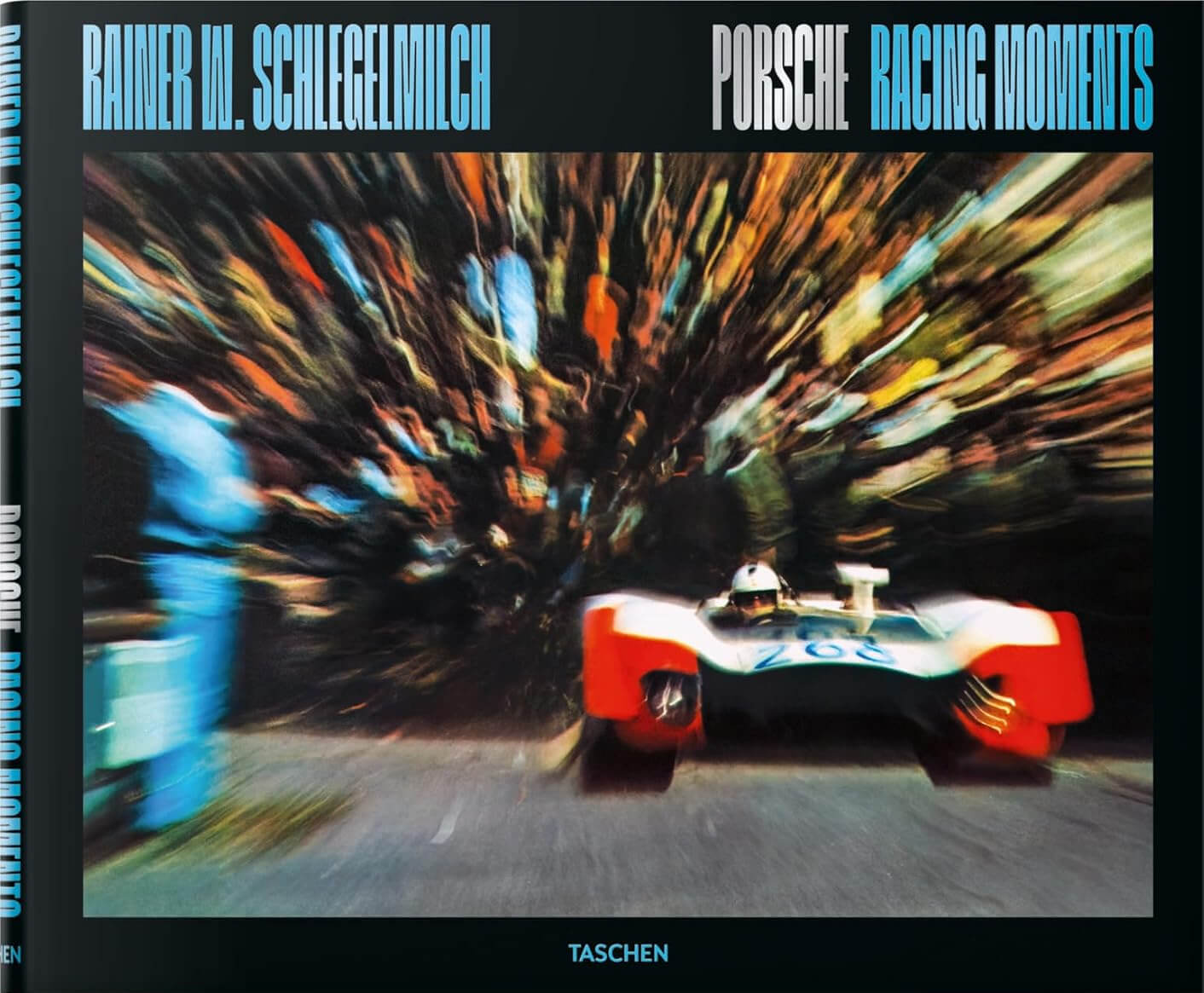
9. Rainer W. Schlegelmilch. Porsche Racing Moments (Taschen)
| Author | Rainer W. Schlegelmilch |
| Publisher | Taschen |
| Pages | 356 |
| Dimensions | 14.2 x 11.9 inches, 8.9 lbs |
| Period covered | 1963 to 1988 |
| Best For | Endurance-racing fans & Taschen collectors |
Porsche Racing Moments is the Taschen Porsche coffee table book, and the only one: Taschen has no general Porsche monograph, so anyone looking for a Taschen volume to sit beside their Ferrari or Sports Cars editions ends up here. It collects Rainer W. Schlegelmilch's photography of Porsche in endurance racing from 1963 to 1988, the era of the 907, 917, 935, 956 and 962, across 356 pages in a landscape format over 14 inches wide.
What sets it apart: Schlegelmilch is known for his zoom-blur technique, which conveys speed in a still frame, and he photographed the paddock as much as the track: mechanics, drivers and team principals appear alongside the cars. No other book on this list is about people at work. It is also the heaviest here at nearly nine pounds.
The honest downside: It covers racing only, and only a 25-year window. There are no road cars, no 356, nothing after 1988. At around $125 list it's a specialist purchase, though retailers discount it regularly. If the recipient doesn't follow motorsport, choose #2 or #3 instead.
The bottom line: The best Porsche racing photography book in print, and the answer if the shelf it's joining is all Taschen. If Formula 1 is closer to their heart, see my F1 coffee table books guide.
10. Porsche Escapes: From Mountain Passes to Coastal Highways by Derk Hoberg (teNeues)
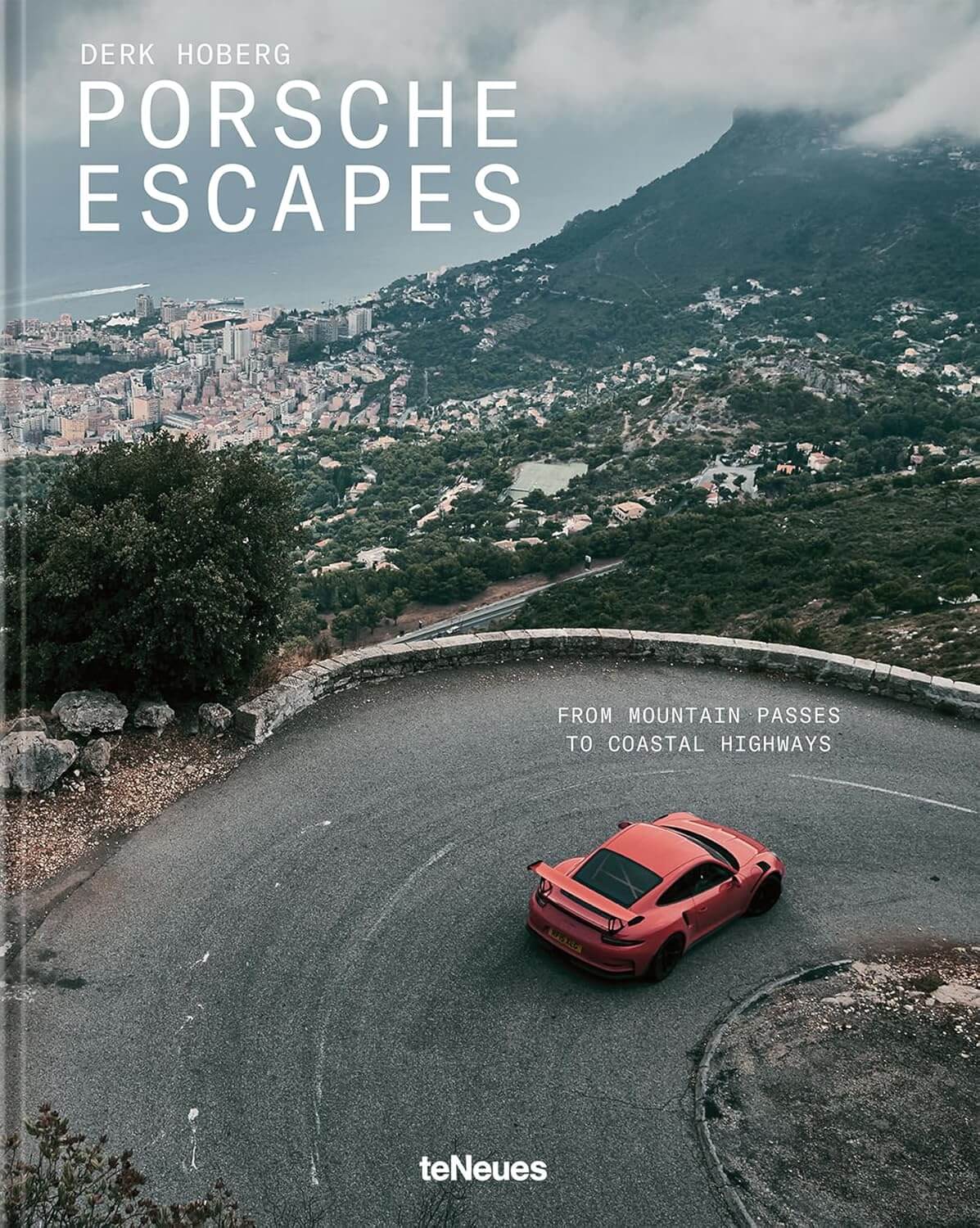
| Author | Derk Hoberg |
| Publisher | teNeues |
| Pages | ~256 |
| Language | English, German |
| Published | 2025 |
| Best For | Travel-lifestyle & road trip inspiration |
Porsche Escapes is the only book on this list that photographs Porsches where they belong: on the road. Derk Hoberg served as deputy editor-in-chief of the Porsche Club Germany magazine before branching into lifestyle publishing, where he's won two Laureus Media Awards. The Großglockner High Alpine Road, the Nürburgring's Nordschleife, the Pacific Coast Highway: each chapter combines driving photography with location context to argue that Porsche is as much about the journey as the car.
What I keep returning to: The Alpine passes chapter. Seeing a 911 on the Stelvio Pass or threading through Austrian switchbacks communicates something about these cars that no amount of studio photography can, the relationship between machine and landscape. Hoberg's editorial background means the pacing works: each section builds from setting to car to experience in a way that feels curated rather than assembled.
The honest downside: This is a lifestyle book, and it reads like one. There are no model specifications, production numbers, or engineering analysis. Availability varies by market, and some readers will find that it prioritizes atmosphere over substance.
The bottom line: The Porsche book you display when you want people to dream about driving, not about owning. Pairs well with any of the technical volumes on this list.
11. Porsche 356: 75th Anniversary by Gordon Maltby
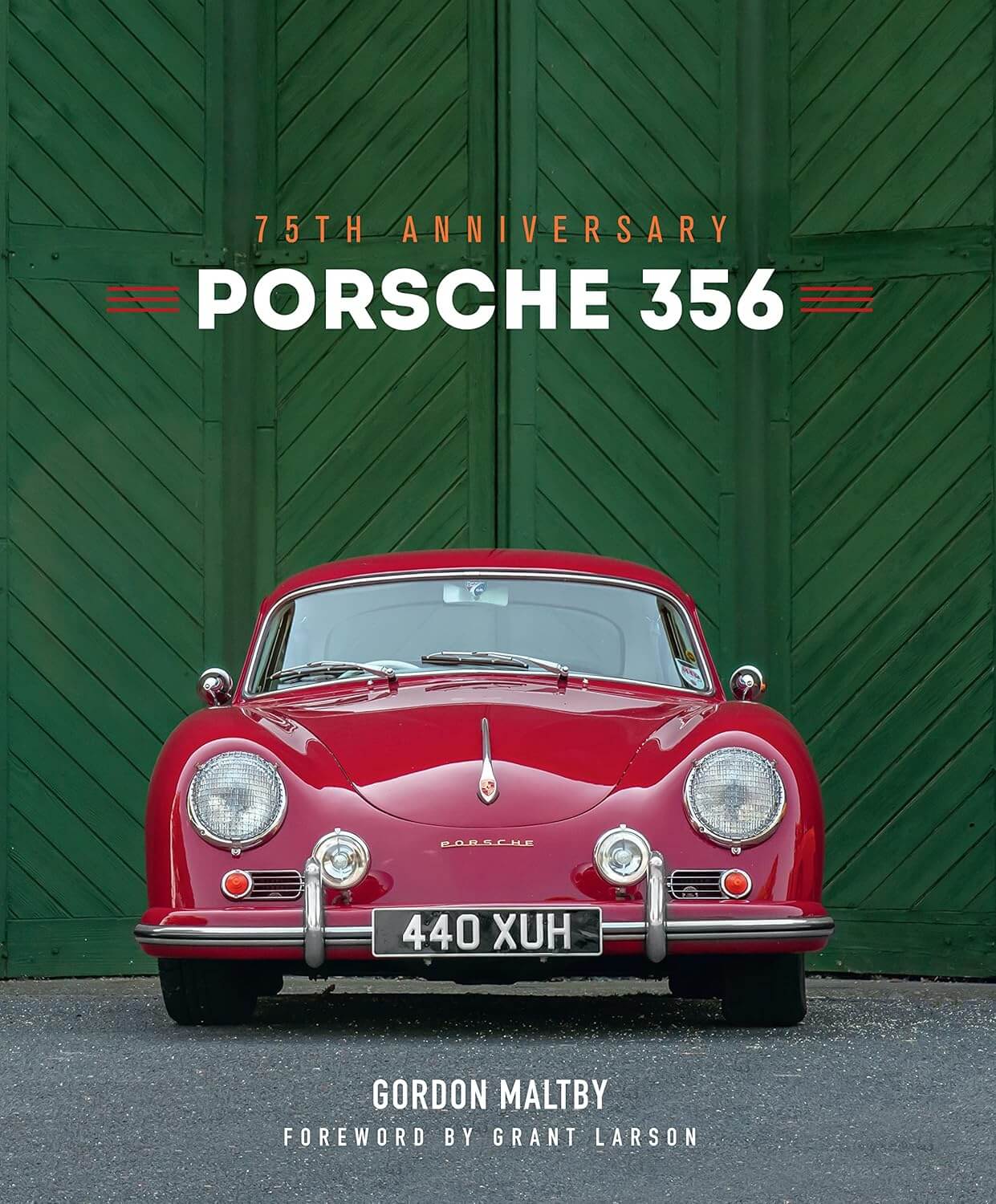
| Author | Gordon Maltby, Foreword by Grant Larson |
| Publisher | Motorbooks |
| Pages | 256 |
| Dimensions | Large format hardcover |
| Published | 2023 |
| Best For | Classic Porsche & early history enthusiasts |
Porsche 356: 75th Anniversary is the definitive book on the car that started the company, written by someone who has lived with 356s for half a century. Gordon Maltby has owned thirty-one Porsches over fifty years, doing most maintenance and restoration himself. He edited the Porsche 356 Registry magazine for twenty-seven years and wrote the respected "Porsche 356 and RS Spyders" back in 1991. The foreword by Grant Larson, the Porsche exterior designer responsible for the Boxster prototype, Carrera GT, and Panamera, reinforces the insider perspective.
What I keep returning to: The way Maltby traces the 356's evolution through four distinct series (pre-A, A, B, and C) with coupes, cabriolets, Speedsters, Hardtops, and Roadsters documented in detail that goes well beyond what you'll find elsewhere. The competition chapter is outstanding: the Rennsport Spyders that dominated road racing, endurance, and hill climb events for over a decade get thorough treatment. The cast of characters, from James Dean, Steve McQueen and Janis Joplin to today's collectors like Jerry Seinfeld and Jay Leno, gives the book a narrative arc that pure technical references lack. Factory schematics, drawings, and cutaways appear throughout.
The honest downside: This is emphatically a 356 book. If your Porsche interest starts with the 911, very little here will be directly relevant. At 256 pages on a single model family, the level of detail can feel overwhelming for casual readers, and $75 is a serious price for a single-model book.
The bottom line: The 356 reference. Buyer reviews routinely call it one of the best automotive books they own, and the depth of knowledge justifies that.
12. Best of Porsche by Christian Martin
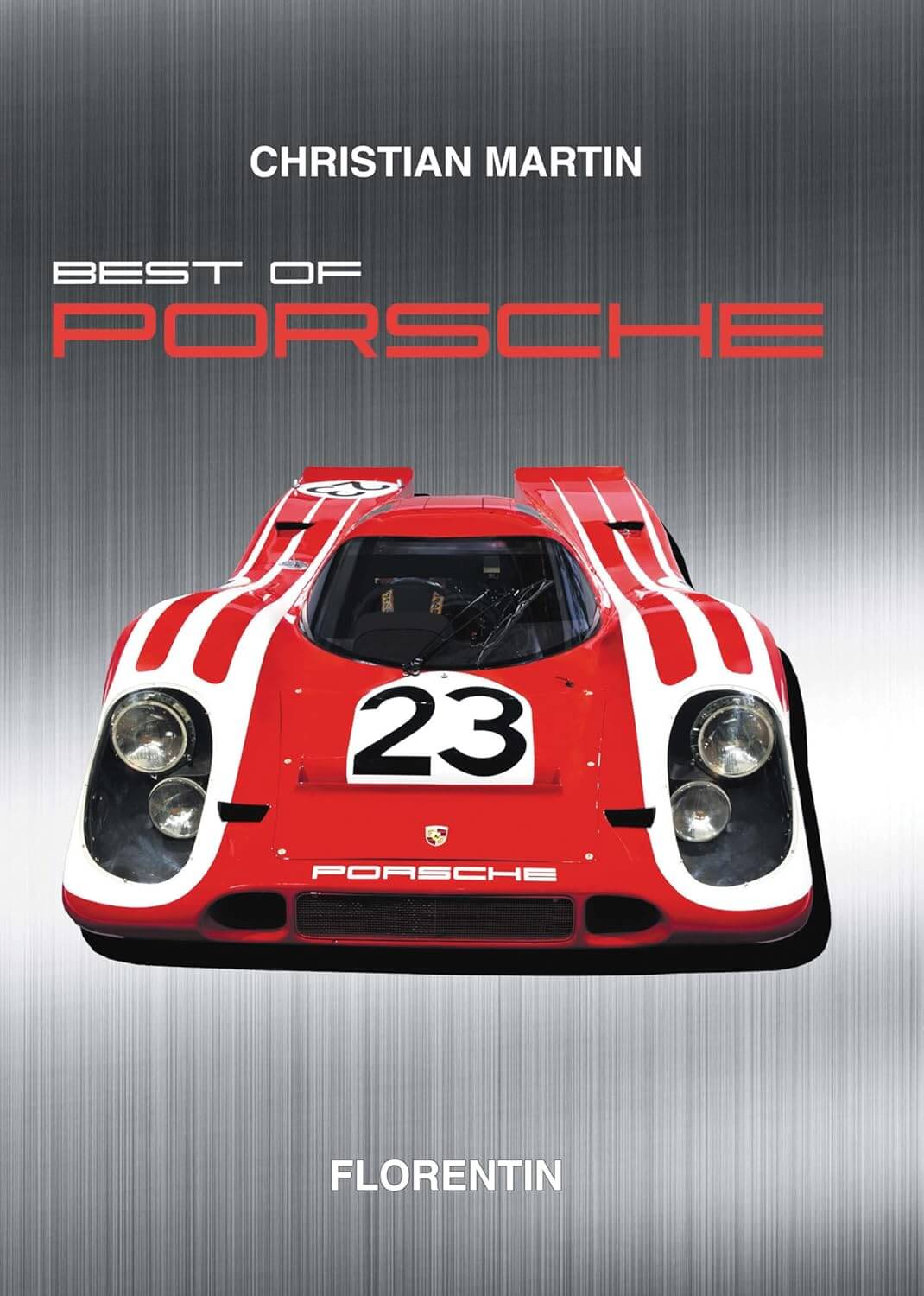
| Author | Christian Martin |
| Publisher | Editions Florentin (February 2026) |
| Pages | 308 |
| Dimensions | 9.5 x 13.0 inches |
| Weight | ~6 lbs |
| Best For | Supplementing existing collections |
Best of Porsche is the book for the cars other Porsche books leave out: special orders, limited-edition racing cars, concept vehicles, and rare factory commissions. Christian Martin is an automotive photographer whose previous book, "Life in Ferrari Red," established his reputation for an artistic eye that sits somewhere between documentary and fine art. The scope here is deliberately broad, with vintage, current, and futuristic models all given space.
What I keep returning to: The coverage of cars you won't find elsewhere. While every Porsche volume features the 911 Carrera RS and the 917, Martin's lens finds the one-off factory commissions, the concept cars that never reached production, and the motorsport specials that exist in single-digit quantities. These aren't catalog shots but composed images that treat each car as a visual subject first and an engineering object second.
The honest downside: It comes from a small French publisher and has few published reviews so far, so you're buying more on the photographer's reputation than on consensus. At nearly six pounds it's impressive on a table and awkward on a lap. The artistic style won't suit readers who prefer the clean technical precision of René Staud. It is the wrong first Porsche book.
The bottom line: The best addition for someone who already owns two or three Porsche books and wants to see the marque through a different lens.
The Best Porsche 911 Coffee Table Books
Three books on this list are about the 911 alone, and they don't overlap much. The Porsche 911 Book (#6) is the photography pick and the cheapest at $35. Porsche 911: Icons of Excellence (#7) is the collector's guide to the seventy-five most significant variants. For a full model-by-model reference, Leffingwell's Complete Book of Porsche 911 and his more browsable Porsche 911 60 Years are compared in the table under #5. If the person you're buying for owns a 911, #7 is the one most likely to tell them something new.
All 12 Porsche Books Compared
| # | Book | Type | Price | Format (in) | Pages | Best for |
|---|---|---|---|---|---|---|
| 1 | Porsche Milestones | Brand overview | $55 | 12.6 x 9.8 | 224 | First Porsche book |
| 2 | Porsche: A Passion for Power | Brand overview, photography | $110 | 11.6 x 13.3 | 272 | Display |
| 3 | Porsche 75th Anniversary | Brand history | $60 | 9.8 x 12 | 256 | Gift, reading |
| 4 | The Porsche Book (Köckritz) | Brand overview, lifestyle | ~$125 | 11.4 x 14.6 | 304 | Largest format |
| 5 | Porsche 70 Years (incl. leather edition) | Brand history | $60 / $210–249 | 10 x 12.3 | 256 | Decor, personalized gift |
| 6 | The Porsche 911 Book | 911 photography | $35 | 9.4 x 7.7 | 192 | Best value |
| 7 | Porsche 911: Icons of Excellence | 911 collector guide | $59 | 9.25 x 12.3 | 224 | 911 owners |
| 8 | Porsche RS | Technical | $60 | 9.25 x 12.25 | 256 | RS and motorsport fans |
| 9 | Porsche Racing Moments (Taschen) | Racing photography | ~$125 | 14.2 x 11.9 | 356 | Le Mans era, Taschen collectors |
| 10 | Porsche Escapes | Travel and lifestyle | $60 | Large format | ~256 | Road-trip dreaming |
| 11 | Porsche 356: 75th Anniversary | Single-model history | $75 | Large format | 256 | Classic Porsche |
| 12 | Best of Porsche | Art photography | $125 | 9.5 x 13 | 308 | Third or fourth book |
Porsche Books by Budget
Under $40: The Porsche 911 Book (#6). Nothing else at this price comes close.
$55 to $75: Porsche Milestones (#1) for an overview, Porsche 75th Anniversary (#3) as a gift to read, Icons of Excellence (#7) for a 911 owner, the RS book (#8) for a track-day regular, Maltby's 356 (#11) for a classic-car person.
$100 to $125: A Passion for Power (#2) for display, The Porsche Book (#4) for the biggest and newest overview, Racing Moments (#9) for the motorsport fan, Best of Porsche (#12) for the collector who has the rest.
$200 and up: The leather-bound Porsche 70 Years (#5), personalized. It's the only option here that reads as a luxury gift before it's opened.
Buying for someone whose taste you only half know? My guide to coffee table books for men covers cars, watches and design in one list, and the wider automotive coffee table books roundup goes beyond Stuttgart. If they're as likely to be a tifoso, see the Ferrari coffee table books.
What to Look for in a Porsche Coffee Table Book
Porsche books fall into four types, and knowing which one you want before buying saves both money and shelf space. Photography volumes, like the teNeues titles from Staud, prioritize visual impact and make the strongest display pieces. Historical references, like Leffingwell's 75th Anniversary or Maltby's 356, reward reading and re-reading. Technical deep-dives, like the RS book from Bergander and Hoberg, serve collectors who want engineering substance. Lifestyle titles, like Porsche Escapes, capture the driving experience itself.
The best Porsche libraries combine at least two of these types. A Staud photography volume paired with Leffingwell's historical text gives you both the visual and the narrative. Adding the RS book or Maltby's 356 gives depth on specific models. Martin's Best of Porsche opens up the corners of Porsche's production that the canonical titles miss.
Format matters more for Porsche than for most subjects. The cars are defined by subtle curves and precise reflections, and those only read at size: the jump from the 9.4-inch 911 Book to the 13-inch A Passion for Power is the difference between seeing a car and seeing its surface. Check the dimensions column in the comparison table before buying for display. The teNeues production standard is consistently excellent, and Motorbooks, Taschen and Dalton Watson are reliable. For boutique publishers like Editions Florentin, physical quality varies more, so check reviews before buying at the premium end.
Finally, check the author line, not just the title. Between two Porsche Books, two Icons of Excellence, and four Leffingwell anniversaries, this is the one category where the wrong book regularly arrives in the right-sounding box.
Final Thoughts
If I had to recommend one book to someone who's never owned a Porsche title, it would be Porsche Milestones: it covers the full breadth of the brand, the production quality is excellent, and it works as both a reading book and a display piece. If budget allows two, add Porsche 75th Anniversary for the historical depth. If the book is mainly for the table, make it A Passion for Power. And if you're buying for someone who already owns a 911, Icons of Excellence or the RS book will tell them something new about a car they think they know completely.
The Porsche shelf has room for all of these. The trick is building it in the right order.