10 Best Golf Coffee Table Books (2026)
After fifteen years of playing and collecting, these are the ten golf books I'd actually recommend — from oversized photography tomes to the instruction classic that's never gone out of print.
The Best Golf Coffee Table Books (Reviewed by a Collector)
Last updated: January 2026
I've been playing golf for over fifteen years and collecting books about the game for nearly as long. My shelves currently hold more than forty volumes — course guides, biographies, instruction manuals, and photography books — and I've read or worked through every one of them. This guide covers the ten I'd actually recommend, drawn from that collection. I'll tell you what each book does well, where it falls short, and who it's genuinely for — so you don't spend $100 on something that sits unread after the first browse.
Disclosure: This article contains affiliate links. If you purchase through these links, I earn a small commission at no extra cost to you. Every book reviewed here I own personally — none were sent for review.
My Top 3 Picks at a Glance
- Best Overall: The 500 World's Greatest Golf Holes — 456 pages, 800+ photographs, every serious course on earth
- Best for Display: Planet Golf Modern Masterpieces — 12.75" wide, Abrams production quality, the closest you'll get to standing on the course
- Best for Gift-Giving: Golf: The Iconic Courses — stunning new release with David Cannon's photography, oversized format built for a coffee table
1. The 500 World's Greatest Golf Holes by George Peper & Golf Magazine
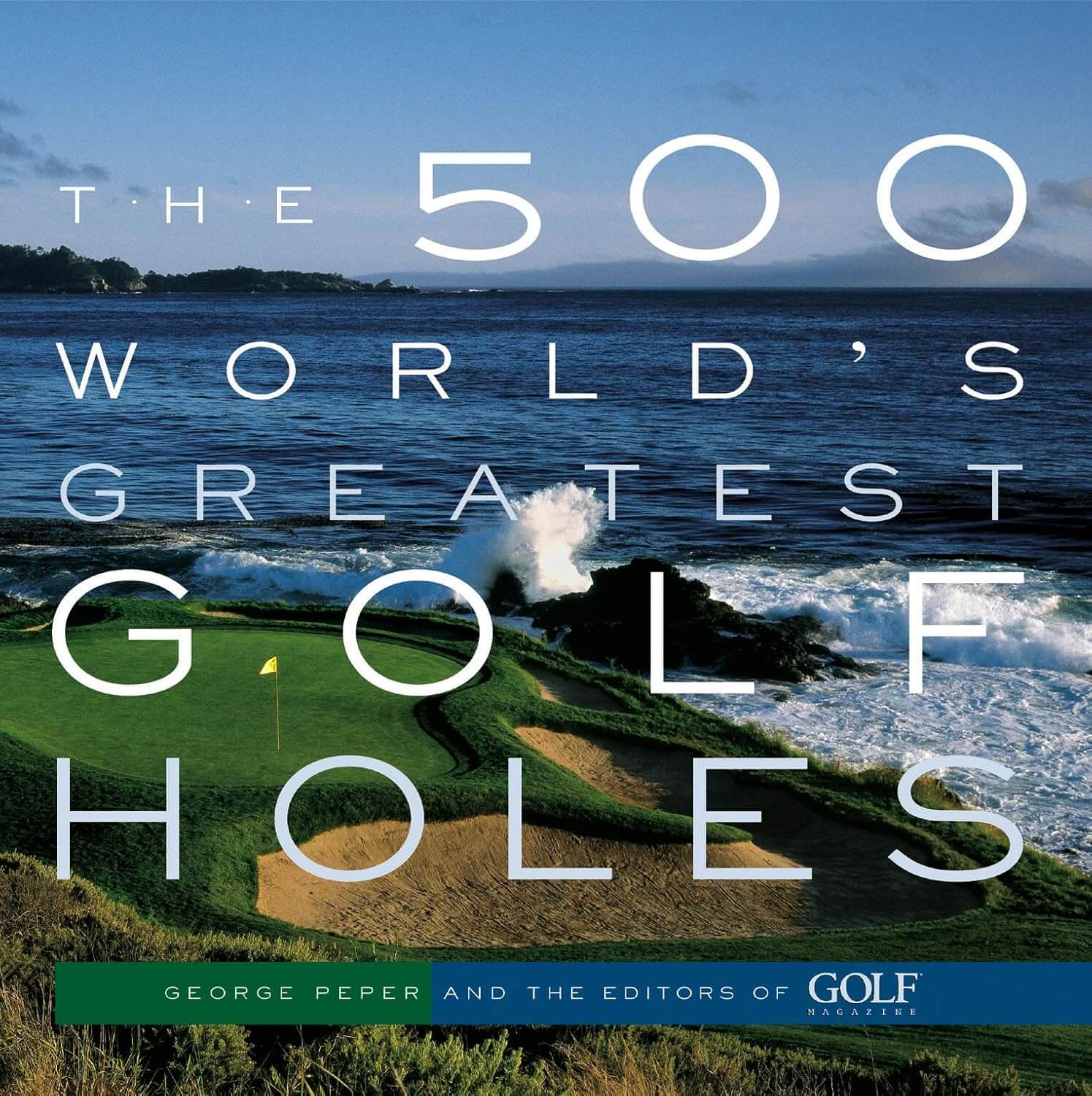
| Author | George Peper & Golf Magazine |
| Publisher | Artisan |
| Pages | 456 |
| Dimensions | 9.88 x 9.88 inches |
| Weight | 4.05 lbs |
| Best For | Reference collection & course bucket lists |
George Peper was editor-in-chief of Golf Magazine for over two decades. This isn't a coffee table book assembled by a design team — it's a considered argument, built hole by hole, about what separates a great golf hole from merely a difficult one. The methodology matters: each hole is evaluated on design, difficulty, beauty, and history. The result is a book you can open to any page and learn something.
What I keep returning to: The breadth is genuinely global. Augusta and St Andrews get their due, but so does the 7th at Pebble Beach, the par-3 island green at TPC Sawgrass, and courses in New Zealand, South Africa, and Japan that most golfers will never play. The 800+ photographs justify the physical weight — aerial shots reveal design intentions that ground-level play obscures entirely. I've used this book to understand why certain holes feel harder than their yardage suggests, and why others are considered classics despite being makeable for mid-handicappers.
The honest downside: Published in 2003, which means it predates courses opened in the last twenty years. Some rankings have aged: a handful of holes that appeared on private courses have since been redesigned, and the photography quality — though strong for its time — doesn't match what's possible now. It also weighs enough to notice when you pick it up.
The bottom line: The definitive single-volume reference for anyone serious about golf course design. Nothing published since has attempted this scope at this depth.
2. The Golf Book by DK
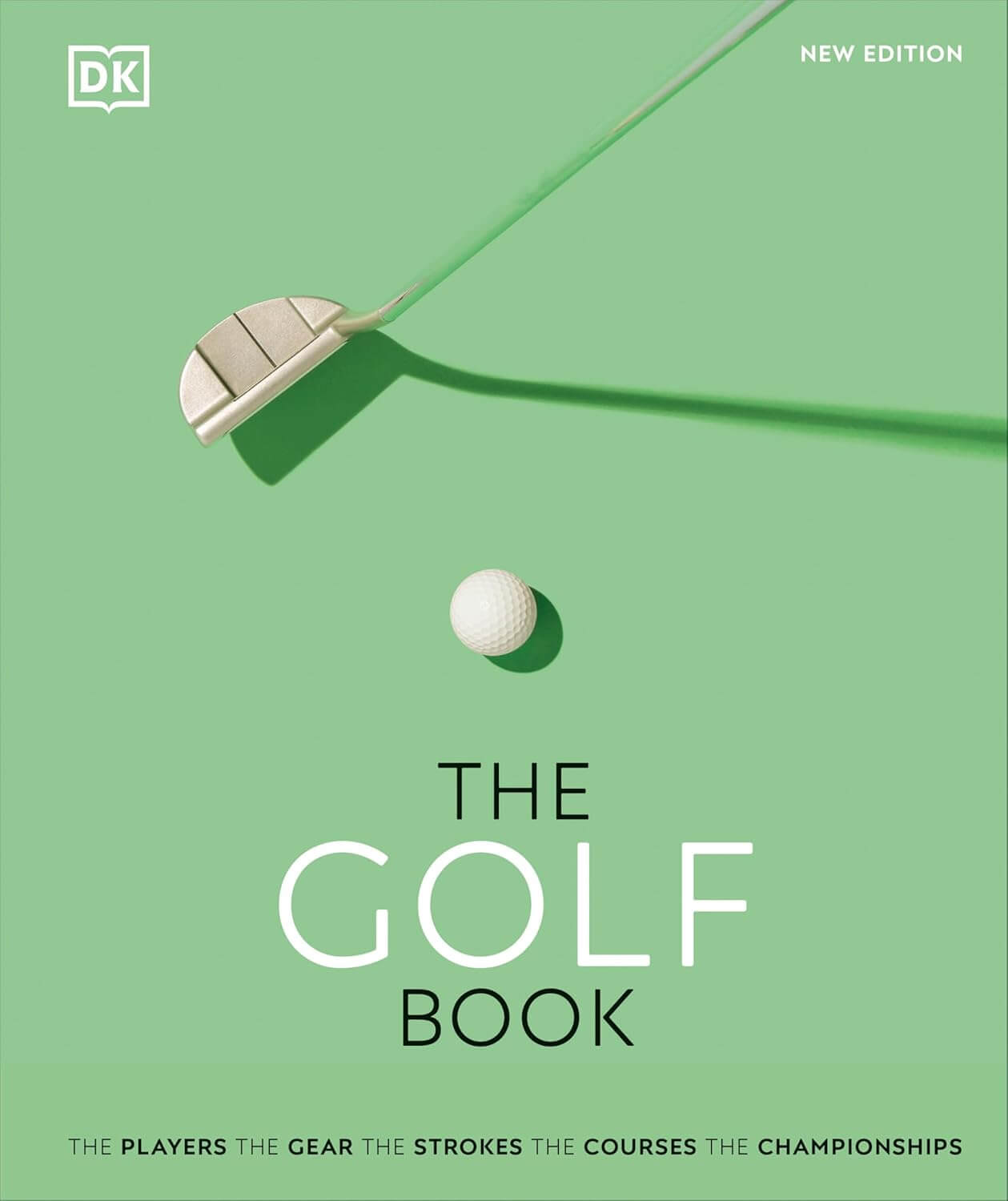
| Author | DK |
| Publisher | DK |
| Pages | 400 |
| Dimensions | 8.75 x 10.38 inches |
| Weight | 3.69 lbs |
| Best For | Comprehensive introduction & history |
DK produces encyclopedic reference books for virtually every subject, and golf is no exception. The 2021 edition covers equipment evolution, major championship history, course design principles, rules, technique, and the full timeline of professional golf — in one well-organized volume. It's the book I'd hand to someone who just took up the game and wants to understand the broader context before their handicap gets going.
What I keep returning to: The equipment chapter is better than anything you'll find in specialized sources. Watching the evolution of club design from hickory shafts to titanium drivers, with detailed diagrams at each stage, explains why modern equipment has changed how courses must be designed. The chapter on major championships traces individual tournaments through historical context in a way that makes watching archival footage make more sense.
The honest downside: Coverage of this breadth means individual topics get compressed. The course architecture section covers in four pages what dedicated books cover in two hundred. The writing is good but factual rather than personal — this is reference material, not analysis. For anyone who already knows the sport well, significant portions will feel like review.
The bottom line: The most efficient entry point to golf as a whole. Start here, then go deeper into the specific areas that interest you.
3. Golf: The Iconic Courses by Frank Hopkinson

| Author | Frank Hopkinson |
| Publisher | Ivy Press |
| Pages | 240 |
| Dimensions | 11.0 x 12.75 inches |
| Weight | ~3.5 lbs |
| Best For | Display piece & course photography |
This is the newest book on the list — May 2025 — and the one I'd choose if I were buying a golf book purely as a gift. David Cannon and Gary Lisbon are among the finest golf photographers working today, and Ivy Press has given their work the format it deserves: 11 by 12.75 inches is large enough that the aerial course photographs have genuine visual impact. The book covers the world's most celebrated courses with enough writing per entry to provide context without overwhelming the photography.
What I keep returning to: The photography of Augusta National in the early morning light — the color of the fairways at dawn is something television broadcasts never quite capture. And Pebble Beach over the Pacific, shot from the cliff-side holes, makes the course's relationship to the coastline far more dramatic than any ground-level view communicates. This is a book that makes you want to play the courses it shows, which is either its greatest strength or its cruelest quality.
The honest downside: As a 2025 publication, the long-term track record is still being established — it's too new to know how it holds up over years of handling. The text is solid but plays a supporting role to the images; readers who want architectural analysis alongside photography should pair it with Peper's 500 Holes.
The bottom line: The best-photographed golf book currently in print. Buy it to display, or to give to someone who loves the game.
4. Remarkable Golf Courses by Iain Spragg

| Author | Iain Spragg |
| Publisher | Pavilion Books |
| Pages | 224 |
| Dimensions | 11.22 x 9.84 inches |
| Weight | 3 lbs |
| Best For | Course photography & international discovery |
Pavilion Books has a long track record with sports photography titles, and Remarkable Golf Courses follows the house formula: oversized format, high-production photographs, accessible writing. What distinguishes this one is the deliberate decision to look beyond the canonical list. Augusta and St Andrews appear, but so do courses in Iceland, Patagonia, and the South African bush that most golf publishing ignores.
What I keep returning to: The chapter on links courses built into genuinely hostile coastlines — not the managed drama of Pebble Beach but the raw Scottish and Irish originals where weather is an active participant in the design. The Ballybunion photographs show what happens when a golf course is built from terrain that didn't particularly want to accommodate one. It's a useful corrective to the manicured-fairway aesthetics that dominate most golf coverage.
The honest downside: At 224 pages, the book covers more ground than it can fully develop. Some of the more obscure courses — the ones worth including precisely because they're less documented — get two or three pages when they could sustain ten. The writing is thorough but rarely surprising.
The bottom line: A solid second purchase after a more comprehensive reference. Best for golfers who want to see beyond the fifty most-photographed courses.
5. Planet Golf Modern Masterpieces by Darius Oliver

| Author | Darius Oliver |
| Publisher | Abrams |
| Pages | 352 |
| Dimensions | 12.75 x 10.0 inches |
| Weight | ~5 lbs |
| Best For | Contemporary course design & serious collectors |
Darius Oliver is one of the most respected golf course critics writing today, and Abrams is the publisher that takes on coffee table books when the subject deserves serious production. The result is the best-produced golf book I own. The premise is specific: courses built or substantially redesigned after 1960, with a focus on design innovation rather than historical prestige. This is the book that makes a case for what great golf architecture looks like when it isn't constrained by hundred-year-old tradition.
What I keep returning to: The spread on Tom Doak's work — specifically Pacific Dunes and Barnbougle Dunes — is the clearest explanation I've found of why some designers working today will be studied alongside MacKenzie and Ross in fifty years. Oliver writes as someone who has actually played these courses and thought carefully about what makes them work. The photography at 12.75 inches wide allows aerial images to show routing decisions in a way no smaller format can.
The honest downside: The focus on courses built after 1960 means some of the greatest courses on earth don't appear here. This is a deliberate editorial decision rather than an oversight, but buyers expecting a comprehensive best-of list will need to go elsewhere for the pre-war classics. The size and weight also make this less practical than smaller books for actual reading — it's a book you spread open on a table, not one you hold in an armchair.
The bottom line: The most impressive golf book from a production standpoint. For serious golfers interested in contemporary design, there's nothing better.
6. Golf: The Ultimate Book by Stefan Maiwald & Peter Feierabend

| Author | Stefan Maiwald & Peter Feierabend |
| Publisher | teNeues |
| Pages | 255 |
| Dimensions | ~11.0 x 13.0 inches |
| Weight | ~4 lbs |
| Best For | European golf & visual storytelling |
teNeues is a German publisher with a reputation for art-forward photography books, and Golf: The Ultimate Book reflects that sensibility. Where American golf publishing tends toward either encyclopedic reference or course rankings, this book approaches the sport more like a photography exhibition — selecting subjects for visual strength first, with text that supports rather than leads the images. The 2023 edition covers courses across Europe with particular depth, making it a useful counterweight to the US-centric perspective of most golf publishing.
What I keep returning to: The section on golf's relationship to landscape — how courses in the Scottish Highlands, the Portuguese Algarve, and the Welsh coast use terrain differently despite serving the same game. The visual comparisons make architectural philosophy legible in a way that text analysis rarely achieves.
The honest downside: The text is translated from German and occasionally reads as such — some passages are slightly formal in ways that a native English-language edit would have smoothed. The book is also less structured than reference-style alternatives; it works best as something to browse rather than consult for specific information.
The bottom line: The most European perspective on golf in this list. Recommended for anyone who finds American golf publishing too focused on Augusta and Pebble Beach.
7. The Stylish Life: Golf by Christian Chensvold

| Author | Christian Chensvold |
| Publisher | teNeues |
| Pages | 176 |
| Dimensions | ~10.0 x 11.0 inches |
| Weight | ~2.5 lbs |
| Best For | Golf's aesthetic history & visual culture |
The Stylish Life series from teNeues treats sport as a design and culture phenomenon rather than an athletic competition, and golf turns out to be a rich subject for this approach. Chensvold covers the history of golf fashion — from the plus-fours of the 1920s through the slacks-and-polo conformity of the postwar years to the current era of athletic performance wear — alongside course architecture, equipment design, and the club culture that formed around the game in Britain and America.
What I keep returning to: The archival photography from pre-war British golf. The way courses looked in 1930 — the fairways, the bunkers, the clubhouses, the spectators — communicates something about the game's social history that text alone can't. And the equipment photography shows how thoroughly the material culture of golf has changed while the fundamental rules have stayed almost identical.
The honest downside: At 176 pages, this is a relatively compact volume for a coffee table book — closer to a large-format magazine in physical presence than the oversized tomes from Abrams or Artisan. The cultural history angle means serious golfers looking for course analysis or technique content won't find it here.
The bottom line: A different angle on golf than anything else in this list. Best for golfers interested in the history and aesthetics of the game alongside the sport itself.
8. Ben Hogan's Five Lessons: The Modern Fundamentals of Golf (Definitive Edition)
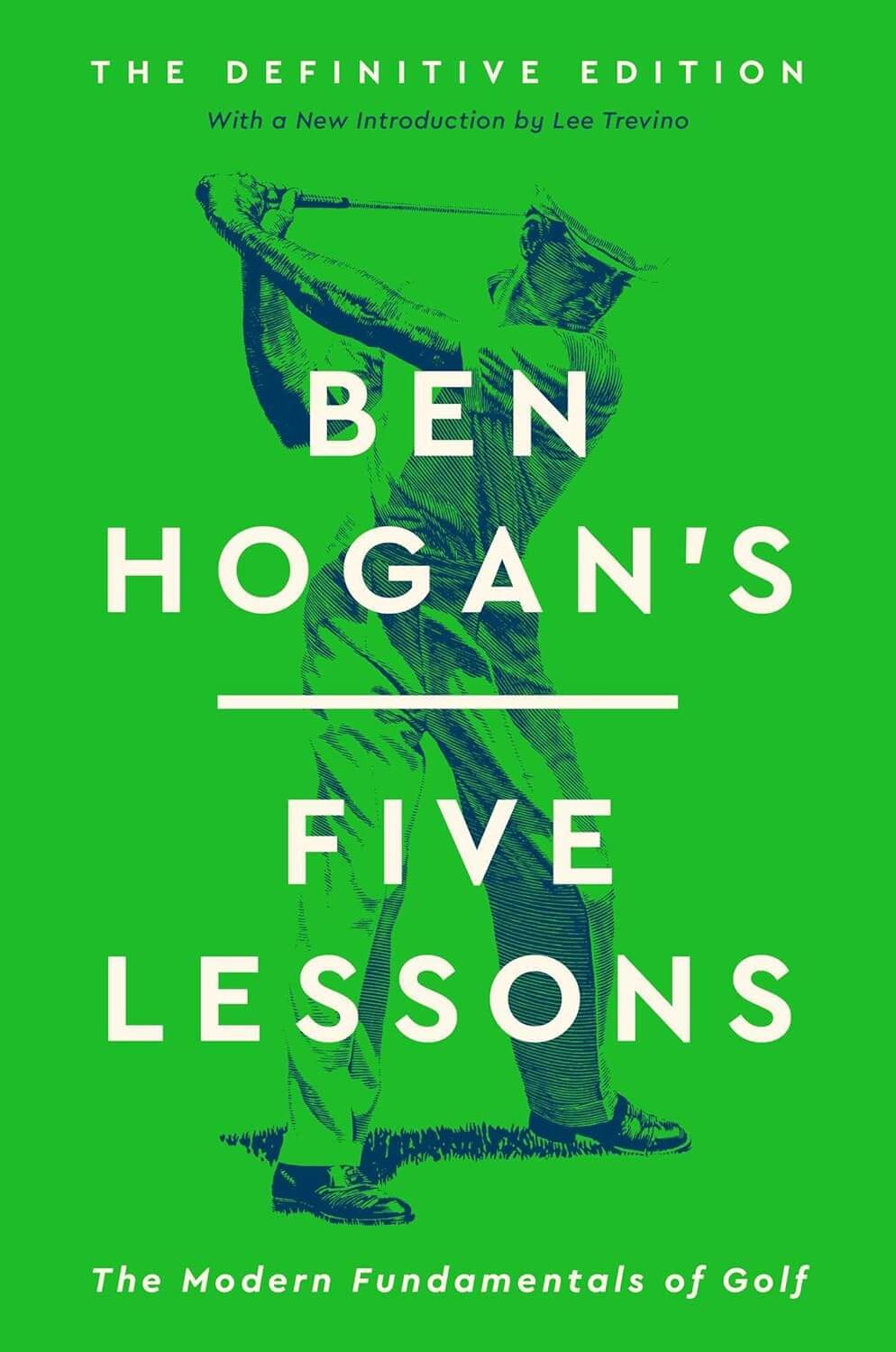
| Author | Ben Hogan with Herbert Warren Wind |
| Publisher | Avid Reader Press / Simon & Schuster |
| Pages | Original + 97 additional pages |
| Dimensions | Standard hardcover |
| Best For | Instruction & technique reference |
Five Lessons was first published in 1957 and has never been out of print — which tells you something about its standing. This 2024 Definitive Edition adds 97 pages of additional material and a foreword from Lee Trevino, expanding on the original without altering it. Hogan's five fundamentals — grip, stance and posture, the first part of the swing, the second part, and a chapter on summary — remain the most clearly explained basic principles in golf instruction literature.
What I keep returning to: The original Anthony Ravielli illustrations. Ravielli was a medical illustrator, not a sports artist, which is precisely why his diagrams communicate mechanical principles better than photographs. The hip rotation illustration in chapter four — showing the unwinding of the lower body through impact — has been reproduced in golf instruction contexts for sixty years because nothing has improved on it.
The honest downside: This isn't a coffee table book in the visual sense — it's an instruction manual in hardcover. The physical format is smaller than the photography books in this list, and the experience of reading it is more textbook than art object. Buyers expecting the scale of Planet Golf or the 500 Holes will find a different kind of value here.
The bottom line: The most important golf instruction book ever published, now in its most complete edition. A different category from the others here — not for display but for use.
9. Tiger, Tiger: His Life as It's Never Been Told Before by James Patterson & Peter de Jonge

| Author | James Patterson & Peter de Jonge |
| Publisher | Little, Brown |
| Published | July 2024 |
| Best For | Tiger Woods biography & storytelling |
James Patterson and Peter de Jonge take a narrative approach to Tiger Woods's life — framing it as a story rather than a sports biography. The 2024 publication gives it access to events through recent years, including Tiger's 2021 car accident and his complicated return to competitive play. The co-authorship with Patterson means the pacing reads like a thriller in places, which some readers will find engaging and others will find less appropriate for the subject.
What I keep returning to: The account of the 2008 US Open — Tiger playing eighteen holes on a broken leg, making a fifteen-foot putt on the 72nd hole to force a playoff, then winning the playoff the following day. As a sporting achievement the book contextualizes it more fully than most coverage did at the time, connecting it to his injury history and the competitive psychology he'd developed under his father.
The honest downside: This is a biography, not a coffee table book — no substantial photography, no oversized format, no visual content beyond what appears on the jacket. It belongs in this list because Tiger Woods is the subject, but its format is a standard hardcover. Don't buy it expecting the visual experience of the other entries.
The bottom line: A compelling read about the most consequential golfer of the last thirty years. Buy it for the story, not for display.
10. The Story of Golf in Fifty Holes by Tony Dear

| Author | Tony Dear |
| Publisher | Firefly Books |
| Pages | 224 |
| Dimensions | 6.75 x 9.0 inches |
| Best For | Golf history & reading |
Tony Dear is a former British PGA apprentice professional turned golf writer, which means he understands holes from the inside rather than the outside. The conceit — fifty holes, each one the site of a moment that shaped golf's six-hundred-year history — is a structure that forces interesting editorial choices. Which hole was present when the term "birdie" was first used? Which hole defined the concept of the Redan, copied on courses ever since? The answers are less obvious than you might expect.
What I keep returning to: The North Berwick chapter. The 15th at North Berwick is the original Redan hole — a par-3 played to an angled plateau green defended by a deep bunker on the left — copied so widely that it became a template for par-3 design worldwide. Dear traces how a hole designed in the 1890s became one of the most replicated templates in golf architecture, appearing in modified form on courses from Augusta to courses built last year.
The honest downside: This is a trade paperback — 6.75 by 9 inches, standard publishing dimensions. It has photographs but is primarily a reading book rather than a display piece. It earns a place here on the strength of the writing and the history it covers, but buyers looking for oversized coffee table format should look elsewhere in this list.
The bottom line: The most readable account of golf's actual history. Publishers Weekly gave it a starred review and called it a "Masters-level celebration of the game." That assessment holds.
How to Choose
For display: Planet Golf Modern Masterpieces (12.75" wide, Abrams quality) or Golf: The Iconic Courses (2025 photography, 11×12.75" format).
For reference: The 500 World's Greatest Golf Holes is the benchmark for course catalogues. DK's The Golf Book covers the broadest ground.
For gift-giving: Golf: The Iconic Courses works for any level of fan. The Stylish Life: Golf works for golfers who care about the game's aesthetic history.
For reading: The Story of Golf in Fifty Holes (history) or Ben Hogan's Five Lessons (instruction) — both slim enough to read in a weekend and substantive enough to return to.
For serious collectors: Planet Golf Modern Masterpieces and The 500 World's Greatest Golf Holes together cover contemporary and classic design with enough depth to hold up against years of revisiting.