8 Best Matisse Coffee Table Books (2026)
Eight Matisse books, personally reviewed — from the $15 Taschen cut-outs introduction to the 18-pound Barnes Foundation set that Artnews called the most gorgeous coffee table book you'll ever own. Here's exactly who each book is for.
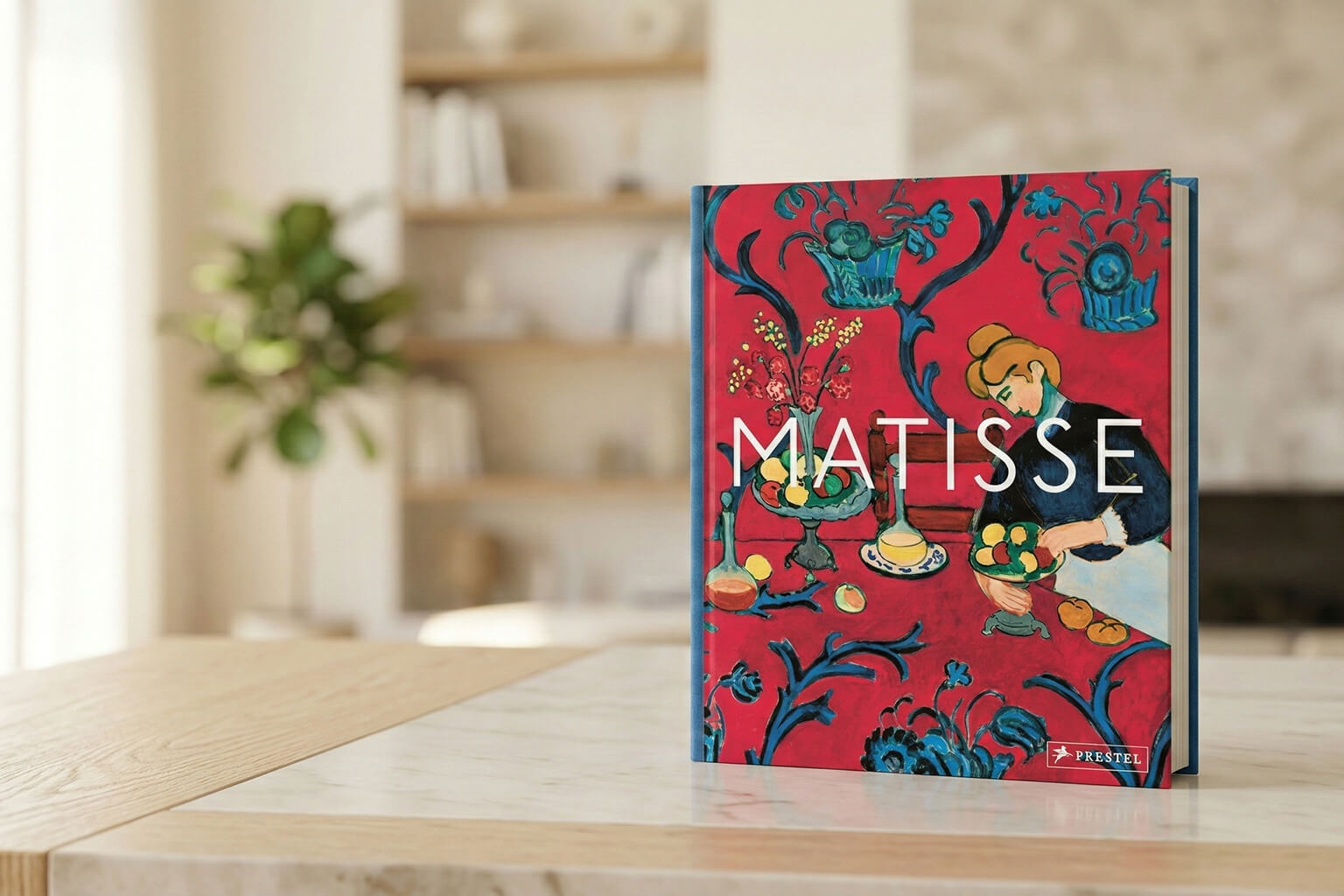
After building out the modern art section of my collection, I've spent time with all eight of these Henri Matisse books — not just flipping through, but reading the scholarship, comparing the color reproductions against works I've seen in person at MoMA and the Fondation Beyeler, and watching which ones visitors actually pick up off the table. Below I break down what each delivers, where it falls short, and who it's actually for.
Disclosure: This article contains affiliate links. If you purchase through these links, I earn a small commission at no extra cost to you. Every book reviewed here I own personally — none were sent for review.
My Top 3 Picks at a Glance
- Best Overall: Matisse: Invitation to the Voyage — Fondation Beyeler retrospective catalogue, covers every creative period, $75
- Best for Gift-Giving: Matisse: The Bigger Picture — six fold-out spreads, cloth binding, colored edges, stunning production
- Best Cut-Outs Book: Henri Matisse: The Cut-Outs (MoMA) — the definitive 150-work catalogue of his revolutionary late paper works
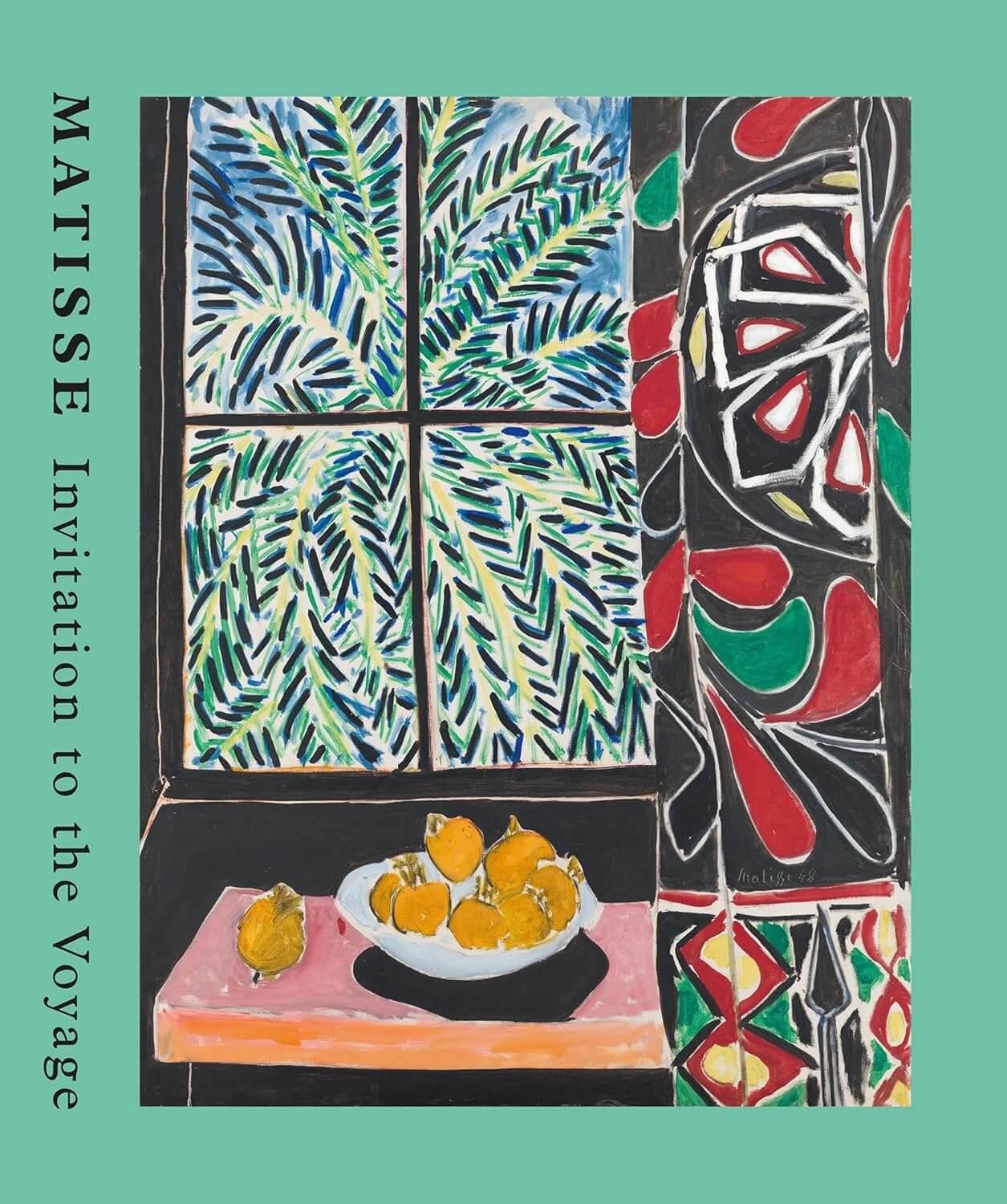
1. Matisse: Invitation to the Voyage by Raphaël Bouvier
| Editor | Raphaël Bouvier |
| Publisher | Hatje Cantz |
| Pages | 216 |
| Dimensions | 10.25 x 12.25 inches |
| Weight | 3.2 lbs |
| Best For | Comprehensive overview & serious art book collectors |
This is the catalogue from the 2024 Matisse retrospective at the Fondation Beyeler in Basel — the first major Matisse retrospective in the German-speaking world in 20 years. Raphaël Bouvier structured the book around Baudelaire's 1857 poem L'Invitation au voyage, which Matisse referenced throughout his lifetime, and the organizing principle works beautifully: the book reads as a journey through the artist's entire practice, from the early paintings around 1900 through the Fauvist revolution, the sensual Nice period, and finally the legendary cut-outs of his last decade.
What I keep returning to: The contributor list alone justifies the purchase. John Elderfield, Jodi Hauptman, Griselda Pollock, Claudine Grammont — these are scholars who have spent careers with Matisse's work, and their essays bring a depth you won't find in a general survey. The reproductions cover 100 color works across all media — paintings, sculptures, and the late paper silhouettes — and the oversized format (over 12 inches tall) lets the Fauvist color hold its intensity. The section on the Nice period paintings from the 1920s and 1930s, which general books tend to rush past, gets room to breathe here.
The honest downside: This is a softcover exhibition catalogue, not a cloth-bound hardcover. The paper quality is excellent, but if you're looking for a hefty display piece with a premium binding, the Sefrioui or the Barnes Foundation set will serve that purpose better. The softcover also means the spine will show wear faster if this becomes your go-to reference that gets opened frequently.
The bottom line: The most current major Matisse publication and the best single-volume overview available. Start here if you want serious scholarship at a reasonable price.
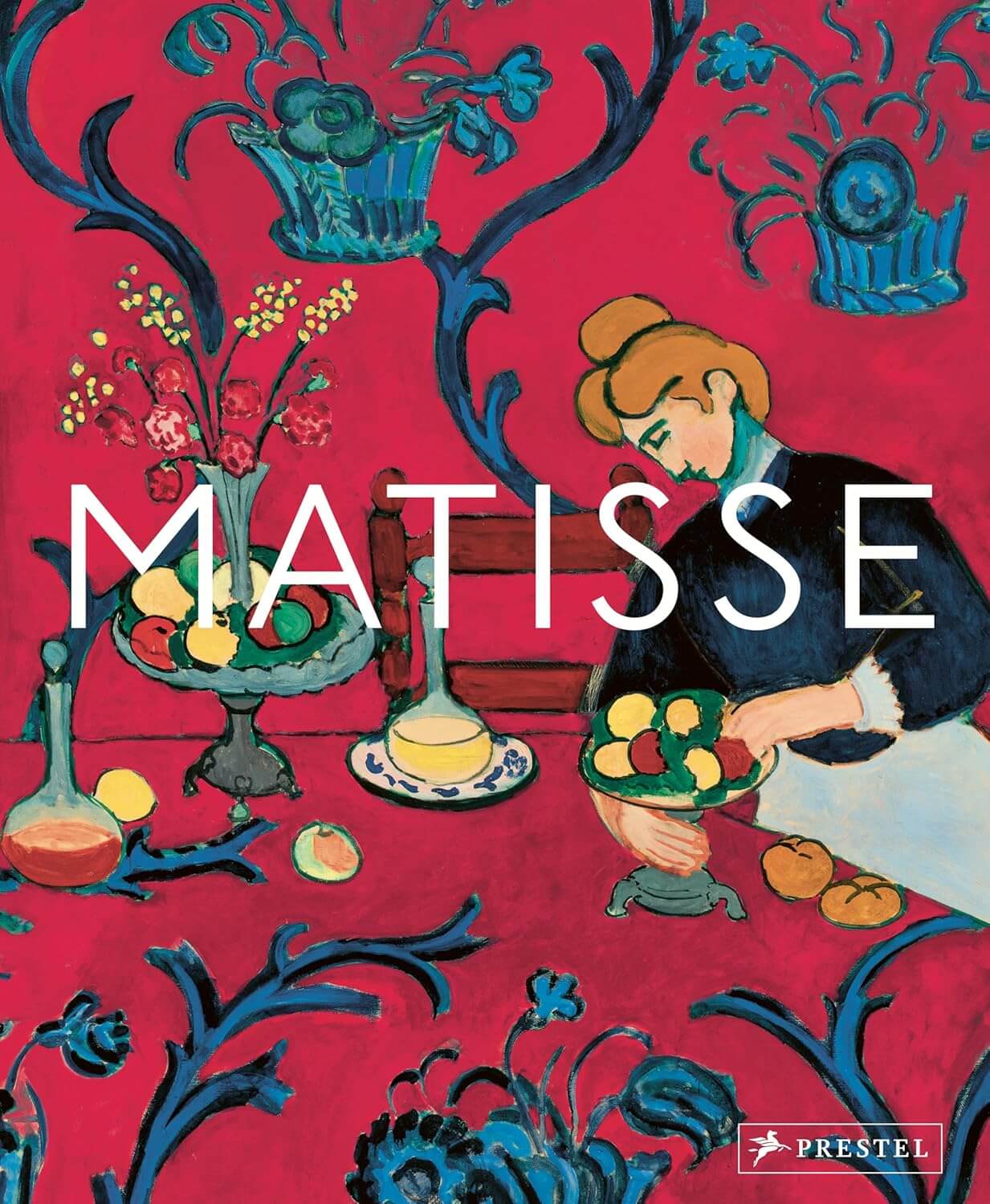
2. Matisse: The Bigger Picture by Anne Sefrioui
| Author | Anne Sefrioui |
| Publisher | Prestel |
| Pages | 172 + gatefold spreads |
| Dimensions | 8.81 x 10.69 inches |
| Weight | 2.9 lbs |
| Best For | Display piece & gift-giving |
I already own Sefrioui's Monet and Van Gogh editions in this Prestel series — they're among the most visually striking art books I've handled at any price — so I bought the Matisse edition without hesitation. The format is consistent across the series: printed cloth binding, colored edges, and six expansive fold-out spreads that let you experience the paintings at a scale where details become visible that standard book pages can't deliver.
Why the format matters here: Six major compositions appear as map-style fold-outs — Joy of Life, The Red Studio, The Dance, and The Sorrows of the King among them. The fold-out of The Dance is the moment where this book proves its worth: those enormous figures in their flat pinks and blues, stretching across a surface wide enough to actually feel the mural's physicality, is unlike anything the standard book format can provide. Sefrioui's brief essays accompany roughly fifty works and do what the best art writing does — they point you toward things you'd miss on your own without lecturing.
The trade-off: At 172 pages (text aside from the fold-outs), this is a curated selection, not an exhaustive catalogue. The early career and the Nice interiors are represented but compressed. If you want the full scholarly apparatus, pair this with Invitation to the Voyage. As a standalone display book, though, the production quality is genuinely exceptional.
The bottom line: The most beautiful Matisse book I own. Buy it as a gift, as a centerpiece, or as the book that makes people reach for it when they walk into the room.
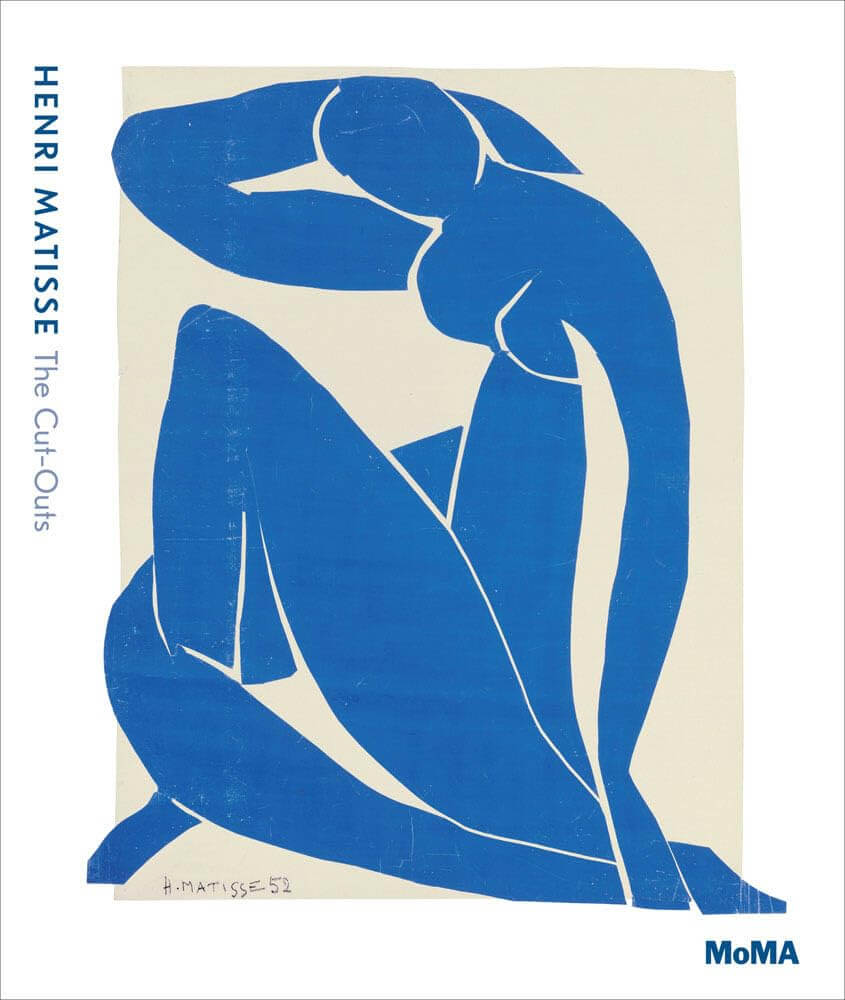
3. Henri Matisse: The Cut-Outs (MoMA) edited by Karl Buchberg, Nicholas Cullinan & Jodi Hauptman
| Editors | Karl Buchberg, Nicholas Cullinan, Jodi Hauptman, Nicholas Serota |
| Publisher | The Museum of Modern Art, New York |
| Pages | 302 |
| Dimensions | 9.5 x 12.0 inches |
| Weight | 4.0 lbs |
| Best For | Cut-outs specialists & anyone who loves Matisse's late work |
If you've ever stood in front of The Swimming Pool at MoMA — 16 meters of blue figures diving and arching across two walls — you already understand why the cut-outs deserve their own book. This is the catalogue from the most comprehensive exhibition ever devoted to Matisse's paper cut-outs, presenting roughly 150 works from the early 1940s through his death in 1954.
Why this is the definitive cut-outs book: The scholarship here operates on two parallel tracks — curatorial and conservation — and the combination is revelatory. Five thematic essays trace the cut-out practice from its origins in Jazz (1947) through the Vence chapel decorations to the monumental late works like Memory of Oceania and The Swimming Pool. But it's the conservation research that makes this catalogue irreplaceable: the technical analysis of Matisse's gouache paints reveals he used over fifteen varieties of orange, eight turquoises, and ten different greens. The period photographs of the works in progress in Matisse's studio — pinned, rearranged, evolving on his walls — show you the process behind the apparent simplicity. Fold-out pages let The Swimming Pool unfold to something approaching its actual proportions.
The honest caveat: At $65, this is a specialist volume. If you're new to Matisse, the cut-outs are extraordinary but they represent his final decade of a 50-year career. You'll appreciate them more after understanding the full arc. Start with Invitation to the Voyage, fall in love with the cut-outs, then come back for this.
The bottom line: The best book on Matisse's most beloved late work. A winner of the Dedalus Foundation's Exhibition Catalogue Award, and it earned every bit of that recognition.
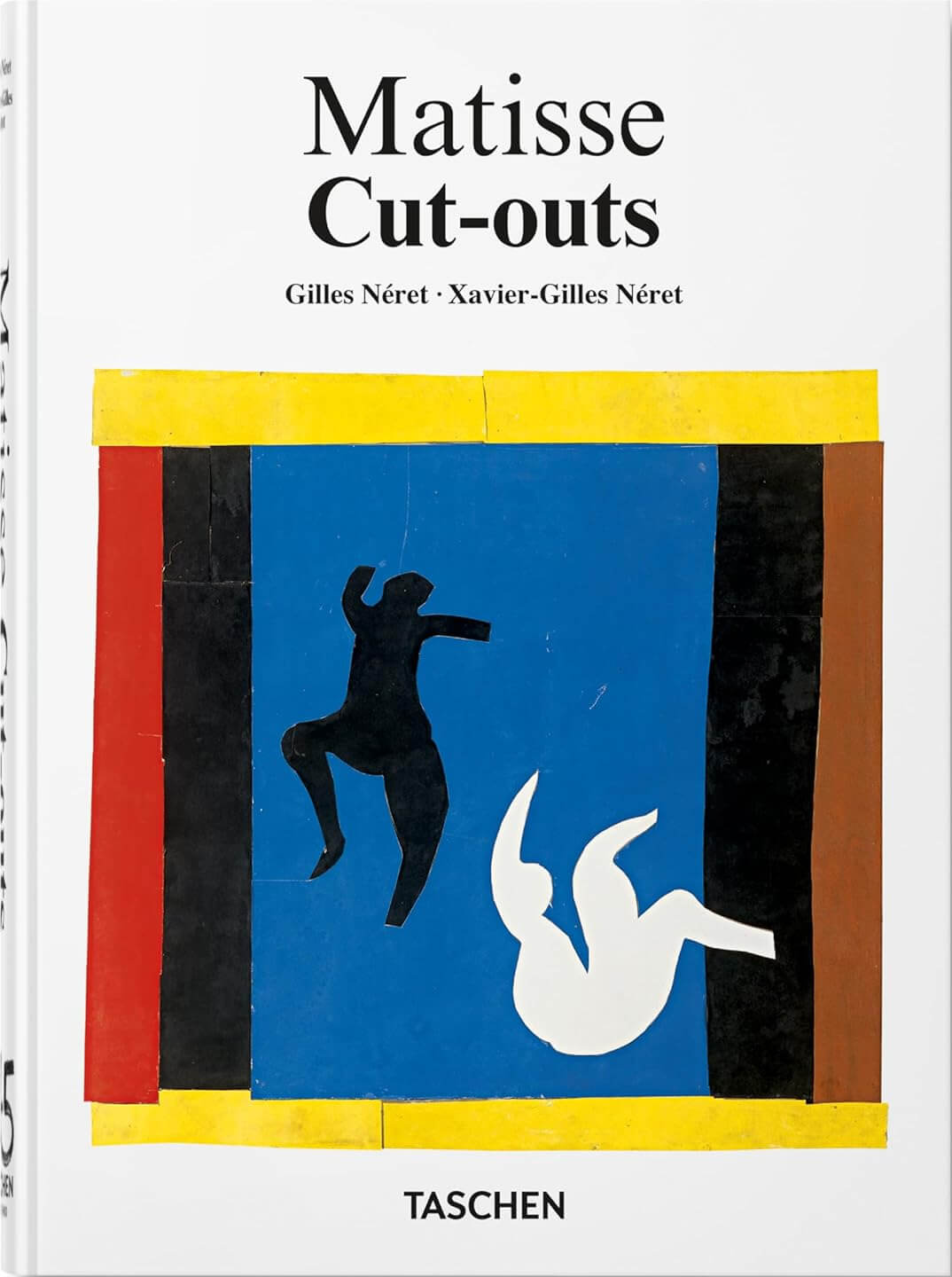
4. Matisse: Cut-Outs (Taschen 40th Anniversary Edition) by Xavier-Gilles Néret
| Author | Xavier-Gilles Néret |
| Publisher | Taschen |
| Pages | 412 |
| Dimensions | 6.1 x 8.5 inches |
| Weight | 2.2 lbs |
| Best For | Comprehensive cut-outs reference at an accessible price |
This is Taschen's reprint of the first volume from their original award-winning XXL Matisse Cut-Outs set — now in a portable hardcover format with over 400 pages. Don't confuse this with the Basic Art 96-page introduction (also excellent, covered below). This is the full-length treatment: it traces the cut-outs from Matisse's 1930 trip to Tahiti — where the light and color fundamentally recalibrated his eye — through the decades to his final years in Nice.
What separates this from the MoMA catalogue: Where the MoMA book is scholarship-first, this Taschen edition is visual immersion-first. It includes photographs by Henri Cartier-Bresson and stills from filmmaker F.W. Murnau, plus texts by Matisse himself, the publisher E. Tériade, and poets Louis Aragon and Henri Michaux. The emphasis is on context and atmosphere — you feel the Mediterranean light, the studio practice, the physical reality of Matisse cutting into colored paper from his wheelchair. The reproductions are vivid, and at 412 pages, the sheer volume of works shown gives you a comprehensive visual record.
The honest trade-off: The 40th Anniversary format (6.1 x 8.5 inches) is compact compared to the original XXL edition. The cut-outs were made to fill walls, and the reduced format means some of the spatial impact is lost. If you want the cut-outs at maximum scale, the MoMA catalogue's oversized format or the fold-outs in Sefrioui's The Bigger Picture deliver more visual punch per page.
The bottom line: The deepest visual dive into the cut-outs at a price that won't stop you buying other Matisse books too. A perfect complement to the MoMA catalogue — one gives you the scholarship, this gives you the full visual journey.
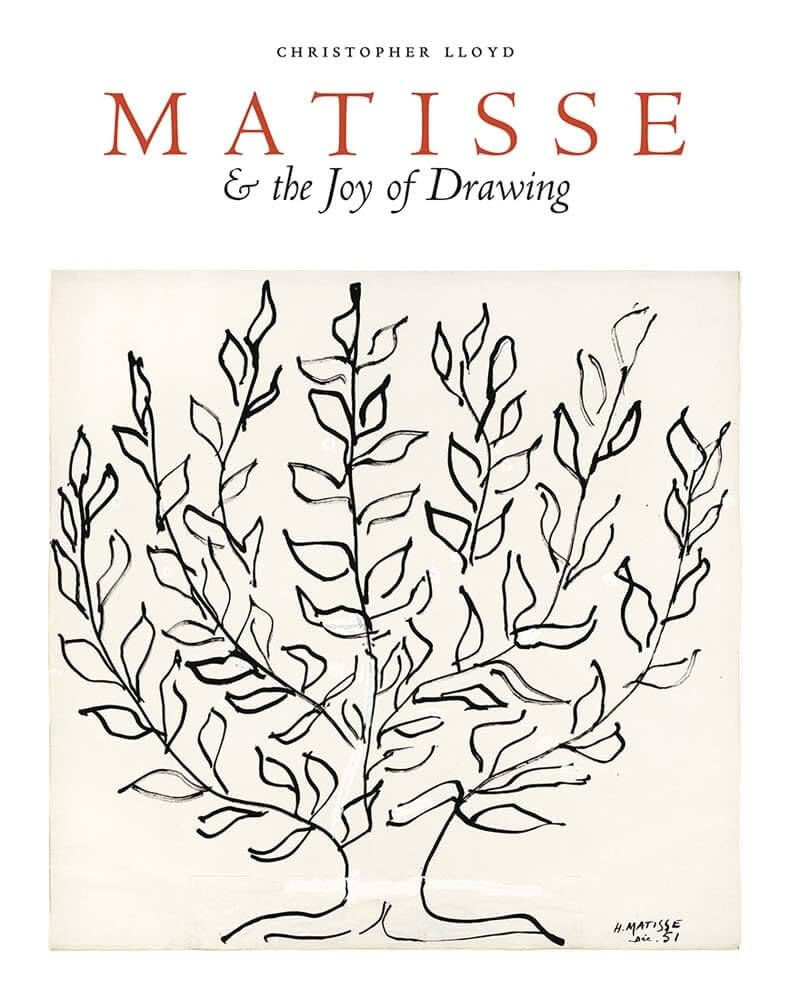
5. Matisse and the Joy of Drawing by Christopher Lloyd
| Author | Christopher Lloyd |
| Publisher | Modern Art Press (distributed by Yale) |
| Pages | 194 |
| Dimensions | 8.25 x 10.5 inches |
| Weight | 2.4 lbs |
| Best For | Drawing enthusiasts & understanding Matisse's line work |
Christopher Lloyd worked in the Department of Western Art at the Ashmolean Museum in Oxford and later served as Surveyor of The Queen's Pictures in the British Royal Collection — a career that gave him direct, sustained access to works on paper that most art historians only see behind glass. His Matisse book applies that expertise to a subject most general volumes handle inadequately: the drawings.
Why this book changed my perspective: Matisse is universally known for color, and reasonably so. But his line work — the fluid, seemingly effortless contour drawings, the pen-and-ink studies, the charcoal figures — is what gives the color its structure. Lloyd traces the evolution of Matisse's work on paper across his entire career: early academic drawings, the experimental graphic work of the 1910s, the celebrated line drawings of the Nice period, the cut-outs (which Lloyd correctly frames as a form of drawing with scissors), and the Vence chapel decorations. The 150+ illustrations include archival photographs of Matisse's studio and the artist at work, which add context you can't get from the finished works alone.
The honest limitation: This is a specialist focus within a specialist topic. If you're building a Matisse collection and haven't yet bought a general survey, start elsewhere. But if you already own the paintings books and keep finding yourself drawn to Matisse's line — that extraordinary ability to describe a figure or a face in a single unbroken contour — this is where you go next.
The bottom line: The book that reveals the architectural intelligence behind Matisse's apparent spontaneity. Essential for anyone who draws or who wants to understand how line and color work together.
{{BuyButton url="https://amzn.to/4sfWaDk price="45"}}
6. Matisse in the Barnes Foundation: 3 Vol. Set edited by Yve-Alain Bois
| Editor | Yve-Alain Bois |
| Publisher | Thames & Hudson |
| Pages | 824 (3 volumes) |
| Dimensions | 13.1 x 15.9 inches |
| Weight | 18.5 lbs |
| Best For | Serious collectors & the ultimate Matisse display piece |
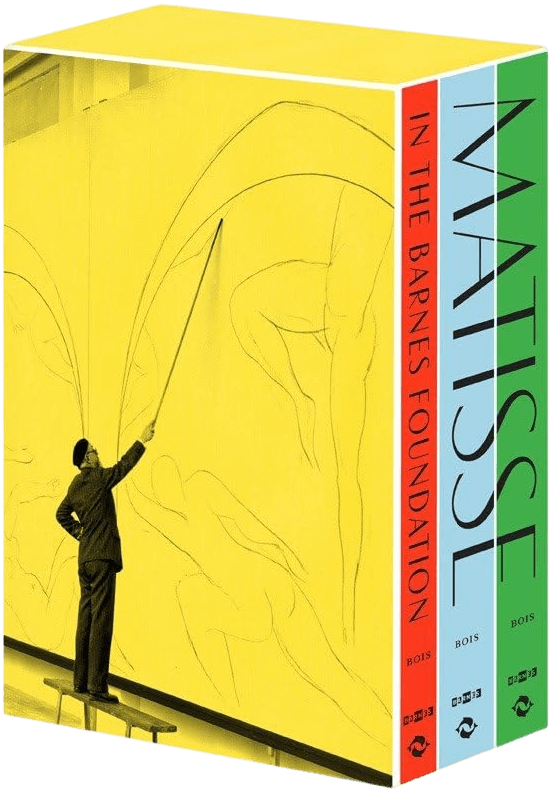
Artnews described this as perhaps the most gorgeous coffee table book you will ever own. At 18.5 pounds across three slipcased volumes, that assessment is both figuratively and physically accurate. This is the first authoritative publication to cover in full the Barnes Foundation's extraordinary Matisse holdings — 59 works spanning every stage of his career, anchored by Le Bonheur de vivre (The Joy of Life) and The Dance, the monumental mural Barnes commissioned for the Foundation's main gallery.
What justifies the price and the weight: Yve-Alain Bois is a professor at the Institute for Advanced Study at Princeton and one of the foremost Matisse scholars alive. His 90,000-word essay on the evolution of The Dance — including the full correspondence between Barnes and Matisse about the commission, published here for the first time — is a landmark piece of art historical scholarship. Karen Butler examines what Barnes thought of Matisse; Claudine Grammont explores how and why he collected the work. The design, by Pentagram, uses four different cover colors drawn from Le Bonheur de vivre, with color-printed fore-edges and select pages on Italian Favini papers. The three volumes are each a different hue — lemon, tangerine, mint — creating an object that is itself a celebration of Matisse's palette.
The honest reality: This set starts at around $350. It weighs 18.5 pounds and requires its own shelf space. You do not casually pick this up. But if you are serious about Matisse, or if you want a single art book purchase that stops every person who walks into the room, this is the one.
The bottom line: A museum-quality publication in every sense. The most ambitious and most beautiful Matisse book ever produced.
7. Matisse: In 50 Works by John Cauman
| Author | John Cauman |
| Publisher | Pavilion Books |
| Pages | 144 |
| Dimensions | 11.1 x 8.74 inches |
| Weight | 2.1 lbs |
| Best For | Introduction to Matisse & budget-conscious buyers |
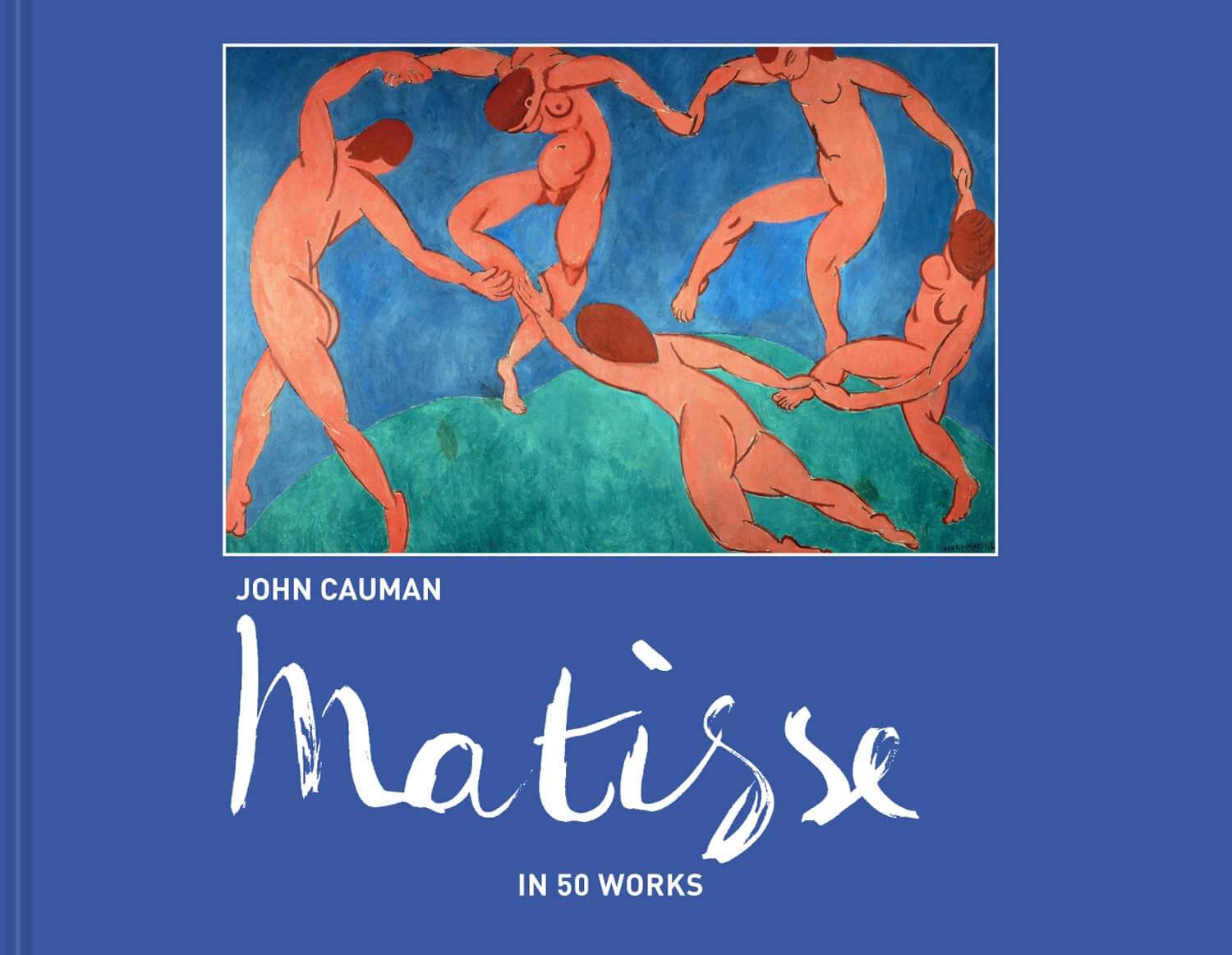
John Cauman wrote his doctoral dissertation on Matisse and America at the City University of New York and co-curated the Matisse and American Art exhibition at the Montclair Art Museum — which means his knowledge of Matisse's work is academic in the best sense while his writing remains accessible to anyone. This book selects 50 iconic works and pairs each with Cauman's analysis, working chronologically from the late 1890s through the cut-outs of the 1950s.
Why I keep buying this as a gift: One Amazon reviewer described discovering three things they didn't know about a painting they'd seen dozens of times at the Boston MFA — before they'd even finished the first page. That's exactly my experience with this book. Cauman's introductory essay is a compact, jargon-free overview of Matisse's entire life and career that I've not found bettered at any length. The selection includes expected masterworks — Luxe, calme et volupté, Le Bonheur de vivre, Harmony in Red, Dance I — alongside works like Entrance to the Casbah and Pianist and Checker Players that general surveys skip. Each entry contextualizes the work within the period, so you understand not just what Matisse painted but why.
The honest limitation: At 144 pages, any single work gets at most two or three pages. The cut-outs, which represent an entire reinvention of Matisse's practice, are compressed into the final section. That's the right choice for an introduction — but if the cut-outs are what brought you here, the MoMA catalogue or the Taschen 40th Anniversary edition will serve you better.
The bottom line: The lowest-risk, highest-return Matisse art book purchase. Start here, then go to Invitation to the Voyage or the MoMA Cut-Outs when you want more.
8. Matisse. Cut-Outs (Basic Art Series) by Gilles Néret
| Author | Gilles Néret |
| Publisher | Taschen |
| Pages | 96 |
| Dimensions | 8.3 x 10.2 inches |
| Weight | 1.3 lbs |
| Best For | Cut-outs introduction & stocking stuffer |
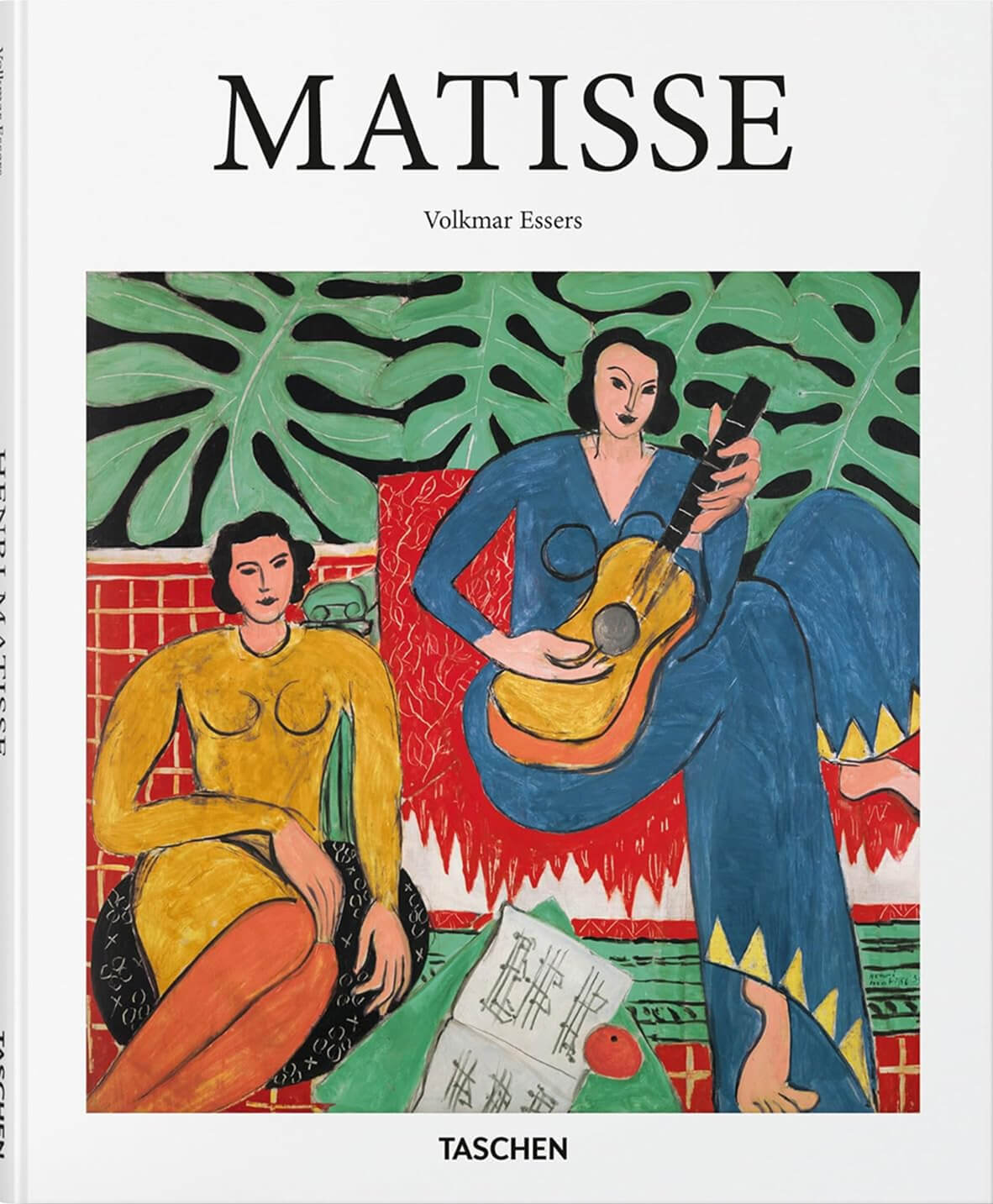
Taschen's Basic Art series has been the gateway drug for art book collectors since 1985, and their Matisse Cut-Outs entry maintains the formula: 96 pages, roughly 100 illustrations, a concise biography, and a chronological narrative — all at a price that makes impulse buying responsible. Gilles Néret, who was both an art historian and a museum correspondent, focuses exclusively on the paper cut-outs, which Matisse described as painting with scissors.
What works: The reproductions are bright and clean — Taschen's standard production quality at this price point is genuinely good — and Néret's contextual writing explains how a 75-year-old artist confined to a wheelchair reinvented himself by cutting shapes from gouache-painted paper. The chronological structure takes you from the earliest collage experiments through Jazz, the Vence chapel designs, and the monumental late works like The Snail and Blue Nude II. For someone encountering these works for the first time, Néret does an excellent job communicating why an apparently simple technique was, in fact, a revolutionary solution to the lifelong tension between color and line.
The honest limitation: At 96 pages, this is an introduction, full stop. If you already know The Swimming Pool and Memory of Oceania and want to understand the conservation science, the studio process, and the full critical context, you need the MoMA catalogue. This is the book that gets you interested enough to want that.
The bottom line: The perfect entry point to Matisse's cut-outs. At around $20, buy it alongside Cauman's In 50 Works and you have a complete Matisse introduction for around $50.
How I'd Spend Different Budgets
Under $50: Cauman's In 50 Works paired with the Basic Art Cut-Outs. For around $50 total, you get a complete introduction to Matisse's full career plus a focused look at his most iconic late work. Both are hardcovers with excellent print quality.
$100–120: Invitation to the Voyage ($75) plus The Bigger Picture ($45). You get the most current scholarship from the Beyeler retrospective paired with the most visually stunning production in the roundup — fold-out spreads of The Dance and Joy of Life at a scale where the paintings come alive.
$150–200: Add the MoMA Cut-Outs catalogue to that pairing. These three books cover every major phase of Matisse's career at a level of depth that most collectors never need to go beyond. The MoMA catalogue alone transforms your understanding of the late work.
$400+: The Barnes Foundation set plus Invitation to the Voyage. The three-volume Barnes is the pinnacle — 59 works, 600+ color reproductions, Pentagram design, scholarship that will remain authoritative for decades. Paired with Bouvier's overview, you have the most comprehensive Matisse library available in two purchases.
Frequently Asked Questions
Which Matisse book shows the cut-outs best?
For scholarship and conservation research: the MoMA Cut-Outs catalogue — 150 works with fold-out pages and studio photographs. For visual immersion and context: the Taschen 40th Anniversary Cut-Outs at 412 pages. For a quick introduction: the Basic Art Cut-Outs at 96 pages and around $20.
Is there a Matisse biography equivalent to the art books?
Hilary Spurling's two-volume biography — The Unknown Matisse and Matisse the Master: The Conquest of Colour — is the definitive life. The second volume won the Whitbread Book of the Year in 2005. They're not coffee table books in format but they do for Matisse's life what the art books do for his work: make you see everything differently after reading them.
Which book makes the best gift?
The Bigger Picture — the cloth binding, colored edges, and six fold-out spreads create genuine surprise when someone opens it. At around $45 it hits the sweet spot for a premium gift without being excessive. The Basic Art Cut-Outs is ideal for a smaller, thoughtful gift.
I'm new to Matisse — where do I start?
Cauman's In 50 Works. It's 144 pages of beautiful reproductions paired with writing that contextualizes each painting without jargon. You'll finish it knowing Matisse's full arc — from the Fauvist revolution through the Nice interiors to the late cut-outs — and you'll know exactly which period you want to explore next.
What about the Henri Matisse: A Quest for Light, Colour, and Freedom book?
Victoria Charles's book is a richly illustrated volume with over 100 reproductions tracing Matisse's evolution. It's a solid overview at a competitive price point, but it lacks the scholarly depth of Invitation to the Voyage and doesn't offer the production quality of The Bigger Picture. It fills a middle ground — if you want a straightforward illustrated biography without the commitment of Spurling's two volumes, it serves that purpose.
Which book covers Matisse's relationship with color best?
Every Matisse art book is, at some level, a book about color — it was the organizing principle of his entire career. But Invitation to the Voyage gives you the broadest view of how his color sense evolved from Fauvism through the Nice period to the cut-outs. The Barnes Foundation set goes deepest on the technical side, with conservation analysis of the actual pigments Matisse used. And the MoMA Cut-Outs catalogue reveals that Matisse had access to (and used) over fifteen varieties of orange alone — which explains the chromatic richness that reproductions can only approximate.
Last updated: February 2026. Prices may vary. I update individual reviews as new editions release.